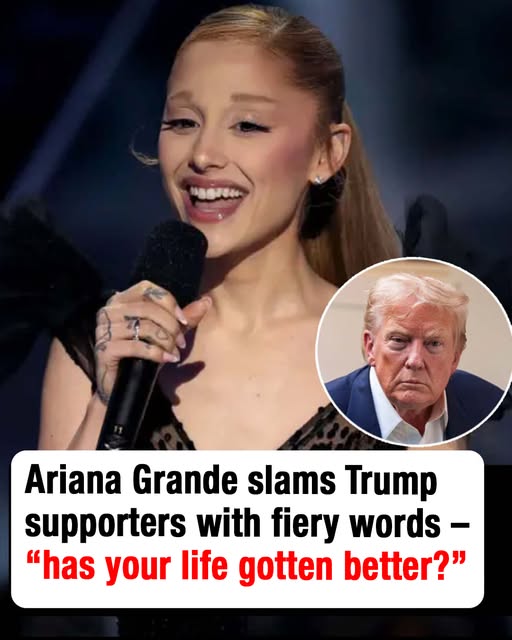
Ariana Grande has once again stepped into the center of a political storm—and this time, it was anything but accidental. With a single Instagram story and a few carefully chosen questions, she managed to ignite a debate that quickly spread across millions of screens. What might have looked like a simple repost turned into something far more powerful, pulling people into a conversation about politics, suffering, and who truly benefits from leadership. While critics demanded she stay silent and “stick to music,” her supporters rallied behind her, praising her willingness to speak out. And in the middle of all the noise, Ariana made one thing clear—she had no intention of backing down.
By sharing a message from LGBTQ+ activist Matt Bernstein, Ariana Grande didn’t just question the political record of Donald Trump—she reframed the conversation entirely. The post challenged claims about economic success, asking whether promises like lower costs and a stronger economy had actually materialized for everyday people. But more importantly, it pushed beyond numbers and policies, asking whether any perceived benefits could justify the impact felt by marginalized groups, including immigrants and transgender individuals. In doing so, the message became less about politics in a traditional sense and more about values, accountability, and empathy.
The reaction was immediate and deeply divided. Supporters viewed her actions as courageous, seeing her as someone using her platform responsibly to raise difficult but necessary questions. Critics, on the other hand, accused her of being out of touch or overly political, arguing that celebrities should not influence public opinion on such matters. Some responses went further, crossing into hostility and personal attacks—highlighting just how charged the conversation had become.
However, this moment did not emerge in isolation. Ariana Grande has, over time, shown a consistent willingness to engage with social and political issues, even when it invites backlash. She has previously amplified messages from figures like Alexandria Ocasio-Cortez, voiced support for leaders such as Kamala Harris, and spoken out during pivotal political moments. Her actions suggest a pattern—not of impulsive commentary, but of deliberate engagement rooted in her personal beliefs.
What stands out in this situation is not just what she said, but how she said it. Instead of delivering a direct statement or argument, she posed questions—questions that required people to pause, reflect, and confront their own perspectives. That approach turned a short social media post into something more interactive and, for some, more uncomfortable. It wasn’t just information being shared; it was a challenge being issued.
At its core, this controversy reflects a broader tension in modern culture: the role of public figures in political discourse. Should they remain neutral to avoid division, or use their influence to advocate for causes they believe in? Ariana Grande has clearly chosen the latter, even knowing the consequences that come with it.
In the end, her message wasn’t about seeking approval. It was about refusing silence. For her, speaking up appears to be less about winning an argument and more about staying aligned with her own sense of responsibility. And whether people agree or disagree, one thing is certain—she has once again forced a conversation that many would rather avoid.