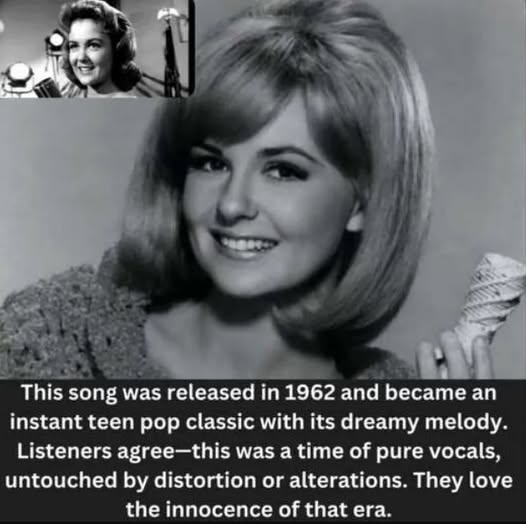
Her voice captured a generation, then quietly faded from the spotlight. One song, one teenage crush, and a love story that seemed to live forever in the glow of radio waves—but the girl who sang it made a choice that confused fans for decades: she refused to be defined by it. Shelley Fabares reached the number one spot with a dreamlike hit, then stepped back almost as quickly as she had arrived, leaving behind a lingering question that followed her for years—why would someone walk away from a moment that looked like the peak of stardom?
At the height of early 1960s innocence, “Johnny Angel” wasn’t just a chart-topping single; it became a cultural feeling. It drifted into teenage bedrooms, school dances, and quiet afternoons, carrying the soft ache of first love and distant admiration. The song resonated with a generation that was learning what it meant to feel deeply but speak softly about it. Shelley Fabares, already familiar to audiences as Mary Stone on The Donna Reed Show, seemed to embody that same emotional space—gentle, sincere, and effortlessly connected to the innocence of the era.
Her performance was deceptively simple, yet emotionally precise. The delicate phrasing of the lyrics, combined with lush orchestration and soft backing harmonies, transformed the song into something more than pop music. It became a shared emotional diary for millions of young listeners, a quiet anthem for unspoken affection. In a time when teenage emotion was often understated, “Johnny Angel” gave it a voice that felt both personal and universal, as if it were speaking directly to every listener who had ever loved someone from a distance.
The success of the song placed Fabares in an unusual position. She was suddenly both a television star and a music sensation, pulled into a spotlight that could have easily defined her entire future. Yet behind the polished image of rising fame was a young woman who quickly recognized the fragile nature of success built on a single defining hit. She understood that what looked like instant stardom could also become a limitation, a role that never evolves, a public identity that refuses to let go.
After a brief follow-up single, “Johnny Loves Me,” she began to shift her focus away from music. Instead of chasing repeated chart success, she returned more fully to acting, building a longer and more varied career in Hollywood. This included appearances in popular television and film projects, including roles alongside Elvis Presley in several films that further expanded her visibility beyond the world of pop music. In doing so, she chose stability and longevity over the unpredictable cycle of music fame.
“Johnny Angel,” however, did not fade with her. The song took on a life of its own, continuing to circulate across radio stations, nostalgic playlists, and cultural memory long after its release. It became a symbol of a specific kind of moment—first love, fleeting innocence, and the bittersweet beauty of something that cannot be held forever. The absence of Fabares from the music scene only deepened the song’s mystique, as if the voice behind it belonged to a passing emotion rather than a permanent career.
Over time, her decision to step back from music came to be seen not as disappearance, but as quiet self-awareness. She did not chase repetition or risk being frozen in a single identity. Instead, she allowed her most iconic musical moment to stand on its own, untouched and unforced. In doing so, she preserved both her artistic flexibility and the emotional purity of the song that defined her early fame.
Ultimately, Shelley Fabares’ brief but unforgettable musical moment became a rare kind of legacy—one defined not by constant visibility, but by timing, restraint, and choice. “Johnny Angel” remains a soft echo of its era, carrying with it the feeling of youth, longing, and innocence. And behind it all stands the story of a young woman who understood something many never do: sometimes the most powerful way to remain unforgettable is to know exactly when to step away.