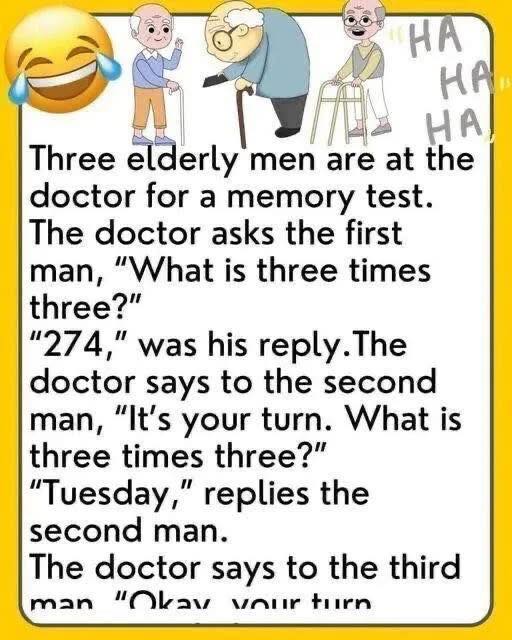
Aging didn’t frighten Arthur, Ben, and Charlie. They had lived through decades of change—shifts in fashion, politics, and the natural slowing of life. What truly troubled them was the idea of losing who they were, the gradual fading of identity that can happen when the mind begins to weaken. They had been close friends since childhood, a bond built early in life and strengthened over the years. Now in their seventies, they entered a specialist’s office with quiet worry, expecting to hear that their mental sharpness was starting to decline.
The clinic felt cold and tense, filled with the seriousness of medical testing. They were there for cognitive exams meant to detect early signs of memory problems. One by one, they were asked to remember random words, draw clocks from memory, and solve mental tasks that felt more and more difficult.
The most striking moment came during a particularly challenging part of the test. The doctor, experienced in dealing with many similar cases, asked a strange and confusing question: “Subtract 274 from Tuesday.” He waited, ready to write down their response.
The room became silent. Arthur looked at Ben, and Ben at Charlie. The question made no sense. For a moment, fear set in—was this a trick? Did their confusion mean something was wrong with them?
Then Arthur began to laugh. What started as a small chuckle quickly turned into loud laughter. Soon, Ben and Charlie joined him. The ridiculousness of the question broke the tension and released the fear they had been carrying for years. In that moment, they realized they had spent too much time worrying about small forgetful mistakes—like losing keys or forgetting names—instead of appreciating the life they still had.
They left the office not with perfect test results, but with something more important: less fear. Their forgetfulness no longer felt like something to be ashamed of. Instead, it became something they shared and understood together. The phrase “Subtract 274 from Tuesday” turned into a private joke, a reminder that even if details fade, their friendship remains strong.
As they continued through life, they discovered that memory is not the only measure of a meaningful life. What mattered more was how they cared for each other—waiting patiently, helping each other find the right words, and sharing moments without judgment. They chose understanding instead of correction, knowing that a forgotten detail was a small price for joy and companionship.
They might not always rely on their memory, but they could rely on each other. In the end, they learned that the heart remembers in its own way—beyond facts and numbers. And even when the mind wanders, the connection between them stays strong, exactly where it belongs: beside those who love us.