The Empty Space
We had been married for five years when I found myself driving to the cemetery alone.
I want to explain why I went, because the reason matters. It wasn’t jealousy—I need to be clear about that. I wasn’t someone who fixated on her husband’s past or compared herself to someone who was no longer alive. From early on, I had accepted that Andrei had loved someone before me and lost her. I treated that loss with quiet respect, the way you do with grief that isn’t yours to question.
Her name was Natasha. That was all I really knew. Natasha—his first wife—who had died suddenly about eight months before he met me. He had told me this gently, carefully, as people do when they’re offering painful information in small, controlled pieces. She had been ill. It had happened quickly. He had been devastated.
I didn’t ask for more.
At the time, I told myself it was kindness. And maybe it was. He was clearly carrying something heavy, and I didn’t want to force him to unpack it before he was ready. I’ve always been patient. I believed I could wait for him to open up, if he ever chose to.
But beneath that patience, there was something else. Something I never quite explained to anyone because it sounded strange even in my own head.
From very early in our life together, I felt an urge to visit her grave.
Not out of curiosity. Not because I felt threatened. It was something quieter than that—almost like a sense of responsibility. A kind of unspoken courtesy. I had stepped into a life that had once belonged to someone else, and part of me felt I should acknowledge that. To stand at her grave and say, in some silent way: I know you existed. I know I came after you. I’m not pretending otherwise.
It sounds irrational when you put it into words. But at the time, it felt completely real.
What unsettled me wasn’t the idea itself—it was Andrei’s reaction whenever I mentioned it.
He didn’t respond with sadness. He didn’t gently avoid the subject like someone protecting a wound.
He shut it down.
The first time I suggested we could go together—just to leave flowers on the anniversary of her death—he changed the subject so abruptly it felt almost physical, like something had been cut off mid-sentence. I noticed, but I let it go.
Months later, I brought it up again. That time, he was more direct. He said there was no point. “It doesn’t change anything,” he told me. “She’s gone. Standing over a piece of ground won’t make it better.”
I accepted that explanation. People process grief differently. Some avoid cemeteries entirely. It made sense, at least on the surface.
But the third time I asked, something shifted.
I asked him if he had ever gone back. Since the funeral.
He looked at me—really looked—and there was something in his expression I couldn’t quite interpret. Then he said no. That it was too painful.
That answer should have settled it. Too painful is understandable. Too painful is human.
But something about the way he said it didn’t match.
It wasn’t grief I saw in his face. It was something sharper. More controlled. Less like sorrow and more like caution.
I told myself I was imagining it. I was good at doing that—explaining things away, smoothing over the parts that didn’t quite fit.
Because everything else in our life did fit.
We had a good marriage. I want to emphasize that, because I don’t want it to sound like I ignored obvious warning signs for years. There were no dramatic arguments, no clear betrayals, no visible cracks. Our life together was warm, steady. He was attentive, thoughtful, present. We laughed often. We had routines that felt like home—Sunday markets, long drives with no destination, conversations that didn’t need to be finished because we already understood each other.
There was nothing obviously wrong.
Just one thing that never quite aligned with the rest.
One closed door.
In the fourth year of our marriage, I found a photograph.
It was accidental. We were cleaning out an old box from the back of a closet—full of cables, papers, forgotten things. At the bottom, wrapped carefully in cloth, was a photo.
A young woman. Dark hair. Laughing. Standing in front of a summer house. There was something unmistakably real about the moment—like it had been taken by someone who loved her.
I held it for a second before showing it to him.
He froze.
“Is this Natasha?” I asked.
He took the photo from me carefully. “Yes.”
“She’s beautiful.”
“Yes,” he said again.
Then he put it in his pocket. And that was the end of it.
He never brought it up again. Not that night, not the next day, not ever. And I didn’t ask.
But I kept thinking about her. About that moment of laughter. About the fact that someone who had once been so present in his life had become almost invisible in ours.
No visits. No stories. No dates remembered.
Just silence.
That was when something inside me shifted from curiosity into certainty—not about what was wrong, but about the fact that something was.
The decision to go to the cemetery didn’t feel like a choice. It felt inevitable.
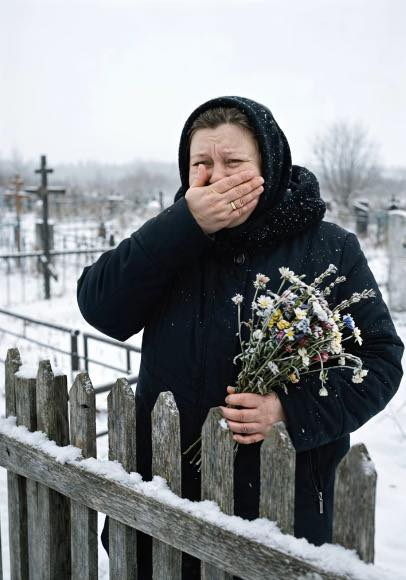
It was a Tuesday in October. I left work early, passed the flower stall I walked by every day, and stopped without thinking. I bought white chrysanthemums—the kind people bring to graves. Then I got into my car and drove.
I knew which cemetery because of something he had said once, casually, about his grandmother. A small detail, but I had remembered it.
The drive was quiet. No music, no calls. Just time to think. And the further I went, the clearer it became that I needed to see it for myself.
The cemetery was large, orderly, divided into neat sections. I found his family plot easily—his grandmother, his grandfather, exactly where he had once mentioned.
Then I started looking for her.
Natasha. His last name. A date that matched what I knew.
I walked the rows slowly. Then again, more carefully.
Nothing.
No name. No marker. No trace.
I stood in the place where she should have been.
And there was nothing there.
Not even an unmarked grave. Just untouched ground. Grass growing evenly, undisturbed. No sign that anyone had ever been buried there.
She wasn’t there.
I stayed there for a long time, holding the flowers, trying to make sense of it. I went through every possible explanation—maybe she was buried elsewhere, maybe her family chose a different place, maybe there was something I didn’t know.
But those explanations felt weak compared to something else.
A quiet certainty.
The kind that doesn’t come from evidence, but from all the small things that never added up finally aligning in one moment.
I drove home in silence.
I put the flowers in a vase, because I didn’t know what else to do with them.
And when Andrei came home later, I said nothing.
Not yet.
What I did instead was start asking questions—but not in the direction I had always pointed them.
Not to him.
But to the periphery. To the places where information gathers without being guarded, where people are not always prepared to hide everything.
His older sister, Vera, had always been kind to me. Not in a formal or performative way, but with that rare warmth that makes you feel like part of the family without effort. We would have lunch occasionally, talk easily about ordinary things, and I trusted her.
I called her three days after the cemetery visit.
I told her I had gone to visit Andrei’s family graves and that I had hoped to find Natasha’s grave, but couldn’t. I kept my voice calm, almost curious, as if I were simply asking for information.
The silence on the other end lasted longer than it should have. Long enough that, before she spoke, I already knew something was wrong.
“Where did you say you went?” she asked carefully.
“To the family cemetery. I found your grandparents… but not Natasha.”
Another silence.
“Natasha…” she repeated slowly. Then added, “Olya… can we meet?”
We met the next day at a café neither of us usually went to. Only later did I realize that wasn’t accidental—she had chosen a place where we were unlikely to run into anyone we knew.
She arrived before me. When I sat down across from her, I saw a kind of exhaustion in her face that had nothing to do with sleep.
She ordered tea. She didn’t drink it.
“How long have you known?” she asked.
“Known what, exactly?” I replied. Because I needed her to say it.
She looked down, then said quietly:
“Natasha is alive.”
The words didn’t hit me like a shock. Not exactly. It was more like a click—a key finally turning in a lock after struggling for too long.
“Tell me,” I said.
And she did.
Andrei and Natasha had married young. A quick engagement, a marriage their families accepted with some hesitation. After a few years, things began to fall apart—not dramatically, but slowly, the way relationships erode when two people are no longer moving in the same direction.
They separated. Natasha returned to her city. They started divorce proceedings, but never finished them.
And then… he met me.
He met me while he was still legally married.
And instead of telling me the truth—instead of saying “I need to resolve my past before we build something new”—he created a story.
He told me his wife had died.
Not a small lie. A complete one. With illness. With timing. With grief.
He described the “death” of a woman who was still alive.
“Does Natasha know about me?” I asked.
Vera looked me in the eyes.
“No,” she said.
In that moment, I understood something that’s hard to describe. It wasn’t just betrayal. It was the feeling that your entire life is built on a foundation that isn’t what you thought it was.
Five years.
Five years built on a lie.
He had performed grief, and I had responded with patience, kindness, and care. I had been gentle with a story that never existed.
But I didn’t go home and confront him right away.
I knew that if I did, he would control the conversation. He would reshape it into something that served him. And I didn’t want stories anymore.
I wanted facts.
That same evening, I called a lawyer. I explained everything. She listened, then said calmly:
“If he was still legally married when he married you, your marriage may not be valid.”
Over the next week, while continuing to live with him as if nothing had changed, I started gathering proof.
And the truth became undeniable.
His divorce had never been finalized.
He was still married to Natasha when he married me.
Our marriage… wasn’t legally real.
That week was the strangest of my life. I cooked, talked, laughed, slept beside him—while knowing everything was different.
But it wasn’t deception on my part.
It was protection.
He had five years to tell the truth.
I took seven days to understand it.
I chose a Sunday.
We were sitting in the kitchen, just like any other morning. Same coffee. Same table. Different silence.
“I went to the cemetery last week,” I said.
“I was looking for Natasha’s grave.”
He went completely still.
“There was no grave,” I continued.
“Because there is no grave.”
Then I added:
“I spoke to Vera.”
He looked at me—and in that look, everything was there.
“How long have you known?” he asked.
“A week.”
I told him everything I knew. Calmly. Without drama.
When I finished, he sat in silence for a long time.
“I didn’t know how to tell you,” he finally said.
I looked at him and replied:
“You had five years.”
“I know.”
“You told me she was dead. You gave her an illness. You described grief that wasn’t real. You let me be careful with you—for years, Andrei. You let me tiptoe around the subject, avoid it, never push, because I thought I was protecting your feelings about a woman who was actually alive.”
He didn’t try to deny any of it.
“She doesn’t know about me,” I said.
“No.”
“She’s been living her life believing her marriage ended with a separation. Not knowing her husband remarried. Not knowing any of this.”
He nodded.
“We were both lied to,” I continued. “That’s what you need to understand. You didn’t just lie to me. You took her life and turned it into a story you told someone else—without her knowledge or consent. Both of us have been living inside a reality you created.”
His face, in that moment, was the face of a man fully exposed, with nowhere left to hide. Not defensive. Not calculating. Just… seen. The way someone looks when there’s no place left to carry the weight of what they’ve done.
“I’m sorry,” he said.
“I know,” I replied. “And I believe you. But you need to understand that ‘sorry’ is the beginning of a long road, not the end of a short one. And the first step on that road isn’t anything you do for me. It’s contacting Natasha. She deserves to know.”
I moved out two weeks later, into a friend’s spare room while I figured out what came next.
Legally, things became clearer. Since our marriage had never been valid, there was no divorce to file. There were still practical matters—finances, property, the quiet unraveling of a shared life—but my lawyer handled everything calmly and efficiently.
Through Vera, I heard that Andrei had contacted Natasha. I don’t know what was said. I don’t know how she reacted to learning that her estranged husband had declared her dead and built a second life on that lie. I imagine there are no words for that kind of revelation. And I realized I didn’t need to know. Her experience belonged to her. I only hoped she was surrounded by people who cared about her.
The chrysanthemums I had bought that Tuesday—the ones I placed in a vase after returning from the empty section of the cemetery—wilted within a week. I threw them away.
Before I moved out, I bought new ones.
I placed them on the kitchen table, because the kitchen felt empty without flowers, and I had always been the one who kept them there.
Then I packed my bags and left.
There is something I understand now about that visit to the cemetery.
I went there to find a grave. To acknowledge the woman who had come before me. To say: you were real, your life mattered, and I’m not pretending you didn’t exist.
But there was no grave.
She was real. She was alive. And her life had been folded away and erased by someone who needed her gone in order to become who he wanted to be.
In a strange way, the instinct that took me there wasn’t wrong. The need to acknowledge the past, to show respect—it was valid. It had just been misdirected by a lie.
I had gone to honor a story.
And discovered the story wasn’t true.
What I stood over in that empty section wasn’t her grave.
The realization came slowly, but by the time I was driving home from the café with Vera, I understood it completely.
I had been standing at the grave of a marriage.
A ceremony I never witnessed. A burial that had been happening quietly for five years. And I had arrived at the end of it, flowers in hand, only to find that nothing had ever truly been laid to rest—because what I had been told was buried there had never existed.
I am forty-one now.
I live in my own apartment—a space I chose, filled with things I chose, arranged exactly the way I want. I have a job I’m good at. I have friends who know the truth and didn’t turn away from it.
People tell me I’ve handled this with remarkable composure. I don’t always know what to say to that, except that sometimes composure is just the shape grief takes when you don’t have the luxury of falling apart.
I have cried.
There have been evenings when the weight of it all—the loss of the marriage, but also the loss of the version of myself who lived inside it, who was patient and careful and kind toward a lie for five years—settles heavily.
I let it.
I sit with it.
And then, the next morning, I get up. I go to work. I buy flowers for my kitchen. I keep building a life that belongs only to me.
Because in the end, that’s the only thing that makes sense.
Not the empty space where something should have been.
Not the man who needed someone gone so badly that he erased her in a story.
Just the morning.
Just the flowers.
Just the life I am building—on ground I have tested myself.
And that ground holds.