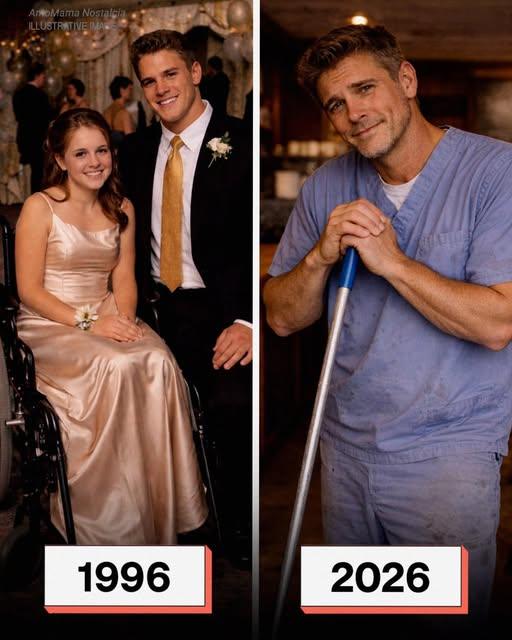
Six months after a crash left me in a wheelchair, I went to prom expecting to feel invisible—at best pitied, at worst ignored. I planned to sit quietly and wait for the night to end.
At 17, my life had been normal. Then a drunk driver ran a red light, and suddenly everything became hospitals, surgeries, and an uncertain future. By prom, I didn’t want to go. I didn’t want to be seen.
My mom insisted. “You deserve one night,” she said. I argued that I didn’t want the attention. She replied, “Then look back at them.” So I went—reluctantly, painfully aware of every glance.
At first, people came by with kind words, quick compliments, and photos. Then they drifted away, back to the dance floor—back to a life that kept moving.
Then Marcus walked up.
I honestly thought he had the wrong person. But he smiled and said, “No, I meant you.” After a short exchange, he held out his hand and asked me to dance.
I told him I couldn’t.
He nodded and said, “Then we’ll figure out what dancing looks like.”
Before I could stop him, he wheeled me onto the dance floor. I was tense, embarrassed, certain everyone was watching. He didn’t care. He moved with me, not around me—spinning my chair, laughing, turning it into something joyful instead of tragic.
“For the record,” I told him, “this is insane.”
“For the record,” he said, “you’re smiling.”
And I was.
When I asked him why he did it, he shrugged. “Because nobody else asked.”
After graduation, my family moved away for rehab, and I never saw him again.
The years that followed were hard—surgeries, learning how to live again, adjusting to a world that wasn’t built for people like me. Eventually, I became an architect, driven by frustration and determination. I built a career designing spaces that didn’t quietly exclude people.
By fifty, I had a successful firm and a life I never expected.
Then, three weeks ago, I spilled coffee all over myself in a café near a job site.
A man in scrubs and an apron came over, cleaned it up, and bought me another coffee before I could protest. Something about him felt familiar.
The next day, I went back.
When I mentioned prom, a wheelchair, and a dance thirty years ago, it clicked.
“Emily?” he said.
It was Marcus.
Life hadn’t been easy for him either. His mother got sick right after high school, and everything else fell apart. He worked whatever jobs he could to care for her, eventually injuring his knee so badly it never fully healed.
We started talking more. When I offered help, he resisted—pride, mostly. So instead, I invited him to consult on one of my projects: an adaptive recreation center.
He agreed to one meeting. Then another.
In one session, he pointed something out no one else had:
“Accessible doesn’t mean welcoming. Nobody wants to enter through the side door by the dumpsters just because that’s where the ramp fits.”
He was right.
From there, things slowly changed. He became part of the team, then a key voice in our work. Eventually, he began helping mentor others dealing with injuries and disabilities.
Getting him medical help took time—he resisted that too—but eventually he agreed. Treatment didn’t fix everything, but it brought relief and possibility.
Months later, he was training staff, mentoring kids, and speaking in ways only someone with lived experience could.
One day, I brought an old prom photo into the office. He saw it.
“You kept that?” he asked.
“Of course.”
He told me he had tried to find me after high school.
“I thought you forgot me,” I said.
He looked at me like that was the most ridiculous thing he’d ever heard. “You were the only girl I wanted to find.”
After thirty years, that was the moment everything shifted.
Now we’re together—carefully, honestly, like people who understand how fragile life is.
His mother is properly cared for. He runs programs at our center and helps shape every new project we take on.
At the opening of the center, music played through the hall. He came over, held out his hand, and smiled.
“Would you like to dance?”
I took it.
“We already know how.”