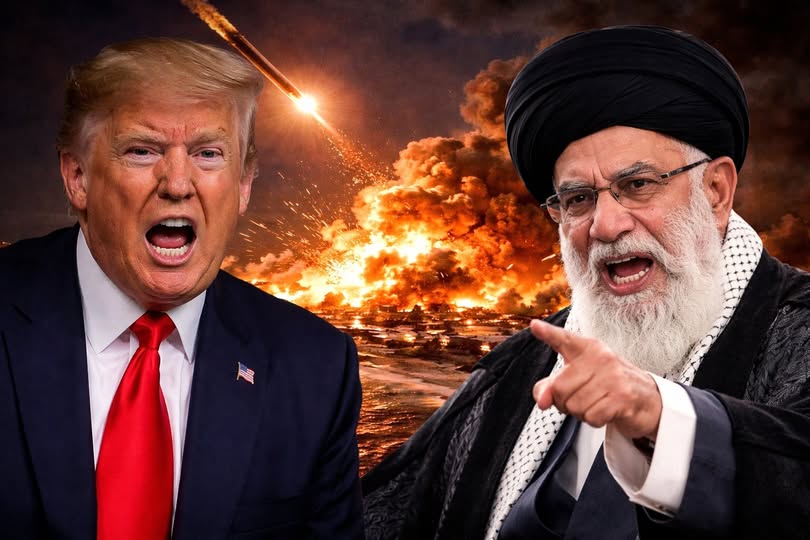
On the morning of March 1, 2026, the Strait of Hormuz—the world’s most precarious maritime artery—ceased to be a simple transit lane and became a high-stakes arena for a duel that threatened to push the globe toward total war. For decades, activity in these waters had been a choreography of shadows, warnings, and calculated posturing. But on this day, those unspoken rules were shattered in favor of the raw, terrifying mechanics of modern naval combat. What began as a routine passage for a United States carrier strike group reportedly transformed into 32 minutes of concentrated fire—a storm of steel and electronics that brought the global economy to a trembling halt.
The Strait of Hormuz is a narrow chokepoint through which roughly one-fifth of the world’s oil flows. Here, the margin for error is measured in yards, and the response time in heartbeats. As the U.S. aircraft carrier entered the strait, the familiar dance of shadowing Iranian fast-attack craft and standard radio warnings abruptly fractured. Reports indicate the situation escalated from tense to critical when anti-ship cruise missiles were detected arcing off the Iranian coast, their flight paths locked on the American fleet.
Those 32 minutes would likely be remembered as the most intense naval engagement of the 21st century. As missiles emerged on the horizon, the Aegis Combat System aboard the escorting destroyers sprang into automated action. Standard Missile-2 and SM-6 interceptors streaked upward, their white plumes painting jagged lines against the morning sky. This was not only a physical battle of projectile versus projectile; it was also a ghost war in the electromagnetic spectrum. Electronic warfare systems aboard the carrier and its escorts raced to blind enemy radars, spoof incoming seekers, and deploy digital decoys to lure the Iranian ordnance into empty waters.
In the war rooms of Washington and the command centers in Tehran, silence reigned. During that half-hour, global markets froze. Oil futures spiked to unprecedented levels as the terrifying reality sank in: if even a single missile hit its target—if a U.S. carrier were struck—the retaliatory spiral could be irreversible. The world teetered on the edge of a conflict that could surpass regional boundaries, involving global powers and disrupting the foundations of modern life.
The American response, however, extended beyond defense. While interceptors engaged incoming threats, the fleet’s “eyes”—E-2D Advanced Hawkeye aircraft and orbiting satellites—identified the launch sites. Counterstrikes were swift and decisive. Within minutes, U.S. strike aircraft and Tomahawk missiles were reportedly targeting suspected launch positions, coastal radar batteries, and command-and-control nodes. The mission was clear: neutralize the threat as quickly as possible.
By the end of the 32nd minute, the skies over the Strait cleared, leaving behind an eerie silence, heavy with the scent of ozone and the weight of what had almost occurred. No U.S. ship was reported damaged, a testament to the technological superiority of the carrier’s defense systems. Yet tactical success did little to lessen the strategic gravity of the incident. For the first time in years, the brink of brinkmanship had been reached and stared down. The delicate equilibrium that had maintained safe passage through the Strait despite decades of tension had been shattered.
Military analysts and historians will likely study this brief period for years. It serves as a stark reminder of global fragility and the frightening speed at which routine operations can turn into existential threats. In such a narrow corridor, miscalculation is not theoretical; it is a constant, suffocating shadow. The March 1 incident underscored the new reality of warfare, where the transition from “peace” to “full engagement” occurs faster than human reaction time, leaving the fate of millions in the hands of automated systems and pre-programmed protocols.
The rapid American counterstrikes also highlighted a dangerous paradox. While the ability to silence hostile batteries within an hour is a powerful deterrent, it virtually eliminates the window for diplomacy. Once missiles are airborne, there is no time for negotiations—only the mechanical exchange of fire. This incident demonstrated that in the modern era, the line between a contained skirmish and global conflict is razor-thin.
In the aftermath, the Strait of Hormuz remains a tense waterway. Routine patrols continue, but the pressure is no longer a low hum—it is a high-pitched scream. The global community witnessed 32 minutes that nearly rewrote 21st-century history, proving that our interconnected world rests on a foundation far more fragile than most admit. Leaders on both sides now face an urgent question: was this a final warning, a terrifying glimpse into the abyss meant to prompt restraint, or the opening salvo of a new, irreversible era of escalation?
The clash in the Strait was more than military hardware—it was a psychological earthquake. It reminded a complacent world that the energy fueling our cities and the shipping lanes carrying our goods pass through a gateway charged with hair-trigger tensions. As the smoke cleared that March morning, it became clear: while the mechanics of war have evolved, human fallibility remains as dangerous as ever. Those 32 minutes—when radars, launch sites, and the illusion of safety vanished—stand as a monument to how swiftly routine can fracture and how close humanity remains to the flames.