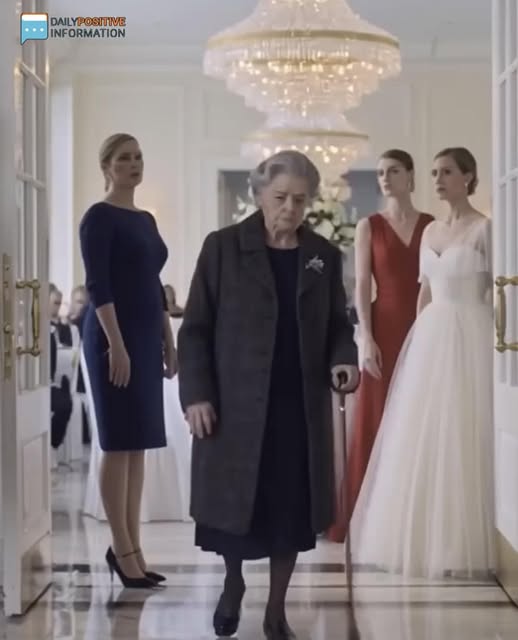
My mother tried to give away my home in the middle of my sister’s wedding reception.
Not quietly. Not in a private conversation off to the side where things like this might be handled with at least the illusion of respect. She chose the exact moment when every eye in the room was already lifted, when the music had softened and the attention of two hundred guests hovered in that delicate space between celebration and performance.
She stood beneath the crystal chandeliers of the Fairmont Copley Plaza in Boston, light catching the edges of her perfectly styled hair, a microphone in one hand and a leather folder in the other. She smiled the way she always did when she wanted control—warm enough to seem gracious, sharp enough to signal that resistance would not be tolerated. It was the kind of smile that made strangers feel included and family members feel warned.
“Come up here, Paige,” she said into the microphone, her voice smooth, practiced, carrying effortlessly across the room. “Don’t make this ugly.”
The words were soft, but the threat inside them wasn’t.
Around me, the room shifted. Conversations stopped mid-sentence. Glasses hovered halfway to lips. Lawyers, donors, people who had spent their lives in rooms exactly like this—all of them turned, curious, expectant, ready to witness what they assumed would be a touching moment. Old Boston money in black tie leaned in, drawn not by concern, but by the promise of something memorable.
At the sweetheart table, my sister Madison sat in layers of white tulle and diamonds, glowing in the carefully curated way my mother had always envisioned for her. But I saw the detail others might have missed—the way she blinked just a little too often, just a little too deliberately. The practiced fragility. The signal that tears could come at any moment, if needed.
Inside the leather folder my mother held were documents already prepared, already finalized except for one thing. Transfer papers. A quitclaim deed. My name printed neatly on the signature line, waiting. Waiting for compliance.
The Seaport penthouse my grandmother Eleanor had left me.
Packaged.
Reframed.
Offered to the room as if it had always been meant for someone else.
“Sign it,” my mother said, her smile never wavering as she turned slightly so the audience could see both of us. “Let Madison begin her marriage the right way.”
There was a pause, just long enough for the weight of that sentence to settle.
Two hundred people believed they were witnessing generosity. A symbolic act of sisterly love. A moment that would later be retold as evidence of how “close” we all were.
What they were actually watching was something else entirely.
A performance.
A setup.
A trap that hadn’t begun tonight, but weeks—maybe months—before, carefully constructed long before the invitations were printed, long before anyone stepped into that ballroom.
To understand what happened that night, you have to understand what my grandmother’s love actually looked like.
Because it didn’t look like grand gestures or public declarations. It didn’t come wrapped in spectacle or expectation.
It looked like consistency.
It looked like presence.
When my grandmother Eleanor left me the penthouse, my family reacted the way they always did when something valuable moved in a direction they hadn’t predicted.
They acted like I had taken something that belonged to them.
Not because they had lost her.
But because they had lost access.
I was the only one who had ever shown up.
Ten years of Sunday visits. Ten years of driving across the city, not out of obligation, but because I wanted to be there. Sitting with her in quiet rooms, listening to stories she had already told but wanted to tell again. Watching her garden through the window when her hip made it too painful to walk outside. Bringing groceries she didn’t ask for but always appreciated.
Ten years of remembering the exact day of her birthday.
Not the day before.
Not the week after.
The actual day.
My mother sent Christmas cards with her name printed in a script that looked almost like handwriting if you didn’t look too closely. My sister Madison sent apologies—creative, evolving excuses that became more elaborate the longer she stayed away.
So when Eleanor died, and the will was read, and it said exactly what she had always hinted it would say, I wasn’t surprised.
But they were.
And their grief didn’t stay grief for long.
It shifted.
Hardened.
Curdled into something else.
Resentment.
I watched it happen in real time, the way emotion gave way to calculation. I had seen that shift before. My entire life, I had watched them assign value to people based on what could be gained from them.
After the will was read, I disappeared from their version of the family.
Removed quietly from group chats.
Left off invitation lists.
Turned into a story told in rooms I was no longer welcome in.
My mother told her friends I had manipulated a vulnerable old woman. She used the word “senile” with a softness that suggested concern, but her tone carried something sharper—dismissal, accusation, control.
My sister let it be understood—never said outright, but always implied—that the penthouse was hers by right. That I was simply… holding it. Temporarily. Until someone corrected the situation.
Then the wedding invitation arrived.
Heavy cream stock. Black ink. Perfect calligraphy. Every detail intentional.
My mother called me that same evening.
“Madison and Tyler need a proper home,” she said, as if stating something obvious. “You live alone, Paige. You don’t need a place like that.”
There was no question in her voice.
Only expectation.
I told her the conversation was over.
But with my mother, things like that never end when you say they do.
They just… wait.
The wedding was everything my mother had orchestrated—and I understood long before the reception that I wasn’t there as a guest.
I was there as part of the design.
The Fairmont Copley Plaza didn’t just host events—it displayed them. High ceilings that made voices echo just enough to feel important. Marble floors that reflected light in a way that made every movement look deliberate. Chandeliers that softened every face into something more polished, more composed, more worthy of being seen.
My mother had spent eleven months planning every detail with precision.
Every flower.
Every table setting.
Every moment.
It wasn’t just a wedding.
It was a statement.
And like every statement she had ever made, it came with an unspoken cost—one that someone else was expected to pay.