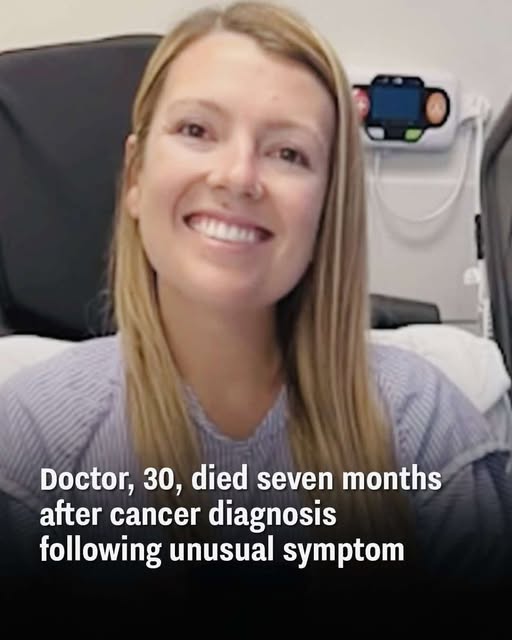
Becca was the doctor everyone trusted. For years, she had been the calm voice in chaotic oncology wards, the one families leaned on when words failed, the person who delivered news with a steady hand and a quiet heart. She spent her days fighting cancer for strangers—charting treatment plans, adjusting chemotherapy doses, offering reassurances she didn’t always feel herself. And yet, for all her knowledge, she missed the whisper of her own illness, the subtle signs her body tried to send but that her mind, trained to see patterns in others, overlooked in herself.
It began innocuously: a night out that left her unusually fatigued, a bathroom visit she couldn’t ignore, a swelling that didn’t seem “ominous” at first. She shrugged it off, just as she had taught patients to ignore fleeting aches, telling herself it was nothing. But inside, something was quietly growing, relentless and unforgiving. By the time the tests confirmed the truth, her world had shifted. The operating room where she had comforted others became the place where colleagues delivered the diagnosis she had always feared. It was cruelly ironic: the healer now needed healing.
Returning to the same hospital corridors as a patient, Becca encountered a world both familiar and inverted. The nurses who once took her vitals with gentle jokes now administered her chemo, the rooms where she had offered hope now echoed with the sound of her own anxious breathing. She watched her parents absorb every pause, every subtle shift in expression—seeing the understanding dawn in their eyes that she already had. Becca, ever the “Smiler” since childhood, refused to let despair dictate her final chapter. She smiled through the uncertainty, holding on to the joy in small moments: a shared laugh with a nurse, the warmth of a sibling’s hand, the quiet companionship of her spouse in the corner of her room.
As treatments failed, and her abdomen swelled once more, there was no longer any way to delay the inevitable. Becca made a conscious choice: to fill her remaining days with presence rather than panic, with love rather than fear. Each conversation, each gentle joke, each hug became her legacy. Family members remember her whispering encouragement to her parents, teasing her younger colleagues, marveling at the way a simple sunbeam through the hospital window could feel like a gift. In the end, she passed peacefully, wrapped in the arms of her mother—the same arms that had held her the moment she entered the world.
Becca’s story is now both a warning and a call to action. It warns of the silent symptoms that even the most informed can overlook, reminding us that knowledge alone is not always enough. And it calls on all of us to honor the fight against cancer with vigilance, compassion, and urgency—the fight she never stopped believing in, even as it claimed her. Her life, and the quiet courage with which she faced her final days, leaves a lasting imprint: that true bravery is not only in saving others but in embracing our own fragility with grace.