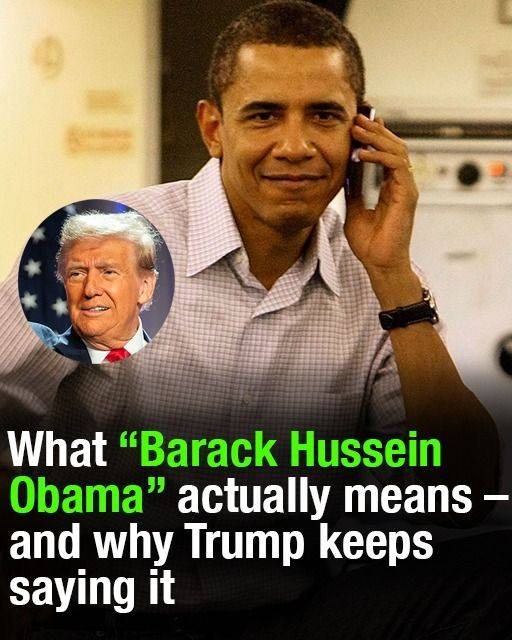
Donald Trump thought he was throwing a punch. For years, he spat out “Barack Hussein Obama” like a warning siren, relying on fear, ignorance, and recycled birther claims to rally his base. Every syllable was meant to land like a punch, to mark Obama as foreign, suspect, and somehow un-American. In Trump’s calculation, the middle name was a weapon, a shorthand for difference and danger. Yet names, like stories and histories, rarely obey the people who try to wield them for harm. The very syllables he tried to twist into shame were quietly, stubbornly rich with meaning, history, and heritage—meanings that push back against insult.
Trump’s obsession with that middle name was never incidental. Saying “Hussein” with a sneer was a shortcut to old prejudices, a way to summon Islamophobia without ever explaining what he meant. It was a tool of simplification, reducing a complex, highly educated man with decades of public service into a caricature of suspicion. But the actual origins of these names quietly defy the narrative he tried to impose. “Barack” comes from the Semitic root for blessing, suggesting favor and hope. “Hussein” evokes goodness, beauty, and moral character—a diminutive honoring the virtues of the original Arabic name, a kind of quiet benediction woven into identity. “Obama,” drawn from his Kenyan heritage, carries the weight of a lineage shaped by struggle and perseverance, a reminder of journeys that bend toward fulfillment despite hardship.
So each time Trump leaned on that name for a cheap laugh or a political jab, he inadvertently recited a story of blessing and resilience. The syllables he intended to weaponize held within them a narrative of grace and strength. Even when twisted, the names carried a quiet dignity, a reminder of the humanity, history, and moral weight that words can hold when rooted in culture and character rather than fear. Trump’s politics, dependent on exaggeration, division, and stoking old fears, could not erase that truth.
It is almost poetic that the name he sought to diminish was, in fact, a testament to endurance. Every rally, every tweet, every televised mention of “Barack Hussein Obama” was, in a sense, a public recitation of blessing he could not fully understand. The meanings persisted quietly in the background, a subtle counterweight to the ugliness he tried to project. And in that tension lies a lesson about language, legacy, and power: words can be twisted, yes, but they are also vessels of history and culture, carrying stories that outlast even the loudest insult.
In the end, the narrative embedded in that full name was never about danger, foreignness, or threat. It was about grace carried through adversity, about roots and lineage that endure, and about the quiet richness of a person whose life and character far outweighed the shallow attempts to define him through fear. And the irony is clear: the very name Trump tried to make small ended up reminding the world that true power lies not in derision, but in history, resilience, and the beauty of meaning that no insult can erase.