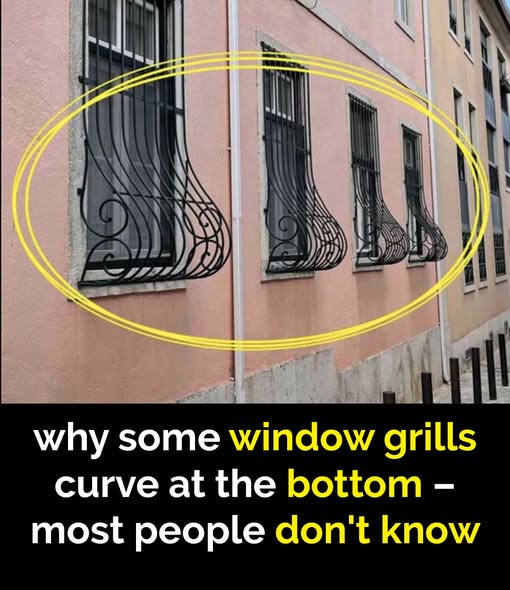
The answer is hiding in plain sight. Those strange, swollen window bars you’ve walked past a thousand times aren’t a quirky design mistake — and they’re far more than decoration. They tell a story about safety, survival, and quiet ingenuity that most passersby will never notice. Behind that subtle outward curve lies an entire history of adaptation, urban life, and practical beauty. Once you understand who relied on them, why they became common in older neighborhoods, and how they evolved over time, you’ll never see those potbelly bars the same way again.
They began as a blunt instrument of protection. In crowded cities where brick and glass offered little defense, homeowners needed something stronger, something solid enough to keep intruders out. Early bars were simple, straight, and purely functional: lines of iron bolted into frames, unyielding and forbidding. But life in apartments and row houses demanded more. Space was limited, air circulation poor, and every window became both a potential vulnerability and a potential resource. Enter the potbelly curve — a subtle bulge that transformed a flat barrier into a multi-purpose tool. That outward curve created a cradle, a small but functional ledge that could hold flower boxes, giving residents a way to bring life, color, and nature into otherwise tight urban spaces. It could support bulky window air conditioners, too, making sweltering summers more bearable without sacrificing precious interior floor space. In one small curve, the city found a compromise between security, comfort, and practicality.
Over time, these bars became more than utilitarian. They evolved into a quiet language written on facades. The outward curve became a signal: this home is guarded, yet not closed off; protected, yet still reaching for beauty. Neighborhoods began to take on their own character, with potbelly bars signaling a lived-in, cared-for home, rather than one abandoned or forgotten. Artisans experimented with subtle flourishes, from scrollwork to geometric patterns, creating a sense of style that softened the bars’ defensive purpose. Residents learned to decorate the cradles with seasonal flowers, herbs, or small potted plants, turning something designed for survival into a statement of personality and resilience.
Even today, choosing potbellied bars is about more than metal and screws. It is a decision that balances safety with aesthetics, space with comfort, and function with flair. The curve itself — so simple, so overlooked — changes how a building feels from the street. It makes an apartment look inhabited, loved, and considered. It demonstrates a history of thinking ahead, of turning constraints into opportunities, of blending necessity with elegance. Walking past them now, each bar tells a story: of summers made cooler, of neighborhoods kept safe, of lives that insisted on beauty even in the smallest, most practical ways.
The next time you pass one of these potbelly bars, take a moment to look closer. See the subtle bulge, imagine the flowers that may have bloomed there, or the air conditioner humming in relief. Behind that simple curve is a lesson in ingenuity and resilience, a reminder that even something designed to protect can also nurture and inspire. What once seemed purely functional becomes quietly remarkable once you understand its purpose — and once you see the life it has supported for generations of city dwellers.