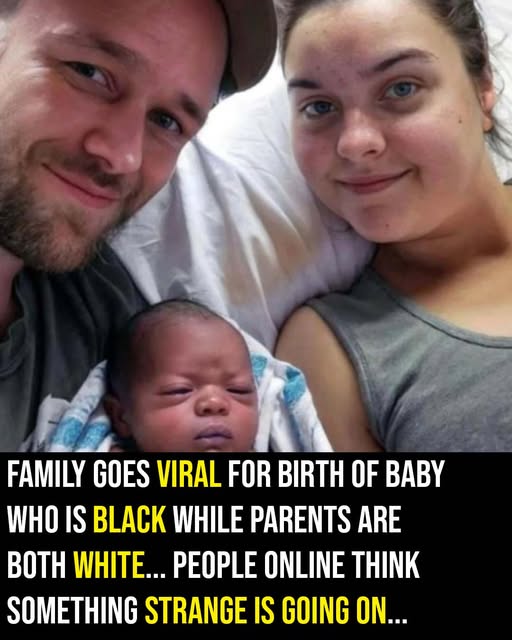
The truth detonated like a bomb in the quiet of social media. What began as a simple Facebook birth announcement—meant to celebrate a new life, to share joy with friends and family—mushroomed into a nationwide spectacle in mere hours. Strangers, armed with nothing but curiosity and cruelty, began mocking, speculating, and turning the intimate details of a young family’s life into public entertainment. Memes appeared, comments piled up, and talk-show hosts dissected every detail, as if a simple birth could be turned into an episode of high-stakes drama. Within a single day, what was meant to be a moment of joy became a trial by internet fire, and the family at the center of it felt exposed, vulnerable, and profoundly misunderstood.
Then came the Steve Wilkos DNA results, a twist that propelled the story further into the surreal. Rachel’s insistence—that an ex’s DNA could somehow “lay dormant” until colliding with Covid—met the hard wall of scientific reality. The test was clear: Paul was not the biological father. Yet in the chaos of public mockery, of late-night jokes and relentless commentary, one quiet decision rose above the noise. Paul made a choice that spoke louder than any headline: he stayed. He chose the crying infant, the nightly feedings, and the fragile new family over his bruised pride, over the sting of humiliation, and over the judgmental eyes of millions. While strangers debated biology, Paul demonstrated that parenthood is not defined solely by genes—it is defined by presence, by care, and by unwavering commitment.
Rachel, meanwhile, faced her own reckoning. She walked away from her job with only a hundred dollars in her pocket, but she carried something far heavier: a lifetime of scrutiny and judgment from people who had never stepped into her shoes. Every post, every meme, every gossip-laden news clip became a subtle reminder of the price of public life in the age of virality. The truck stop, in its Maury-style final statement, delivered a punchline that made people laugh, but behind the humor lies a starker reality: biology may answer a single question, but it cannot measure the quiet, enduring work of love.
Cash, the infant at the center of it all, will one day grow up and learn this story. And when that day comes, the truth that will matter most is not the science of who shared his DNA, nor the spectacle of strangers’ opinions. What will resonate is the decision of a man who chose love, consistency, and devotion over humiliation and public opinion. It’s the story of a family tested by scrutiny, ridicule, and relentless questioning, yet held together by choices that speak louder than bloodlines.
In a world obsessed with genetic proof, viral fame, and instant judgment, the narrative that endures is the one defined by heart. This family survived not because the world got it right, but because Paul stayed, because Rachel continued to love, and because, in the quiet moments beyond the memes and the cameras, a child was cradled in arms that would never abandon him. The lesson is simple yet profound: the measure of family is not in DNA alone, but in the courage to remain, to nurture, and to love when the world is laughing.