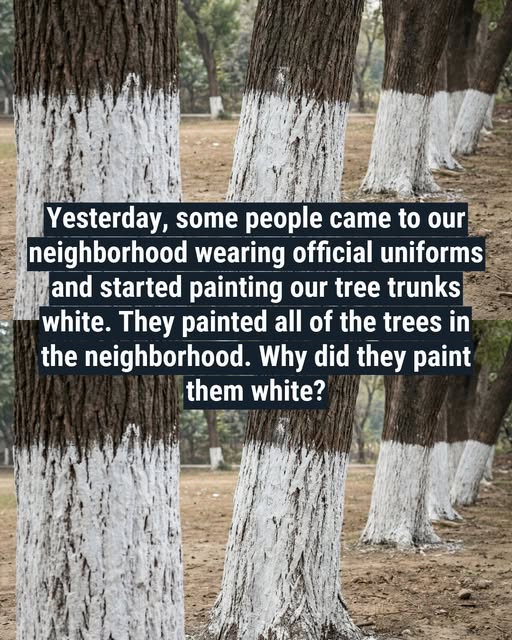
If you’ve ever passed by a large orchard or a carefully maintained garden and noticed trees with their lower trunks painted white, you might have thought it was just for decoration or marking purposes. In reality, this practice has a very important function in tree care. Known as trunk whitewashing, it is a protective technique used to defend trees from serious damage, especially during winter.
The main issue it prevents is something called sunscald. In cold months, trees go into dormancy to survive freezing temperatures. However, on bright winter days, the dark bark—particularly on young or thin-barked trees like maples and fruit trees—absorbs sunlight and warms up. This can cause the tree’s tissues to become active again. When temperatures suddenly drop at night or during a cold snap, those active cells freeze quickly, leading to cracks and damage in the bark. These injuries expose the tree to diseases and pests.
Applying white paint to the trunk, especially on the sides most exposed to sunlight, helps prevent this problem. The white surface reflects sunlight, keeping the bark at a more stable temperature and avoiding the cycle of warming and rapid freezing that causes damage.
The method itself is simple but effective. Experts avoid oil-based paints because they can block the tree’s natural pores and cause harm. Instead, water-based latex paint is used, usually diluted with water to make it less dense. Some growers enhance the mixture with additional materials to create a thicker coating that also helps protect against insects that might lay eggs in the bark. The paint is typically applied by hand with a brush to ensure it reaches all the small cracks and surfaces.
While there are many markings used on trees for different purposes, a white-painted trunk is a clear sign of protection. It shows that someone is actively caring for the tree and helping it survive harsh conditions. This simple practice can make a big difference, especially for young trees facing extreme weather and pests.
In the end, a white trunk is more than just a visual detail—it reflects knowledge and care. By protecting trees from winter damage, this method helps ensure they remain strong, healthy, and productive for years to come.