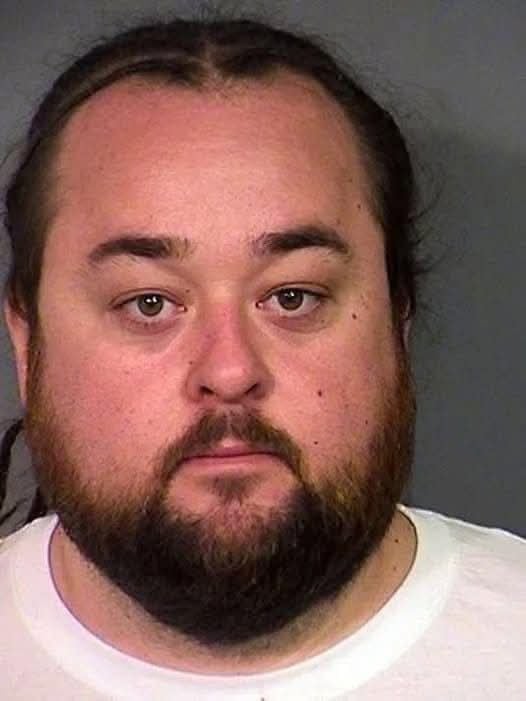
For years, Austin ‘Chumlee’ Russell was the easygoing heartbeat of Pawn Stars—the guy who turned oddball finds into unexpected wins while absorbing jokes from Rick Harrison behind the counter of the Gold & Silver Pawn Shop. On screen, everything was negotiation, humor, and second chances. Off screen, the stakes have become far more serious—and far less scripted.
His current situation revolves around a legal case tied to a police raid that brought allegations involving weapons and controlled substances. Now, instead of bargaining over collectibles, Chumlee is facing a very different kind of deal—one that could shape the next several years of his life.
At the center of it is a plea agreement. Under its terms, he would plead guilty to a reduced charge related to attempted possession of a controlled substance. In return, more severe felony charges would be held back—conditionally. On paper, it looks like an opportunity: avoid prison, enter treatment, complete probation, and move forward.
But the reality is far more fragile.
The agreement reportedly comes with strict conditions: a multi-year probation period, mandatory treatment, and zero tolerance for violations. Any misstep—a failed drug test, a new legal issue, even a technical violation—could trigger the reinstatement of the more serious charges. And those carry the possibility of significant prison time.
So while it may appear to be leniency, it functions more like a narrow path. One that requires consistency, discipline, and a complete shift in lifestyle.
For someone whose public image has long been built on humor and spontaneity, that shift is not small. It means stepping away from the persona people recognize and into a version of life that demands structure and accountability—often away from the spotlight.
Cases like this also tend to expose a broader reality about fame, especially in the world of reality television. What audiences see is curated—entertaining, fast-paced, and often lighthearted. What they don’t see are the pressures, environments, and personal struggles that can exist behind the scenes.
For Chumlee, this moment isn’t about television anymore. It’s about outcome.
If he successfully completes the terms—stays compliant, finishes treatment, avoids any violations—there’s a possibility of closing this chapter without long-term legal consequences. If not, the consequences escalate quickly.
That’s what makes this situation different from anything viewers saw on screen. There’s no negotiation, no counteroffer, no clever deal-making to soften the terms.
Just a single, difficult question:
Can he follow through?
Because in this case, the value of the deal isn’t measured in profit or loss—
It’s measured in freedom, and what he does next will determine whether this becomes a turning point or a final warning.