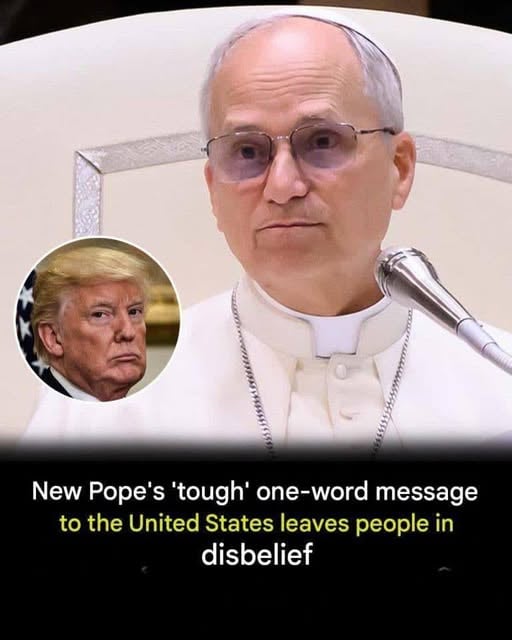
In an era defined by deafening political noise and endless digital shouting matches, it took a single, monosyllabic utterance from the Vatican to stop the United States in its tracks. Pope Leo XIV, the first Chicago-born pontiff, is no stranger to blunt, unsparing statements—but his latest comment, one word that has since gone viral, proved that sometimes the loudest message is the briefest. When asked to summarize his view of the American soul, he said only: “Many.”
At first glance, the word seems cryptic, almost casual. Yet for millions grappling with a fractured social landscape, it felt like a mirror. Many political cruelties, many instances of faith weaponized to exclude, many forgotten migrants and citizens left to struggle in the shadows of the American Dream. In that single syllable, Leo XIV cataloged a nation’s wounds.
The resonance of the word is inseparable from the man who spoke it. Unlike distant foreign dignitaries, Pope Leo XIV understands the rhythm of the American street. He has challenged U.S. leaders on immigration, human dignity, and the moral cost of apathy. His “Many” was not a shrug—it was a summons, a quiet indictment demanding attention to the individuals behind the numbers.
Yet even as the nation paused to consider the weight of his critique, the Pope offered a counterbalance: “God bless you all.” In four words, he framed his papacy: fierce honesty married to unwavering love. Critique and compassion are inseparable in his vision.
He does not seek humiliation. He seeks accountability. He calls the United States to reconcile its ideals with its realities, to confront injustice not as a distant observer, but as a brother, a shepherd, a participant.
Across social media feeds and dinner tables, the word continues to reverberate. Many is more than diagnosis—it is invitation. Invitation to see, to act, to heal. Pope Leo XIV has signaled clearly that he will not watch silently. He is betting on the American spirit, trusting that when a nation finally confronts its reflection, it will have no choice but to choose mercy over fear.