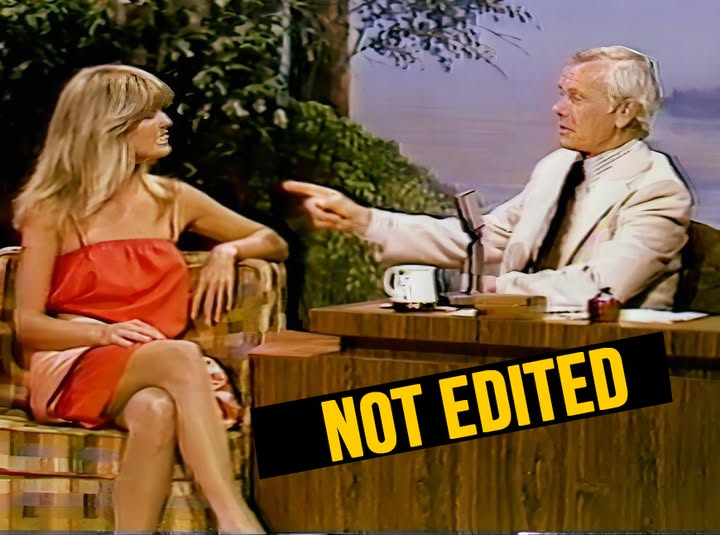
In the 1970s, Farrah Fawcett was more than a television star; she was a cultural phenomenon, her image etched into the collective American consciousness. Long before the era of viral social media, Farrah’s face was the silent guardian of millions of bedroom walls. As the golden-haired standout of Charlie’s Angels, she radiated a sun-drenched, effortless glamour that defined a decade. Yet beneath the feathered hair and dazzling smile was a woman caught between the pull of traditional values and the relentless demands of Hollywood.
Farrah’s journey began far from the bright lights of Los Angeles. Raised in a devout Catholic household in Texas, she was a woman of deep, quiet faith—so much so that she briefly considered becoming a nun during adolescence. This spiritual foundation created a lifelong tension. While fiercely independent and ambitious, a part of her resonated with her mother, Pauline—a woman who found genuine peace in domestic joys like cooking and cleaning. This grounding made her meteoric rise all the more jarring.
The spark that launched her global celebrity wasn’t a film or a script—it was a single photograph. The legendary red swimsuit poster, shot by Bruce McBroom, became the best-selling poster of all time. Farrah’s instincts shaped the image; when the studio pushed for a bikini, she insisted on her one-piece suit. That choice transformed a simple pin-up into an enduring symbol of wholesome Americana. Yet, she grew frustrated with the very image that made her famous. After only one season of Charlie’s Angels, she walked away from a ratings juggernaut, risking the wrath of an industry that labeled her a “TV sex symbol” rather than a serious actress.
In the decades that followed, Farrah fought to prove her depth. She earned critical acclaim in intense, gritty roles like Extremities, replacing the “Farrah Flip” with scripts that challenged public perception. Behind the scenes, she found solace in fine art, becoming a serious sculptor under the mentorship of Charles Umlauf. Her personal life—marked by a high-profile marriage to Lee Majors and a long, tumultuous relationship with Ryan O’Neal—was constantly dissected by tabloids, yet she guarded her inner world fiercely.
The final chapter of Farrah’s life revealed her extraordinary courage. Diagnosed with cancer in 2006, she made the staggering choice to document her battle. The woman who had spent her life as a symbol of carefree perfection allowed the world to witness her at her most vulnerable. According to her physicians, she fought the disease with relentless, quiet determination, shocking those who only knew her from television roles.
Farrah Fawcett passed away in 2009 at 62, leaving behind a legacy that transcends pop culture. She navigated the impossible transition from poster on a wall to human being with visible scars and immense grit. She proved that while beauty might open doors, character and the courage to be unguarded endure far longer. Farrah began as an angel, but she finished as a warrior—her most enduring beauty not the hair or the smile, but the heart that refused to be confined.