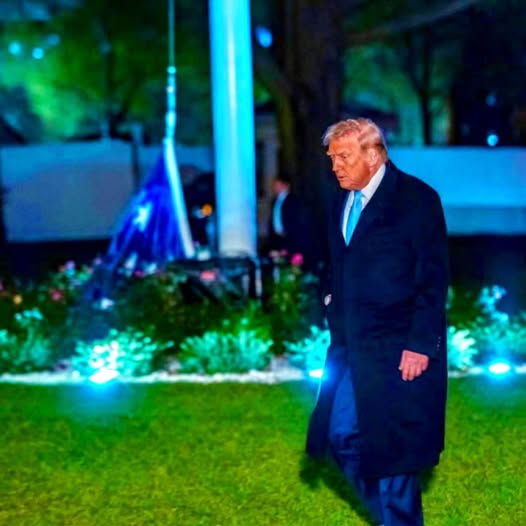
A new series of legal challenges has once again placed Donald Trump at the center of a critical moment in the United States—one that could have long-term effects not only on his personal future, but also on the country’s political and legal systems.
These latest charges go beyond routine controversy. They touch directly on how democratic institutions operate, raising important questions about the limits of political authority and the importance of accountability. The case includes serious allegations such as conspiracy to defraud the United States, obstruction of an official proceeding, and interference with constitutional rights—claims that carry major legal and historical significance if proven.
Unlike political debates driven by public opinion, this situation has clearly shifted into the legal arena. Here, arguments will be tested through formal judicial procedures, where evidence, legal precedent, and constitutional interpretation will shape the outcome—not campaign messaging or media narratives.
The indictment presents a wide-ranging account of alleged actions that prosecutors argue undermined core democratic processes. While the details will be challenged in court, the scale of the accusations shows this is far from a minor issue. It directly relates to election integrity, the peaceful transfer of power, and the responsibilities tied to holding the highest office in the country.
Legal experts note that cases of this magnitude are highly complex. They involve not only disputes over facts, but also deeper constitutional questions that could influence how presidential power is interpreted in the future. In this way, the case is not just about determining guilt or innocence—it may help define the boundaries of executive authority for years to come.
Public reaction remains deeply divided. Supporters of Trump often see the charges as politically motivated, reinforcing concerns about bias and institutional overreach. Critics, on the other hand, view the case as an essential step toward accountability, emphasizing that no one should be above the law. This divide reflects broader tensions in the country regarding justice, governance, and trust in institutions.
As the process moves forward, the courtroom becomes the central stage. Unlike politics, where perception can dominate, the legal system requires evidence-backed claims and arguments that withstand scrutiny. Decisions will ultimately rest with judges and possibly juries, shifting the focus away from public debate to legal determination.
The timeline for such proceedings is typically long and detailed. Pretrial motions, hearings, and procedural steps are necessary to ensure fairness and accuracy. While this pace may feel slow, it reflects the seriousness of handling a case with national importance.
Media coverage and public discussion have grown rapidly, with analysts and commentators offering various interpretations. Social media has further amplified these conversations, often mixing verified information with speculation. In such an environment, distinguishing facts from opinion becomes increasingly important.
For the public, this case highlights the complex relationship between politics and the legal system. Democracies depend on both, but tensions can arise when legal accountability intersects with political power. Situations like this force a broader conversation about where those boundaries should lie.
At the same time, the principle of due process remains essential. These charges are still allegations, not final conclusions. The presumption of innocence is a core part of the legal system, ensuring that outcomes are based on evidence examined in court—not on public opinion.
Beyond the immediate legal battle, the potential impact is significant. The outcome could influence how future leaders approach their authority, how laws are interpreted, and how the public views accountability at the highest levels of government.
The case also underscores the importance of strong institutions. Courts and legal systems are designed to operate independently, providing stability and a structured way to resolve disputes—even in highly sensitive situations. Their role in cases like this is critical for maintaining public confidence.
As developments continue, each step—whether filings, hearings, or rulings—will be closely watched. The level of attention reflects just how important the issues are, both legally and politically.
In moments like this, patience is key. The legal system prioritizes fairness and accuracy over speed, and allowing it to function properly means waiting for all evidence to be presented and reviewed.
For now, the situation remains ongoing. What is certain is that this case represents a defining moment—not only for Donald Trump, but for the broader discussion about power, responsibility, and accountability in the United States.
The final outcome will likely leave a lasting impact, shaping how future generations understand the balance between leadership and the rule of law.