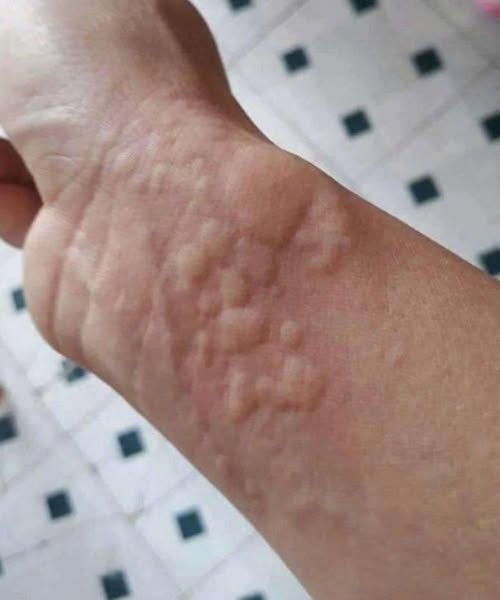
Most people dismiss it at first. A red welt on an arm, a suddenly itchy patch on the neck, a strange rash that seems to appear out of nowhere—small annoyances that are easy to brush off. But sometimes, those seemingly minor symptoms are not just skin-deep. When they arrive alongside even the slightest difficulty breathing, a tightness in the chest, or a swelling of the lips and face, the body is sending a loud, urgent alarm that cannot be ignored. Especially after the age of 60, these signs can escalate far faster than you imagine, turning a brief discomfort into a life-threatening emergency in minutes.
Hives, medically known as urticaria, may appear superficial, like a cosmetic nuisance, but in some situations they are the skin’s way of signaling a much deeper crisis within the immune system. When hives are accompanied by throat tightness, wheezing, dizziness, or swelling of the tongue, the body is often entering anaphylaxis—a severe, full-body allergic reaction that can progress rapidly. Unlike typical allergic responses, which people may tolerate for years without issue, anaphylaxis can strike suddenly and without warning. A food you have eaten hundreds of times, a medication you have taken safely, or even a familiar environment can trigger a violent reaction, because the immune system is capable of changing quietly over time. Age, cumulative exposures, and underlying health conditions can all make the body more sensitive to what was once harmless.
In these critical moments, hesitation can be deadly. Even if the rash looks small or the discomfort seems mild, it is vital to act quickly. Calling emergency services immediately, administering a prescribed epinephrine auto-injector if available, and treating any breathing difficulty as urgent are not overreactions—they are lifesaving measures. Waiting to see if the symptoms “pass” can allow the reaction to progress, potentially shutting down airways or sending the cardiovascular system into shock. After 60, when the body’s resilience may be reduced, recognizing these warning signs and responding without delay is not paranoia—it is wisdom born of experience.
Understanding the gravity of these symptoms also means knowing the early signals. Flushed skin, raised itchy patches, tingling lips, sudden dizziness, or a sense of impending doom can all precede the more dramatic stages of anaphylaxis. Educating friends, family, and caregivers about the urgency of these signs ensures that someone can respond even if the person affected is unable to call for help themselves. Awareness is the first line of defense, and preparation—the presence of an auto-injector, clear emergency contacts, and a plan for rapid response—is the second.
Every hives outbreak accompanied by respiratory changes should be treated as a warning, a call to action rather than a nuisance to ignore. These moments demand attention, respect, and swift intervention. Sharing this knowledge may save a life. You cannot always prevent the reaction, but you can prepare to survive it. Listening to your body, trusting its warnings, and responding immediately is an act of care and courage, particularly for those entering their later decades. In these situations, wisdom is not measured by avoidance of risk but by the decisiveness with which one meets it—and in the case of sudden hives with breathing difficulty, decisiveness can be the difference between tragedy and survival.