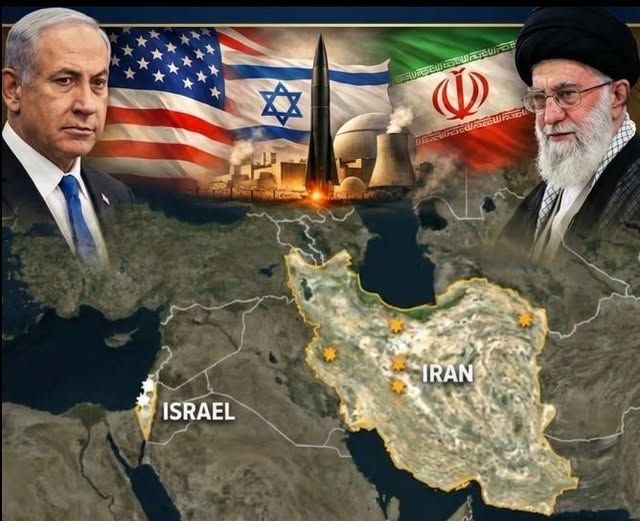
A storm of fire nearly ignited the world’s most strategically sensitive chokepoint, bringing into stark relief how fragile global stability can be. What began as a routine U.S. naval transit through the Strait of Hormuz—an artery through which a significant portion of the world’s oil flows—reportedly escalated in a matter of minutes into a tense exchange of missiles, countermeasures, and retaliatory strikes. Global markets froze, war rooms lit up with flashing alerts, and analysts around the world whispered a single, urgent word: escalation. The distance between measured restraint and open catastrophe shrank to an almost invisible line, and for those watching in real time, the stakes could not have been clearer: one misstep here might have sparked a conflict whose consequences would be felt for decades.
On March 1, 2026, the familiar choreography of patrols, warnings, and routine surveillance that had long characterized the Strait of Hormuz appeared, for a brief but intense moment, to collapse under the raw mechanics of modern warfare. Anti-ship missiles reportedly arced off the Iranian coastline, their trajectories traced against the dawn sky, while U.S. interceptors tore upward at supersonic speeds to meet them in midair. Electronic warfare systems strained to disrupt hostile radars, emitting pulses designed to blind sensors and break the delicate calculus of targeting. Every maneuver—every launch, every countermeasure—was executed in seconds, yet each carried implications that could ripple across the region for years to come. That no U.S. ship was struck does little to diminish the severity of the encounter. The mere fact that these unspoken rules of engagement were tested so openly revealed just how thin the line is between disciplined restraint and a conflagration that could engulf the region.
The swift American counterstrikes on suspected launch sites further underscored the dual nature of modern military capability: power and peril are inseparable. Each radar installation silenced, each missile battery destroyed, served as both a demonstration of technological precision and a stark reminder of how quickly hostilities can spiral out of control. For military strategists and political leaders alike, the question lingers: how close did the Strait of Hormuz come to becoming the flashpoint for a broader war? In such a narrow corridor, where shipping lanes are hemmed in by geography and geopolitical tensions run high, miscalculation is not a theoretical risk—it is a constant, looming shadow. A single radar misread, a delayed communication, or an unintended interception could have turned this tense standoff into a full-scale confrontation, with consequences that would have reverberated far beyond the Persian Gulf.
Beyond the immediate military implications, the incident will almost certainly be dissected for years in war colleges, think tanks, and foreign ministries worldwide. Analysts will not view it as an isolated clash but as a cautionary tale about the fragility of routine in zones of strategic pressure. Every strike, every defensive maneuver, and every calculated pause will be scrutinized, both as a measure of human decision-making under pressure and as a warning about the thin thread by which regional stability hangs. The incident also casts a light on the larger question of leadership under fire: whether global leaders treat this confrontation as a critical lesson in brinkmanship or whether it becomes a prelude to further, potentially irreversible escalations. The Strait of Hormuz, a narrow waterway often taken for granted as a routine passage, has reminded the world once again that the rules of engagement are delicate, and that the price of error can be unimaginably high.
In the days and weeks that followed, the shadow of that morning lingered across international capitals. Diplomats scrambled to reaffirm lines of communication, military planners reviewed contingency operations, and energy markets reacted nervously to the heightened risk of disruption. The incident served as a stark reminder that the world’s reliance on narrow chokepoints carries inherent vulnerability. In an age where speed, technology, and rapid decision-making dominate warfare, the difference between routine and crisis can be measured in heartbeats. For the nations that rely on the Strait of Hormuz—whether for oil, trade, or strategic presence—the events of March 1, 2026, will remain a warning: stability is never guaranteed, and vigilance is the price of survival in a world where the margin between peace and war can disappear in an instant.