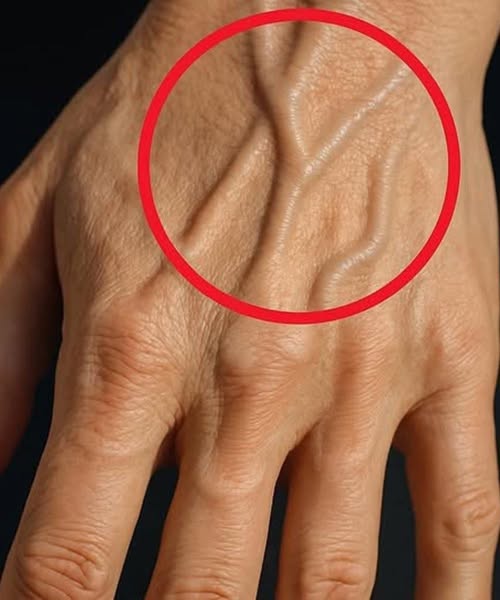
Human hands are often described as maps of our lives, bearing the marks of labor, age, and unique genetic history. Yet in the digital age, they have also become a source of health anxiety. Many people notice that the veins on the backs of their hands appear more prominent, blue, or bulging than before, prompting frantic online searches. A common myth links visible hand veins to declining kidney function or other filtration issues. While curiosity about bodily changes is natural, it’s crucial to distinguish between normal anatomical variation and genuine medical warning signs. According to clinical research in 2026, visible hand veins almost never indicate organ failure; they simply reflect the ways our bodies adapt over time, environment, and lifestyle.
Veins become noticeable primarily due to the structure of the hand. The skin on the back of the hand is naturally thin. Beneath it lies a layer of subcutaneous fat, which cushions and obscures the vascular network. With age, two things happen: the skin loses collagen and elastin, becoming more translucent, and the fat layer diminishes. Without this “padding,” veins naturally rise closer to the surface. This benign process, sometimes called senile purpura or skin atrophy, carries no diagnostic weight regarding internal organ health.
Body composition and genetics also play key roles. People with lower body fat, particularly athletes or those with lean “ectomorph” body types, often have highly visible veins. In fitness circles, this is referred to as vascularity and signals low subcutaneous fat, not a medical concern. Genetics influence vein size and depth just as they determine eye color. If your parents had prominent hand veins, chances are you will too. This is hereditary architecture, not a warning from your filtration system.
Environmental and physiological factors further affect vein prominence. Heat—whether from a summer day or a hot shower—causes vasodilation, bringing blood closer to the skin’s surface to release heat. Intense exercise increases blood flow to the extremities, swelling the veins. Even mild dehydration reduces tissue fluid, “shrink-wrapping” the skin around veins and making them appear more prominent. None of these situations indicate organ failure; they simply reflect a responsive vascular system.
To debunk the myth linking veins to filtration, it’s important to understand how kidneys signal distress. When filtration declines, the body usually retains fluid (edema), not loses it. Hands, feet, and face become swollen, which actually hides veins rather than makes them more visible. If you’re concerned about kidney health, disappearing veins combined with swelling are far more relevant indicators than veins that are clearly visible.
[Image illustrating the difference between a hydrated hand with visible veins and an edematous hand where veins are obscured by swelling]
Real warning signs of compromised filtration are systemic. Clinicians look for persistent fatigue from waste accumulation, changes in urination (reduced output or foamy urine indicating protein leakage), elevated blood pressure, shortness of breath, nausea, or a metallic taste in the mouth. Prominent hand veins are not part of any professional diagnostic criteria for kidney or liver health.
There is one medical context linking veins and filtration: patients with advanced kidney failure requiring dialysis often have an arteriovenous (AV) fistula. This surgical connection between an artery and a vein—usually in the arm—forces the vein to enlarge to accommodate dialysis needles. These veins are exceptionally prominent, but this is a treatment effect, not a natural symptom in a healthy person.
The most reliable way to monitor organ health remains objective testing. Standard blood panels measure creatinine and calculate the Glomerular Filtration Rate (GFR) to gauge kidney efficiency. Urinalysis detects protein or blood early. These tests provide clarity that visual inspection cannot.
When should you pay attention to your hands? While visible veins are harmless, other changes can signal vascular—not filtration—issues. Sudden pain, extreme cold or heat in the skin, or color changes to deep purple or white may indicate circulatory conditions like deep vein thrombosis or Raynaud’s phenomenon and require a vascular specialist.
In conclusion, the appearance of your hands reflects your exterior, not your internal systems. Visible veins are a normal part of life, shaped by age, activity, and environment. By focusing on evidence-based health markers—blood pressure, energy levels, lab values—you can navigate wellness with confidence. Your hands tell the story of a life lived, not of a failing organ.