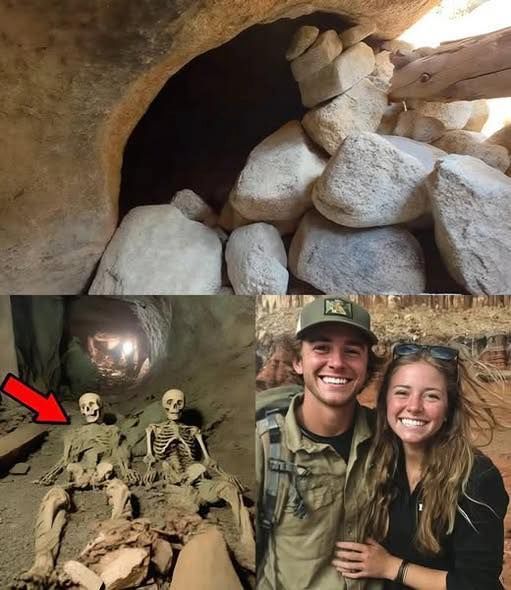
The desert is known for keeping secrets. Its vast stretches of red rock and drifting sand can hide traces of human stories for years, sometimes decades, until time or chance finally reveals what has been buried. In the remote San Rafael Swell region of Utah—an isolated landscape filled with deep canyons and the remnants of an old mining industry—one such mystery remained unsolved for nearly eight years. The disappearance of John and Melissa Carter in 2017 troubled both investigators and the local community, becoming one of those cases that seemed destined to remain forever unresolved. But in early 2025, a discovery in the Temple Mountain area finally brought the couple’s story back into the spotlight and launched a new investigation into what might have happened inside a long-abandoned uranium mine.
John and Melissa Carter were not inexperienced travelers. They were known among friends as adventurous explorers who enjoyed visiting remote wilderness locations. Their trip in 2017 was meant to be another ordinary outing, this time to the Temple Mountain region, an area once famous for uranium mining during the mid-20th century. When the couple failed to return from the trip, search teams quickly organized a large operation. Volunteers, rescue crews, and law-enforcement officers searched across miles of desert terrain, using both ground patrols and aircraft. Eventually their vehicle was located parked along a quiet trail, far from populated areas. Inside the truck were their camping supplies and personal belongings, untouched, suggesting they had stepped away only briefly for a hike. Despite the extensive search, no other trace of the couple could be found. As weeks turned into months, investigators were left with no solid clues, and the case gradually grew cold.
For years afterward, the disappearance of the Carters remained one of Utah’s lingering mysteries. Files related to the case were stored among other unsolved investigations, serving as a reminder of how harsh and unpredictable the desert environment can be. That situation changed dramatically in 2025, when a group of geological survey workers were conducting research near the same Temple Mountain area. While examining old mining structures, they noticed something unusual at the entrance of a mine shaft that had supposedly been sealed since the 1980s. The barrier appeared damaged or altered in a way that suggested someone had interfered with it. When the surveyors looked closer, they suspected the closure had been tampered with and contacted authorities.
When officials investigated the site and entered the shaft, they made a grim discovery. Deep inside the mine, John and Melissa Carter were found seated beside each other against the rock wall. The scene was strangely orderly. There were no obvious signs of panic or struggle that might normally accompany an accident. Nearby were a few personal items—such as a backpack, flashlight, and other small supplies—placed as though the couple had simply paused to rest. However, the early forensic findings suggested that the situation might not have been accidental. Preliminary toxicology results reportedly revealed traces of sedative substances in their bodies. This detail immediately shifted investigators’ focus toward the possibility that someone else had been involved.
Because the mine had officially been closed for decades, the condition of its entrance became a crucial part of the investigation. Records showed that the shaft had been permanently sealed years earlier as part of safety measures related to abandoned uranium mines. If the barrier had indeed been reopened and later resealed, it raised serious questions about when this occurred and who might have done it. Investigators also noted unusual markings carved or scratched into the walls near the entrance and footprints preserved in the dust that did not match the boots worn by the Carters. These additional clues suggested the presence of at least one other person in that remote location.
The case also drew attention to a larger issue across the western United States: the thousands of abandoned mines scattered throughout desert landscapes. Experts estimate that Utah alone contains more than 15,000 such sites. Many were created during the uranium boom of the Cold War era and later abandoned, often with limited documentation or monitoring. These mines can form complex underground tunnels that are dangerous and difficult to access. In the Carter case, the mine had effectively hidden what happened for years, concealed within a landscape already filled with forgotten industrial relics.
For the Carter family, the discovery brought mixed emotions. On one hand, the painful uncertainty that had lasted nearly eight years finally came to an end. On the other, it introduced a new phase of grief and a long search for answers. The family has largely avoided public statements, instead asking investigators to carefully reconstruct the events surrounding the couple’s disappearance. The central question remains unresolved: were John and Melissa victims of an unfortunate encounter with someone living or hiding in the remote desert, or were they intentionally targeted for reasons still unknown?
The presence of sedatives and the carefully arranged appearance of the scene have prompted some experts to consider the possibility of planning or deliberate action. The San Rafael Swell is vast and sparsely populated, a place where someone could easily avoid attention. Its maze of canyons and hidden pathways makes it attractive to explorers but also difficult for law enforcement to monitor. Because of these factors, investigators are reviewing whether other missing-person cases in the region might be connected in some way.
From a forensic standpoint, the investigation is complex. The dry desert environment can preserve evidence surprisingly well, but determining exactly what happened after so many years requires careful scientific analysis. Specialists in fields such as forensic geology and entomology may examine everything from dust patterns to environmental conditions inside the mine. Each piece of evidence—from footprints to wall markings—could help establish a timeline of events. The involvement of federal authorities suggests that the case may involve elements that extend beyond local jurisdiction.