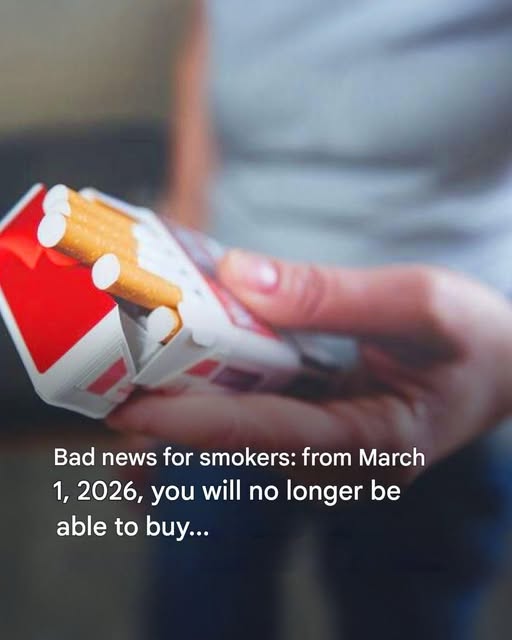
The economic landscape of tobacco in France has undergone a profound and far-reaching transformation over the past decades, evolving from a casual consumer habit into a significant financial burden that now dictates the daily budgets of millions of citizens. By 2026, purchasing a pack of cigarettes is no longer an impulsive or reflexive act; it has become a highly calculated economic decision that weighs on household finances with real, tangible consequences. What was once a minor line item in a family’s expenses has become a major driver of financial strain, with the average price of a single pack now hovering between €12.50 and €13.00. This shift is not simply the result of market forces, inflation, or production costs—it is the product of a deliberate, long-term political strategy, executed over multiple decades, designed to use fiscal pressure as a primary instrument for public health policy.
To fully understand the present pricing structure, one must dissect what could be called the “anatomy of a cigarette pack.” In the French market, the price paid by consumers is a complex mosaic, composed of state taxes, manufacturer margins, and commissions to tobacconists, or “buralistes.” Approximately 75% to 80% of the retail price of a pack is made up of government-imposed taxes, which include the Consumption Tax on Tobacco (Droit de Consommation) and the Value Added Tax (VAT). Consequently, when a smoker pays €13 for a pack, nearly €10 is directly funneled into the state treasury. The remaining fraction of the price is divided between the manufacturer—covering production, logistics, and marketing—and the local tobacconist, whose share often accounts for less than 10% of the final price.
This relentless fiscal tightening is rooted in a stark public health reality: every year, smoking-related illnesses claim around 75,000 lives in France. For policymakers, the taxation strategy serves a “double dividend” purpose. On one hand, it generates substantial revenue for the social security and healthcare systems, helping to offset the astronomical costs associated with lung cancer, cardiovascular disease, and respiratory illnesses. On the other hand, it functions as a behavioral deterrent. Economic studies consistently show that a 10% increase in tobacco prices reduces consumption by roughly 4%, with the effect most pronounced among young people and lower-income populations, who are particularly sensitive to price fluctuations.
Since 2023, the French government has streamlined this approach by tying tobacco taxes to inflation. This “automatic pilot” mechanism ensures that the real cost of smoking cannot decline over time due to changes in the value of the Euro. However, this policy has had additional consequences, pushing certain products into the realm of luxury consumption. Rolling tobacco, long considered an affordable alternative for budget-conscious smokers, has seen prices escalate dramatically, with a standard 30-gram pouch now approaching €18.00. This has narrowed the cost difference between “rollies” and factory-made cigarettes, leaving smokers with fewer low-cost options and reinforcing the financial strain on those least able to absorb it.
Domestic pressure is further intensified by a network of social and physical restrictions on smoking. France has become a country where lighting up in public is increasingly restricted. “Tabac-Free” zones have expanded to include public parks, family-friendly beaches, and the immediate vicinities of schools. These regulations are not mere suggestions; they are rigorously enforced. Fines for smoking in prohibited areas, or for the increasingly vilified act of “jet de mégot” (dropping a cigarette butt), can be substantial. Cigarette filters, in particular, have become emblematic of environmental irresponsibility, as a single filter is capable of polluting up to 500 liters of water.
Yet, France’s strict internal policies collide with its position within the European Union, creating unique challenges. Neighboring countries such as Spain, Luxembourg, and Belgium maintain significantly lower tobacco taxes, fostering a robust market for “tobacco tourism.” On any given weekend, French citizens are frequently seen crossing borders to stock up on cartons of cigarettes that cost roughly half as much as they do domestically. While a legal carton in France can exceed €300, the same product just across the border remains an accessible and attractive bargain.
This stark price disparity has fueled not only cross-border legal shopping but also a flourishing illicit market. Smuggling operations, which once consisted of small “suitcase runs,” have evolved into organized criminal networks that transport large quantities of untaxed or counterfeit cigarettes into French cities. The French Customs Office, responsible for ensuring compliance with tax laws, finds itself in a continuous and high-stakes game of cat-and-mouse with these smugglers. This underground economy significantly undermines the government’s public health objectives. When a smoker can purchase a “street pack” for €5, the deterrent effect of a €13 legal pack is effectively nullified. Moreover, illicit cigarettes often evade quality controls, potentially exposing consumers to higher levels of toxins and heavy metals.
The social consequences of this fiscal strategy are equally complex. Smoking is now concentrated primarily within lower-income demographics, meaning that tobacco taxes are highly regressive. For a high-income individual, an additional €2 per pack may be a minor inconvenience; for a minimum-wage worker, it could necessitate sacrificing essential items such as fresh food or healthcare. This has sparked debate over whether the state is genuinely helping people quit or merely taxing addiction. Although subsidies exist for nicotine replacement therapies, such as patches and gums, the path to cessation remains long, difficult, and prone to relapse, leaving many trapped in a cycle of financial and physical strain.
Looking toward the future, the trajectory for tobacco in France is clear: the pressure will continue to increase. New regulations are under discussion, including stricter “plain packaging” laws to diminish the marketing appeal of tobacco and tighter restrictions on electronic cigarettes and vaping devices, which are viewed as potential gateways to traditional smoking. The ultimate public health ambition, as stated by government ministers, is the creation of a “tobacco-free generation” by 2032.
In conclusion, the cost of cigarettes in France stands as a striking symbol at the intersection of economics, public health, and ethics. It represents a deliberate effort by the state to engineer healthier behaviors through financial levers while grappling with unintended consequences such as cross-border smuggling, social inequality, and entrenched addiction. For the smoker, each pack has become both a shrinking luxury and an increasing financial burden. For the government, taxation remains a key instrument for societal transformation. Between these two perspectives lies a nuanced reality: every cent increase embodies the tension between hope for longer, healthier lives and the immediate weight of economic pressure, a tangible reflection of the complexity inherent in public health policy and social justice.