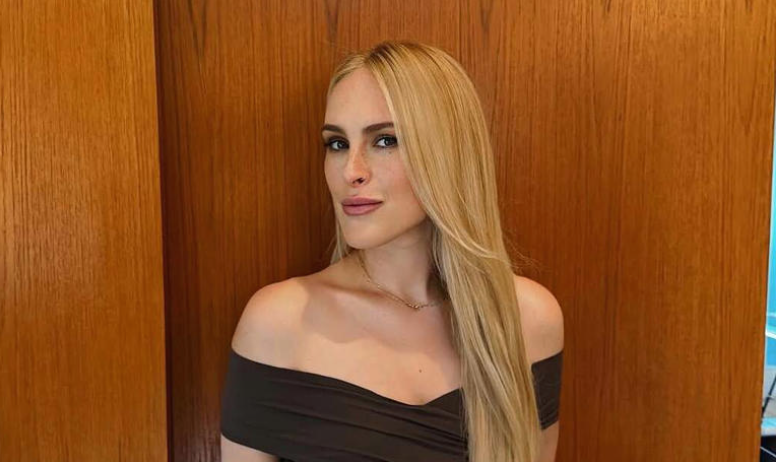
In Hollywood, the children of icons are often presumed to live lives of effortless luxury. For Rumer Willis, the eldest daughter of Bruce Willis and Demi Moore, this assumption has become a point of public debate. As 2026 unfolds, the 38-year-old actress finds herself at the center of a national conversation about the realities of the gig economy, single motherhood, and what it truly means to inherit a “legacy” in the entertainment industry. Through candid social media posts, Willis has challenged the perception that her life is cushioned by trust funds and parental support, instead revealing the demanding professional schedule she maintains to provide for her young daughter.
The controversy erupted after an Instagram post in which Willis shared the challenges of single parenting. What was meant as a gesture of solidarity with other mothers quickly drew criticism. Many pointed to her famous lineage, suggesting her complaints about the “grind” were exaggerated. In response, Willis addressed the issue head-on on February 16 via Instagram Stories, explaining that she currently juggles four different jobs to cover her expenses. While she acknowledges the privilege of her surname, she emphasized that her income is earned through her own work.
“I work four different jobs to provide for my daughter,” she told followers. “I am the sole provider for Louetta. I don’t live off a trust fund or get money from my parents.” Her statement reflects a broader trend among second-generation celebrities who push back against the “nepo baby” narrative. For Willis, the idea that she passively benefits from inherited wealth misrepresents the reality of her career, which involves irregular work, financial uncertainty, and the pressures of managing a household while raising a child.
Willis welcomed her daughter, Louetta, in 2023 with her former partner, musician Derek Richard Thomas. Since then, the responsibilities of being the sole provider have reshaped her life. Childcare support is minimal, making it difficult to maintain a conventional acting schedule. The entertainment industry often demands long hours and last-minute travel, forcing Willis to adopt a “portfolio career” approach, combining acting with brand partnerships, voice-over work, writing, or entrepreneurial ventures to sustain her household.
Her career has always balanced visibility and self-reliance. From debuting with her mother in the 1995 film Now and Then to roles in The House Bunny, Once Upon a Time in Hollywood, and television shows like 90210 and Empire, Willis has proven her versatility. Yet even a successful acting career does not guarantee financial stability in a modern industry with shorter seasons and reduced residuals. The public often sees only red carpet highlights, not the months of auditions, failed projects, and the continuous need to diversify income.
Willis’s defense also challenges assumptions about her work ethic. She highlighted her years acting as the financial anchor not only for herself but for those around her. Raising a daughter as the sole provider has intensified these responsibilities. “How about y’all pause before you judge and assume,” she urged her audience, advocating for a nuanced understanding of wealth, privilege, and self-sufficiency. Having famous parents does not equate to a guaranteed allowance, she stressed, and she is determined to prove her independence.
Her transparency resonates with a broader audience facing the instability of modern work and rising living costs. Even high-profile individuals like Willis contend with childcare expenses and limited corporate benefits, making her “four-job” lifestyle a necessity rather than a choice. In this way, she provides a glimpse into a segment of Hollywood that is recognizable yet still reliant on hustle to maintain a stable life.
The timing of her comments is also notable. Her father, Bruce Willis, has been publicly battling frontotemporal dementia, bringing added scrutiny and emotional weight to the family. Suggesting that Rumer relies on parental resources overlooks the personal and financial labor she contributes. Her insistence on financial independence asserts her capability as a mother and professional amid family challenges.
Culturally, the Willis controversy underscores that celebrity status does not exempt one from the universal struggles of parenthood. Many women worldwide face the pressures of being the sole provider, and Willis’s experience illustrates that even privilege cannot erase the demands of managing multiple jobs and raising a child. By openly confronting misconceptions, she protects her identity as both a worker and a parent.
As she continues to balance her career and raising Louetta, Rumer Willis embraces radical honesty. By challenging uninformed assumptions, she is redefining what it means to inherit a “Willis” legacy in the 21st century. Her narrative emphasizes not what is given, but what is earned. Through her four jobs and devotion to her daughter, Willis is creating a story of self-reliance that she hopes will become Louetta’s true inheritance.