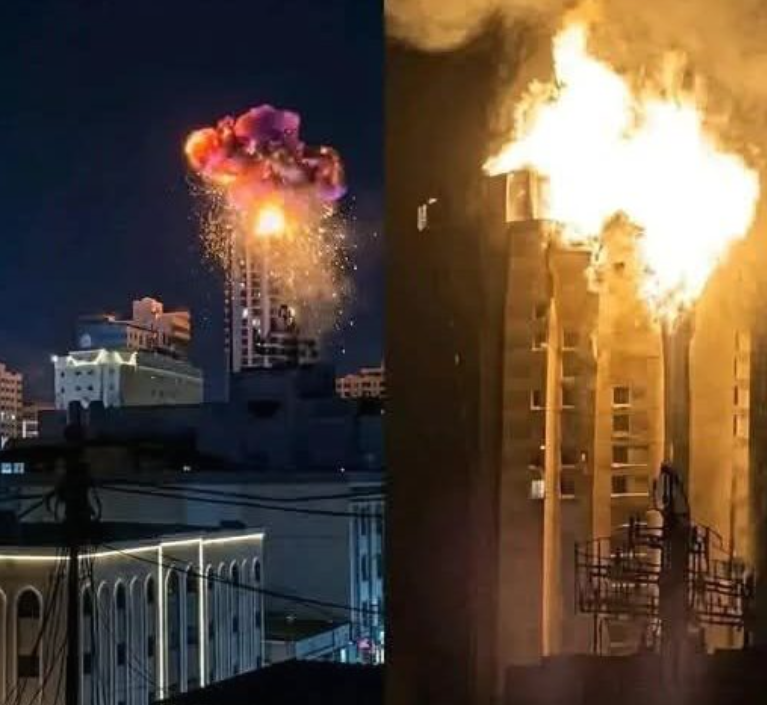
In the opening days of March 2026, the global community found itself gripped by a historic period of heightened tension, a time when the delicate balance of international relations seemed to teeter on the edge of instability. The catalyst for this unease was a series of rapid, high-stakes reports regarding military escalations in the Persian Gulf—a region long viewed as both strategically indispensable and perpetually volatile. Analysts, journalists, and government officials alike struggled to discern the “light of truth” in an environment dominated by instant digital commentary, where social media speculation raced far ahead of formal confirmation from defense ministries and official channels. According to preliminary reports circulating as early as March 1, 2026, a coordinated effort allegedly involving four regional powers had targeted several critical United States military installations across the Gulf. While the precise origins and motives of the purported attacks remained unclear, claims focused on ballistic missile strikes aimed at strategic hubs, including Al Dhafra Air Base in the United Arab Emirates, Al Udeid Air Base in Qatar, and the headquarters of the U.S. Fifth Fleet in Bahrain.
The gravity of such claims cannot be overstated. A multi-front assault on these key facilities would represent a profound escalation of regional conflict, effectively transforming abstract geopolitical anxiety into a tangible, immediate threat. The “active awareness” of the global community shifted overnight, with policymakers, diplomats, and the general public alike forced to reconcile the prospect of large-scale warfare with the daily routines of life. Yet, even amid the urgency of these initial reports, verification remains paramount. History has repeatedly shown that misinformation or misinterpretation in moments of tension can precipitate panic, economic disruption, and premature military posturing. Military analysts emphasize that an escalation of this magnitude would typically trigger a carefully orchestrated set of public protocols, including formal briefings by the U.S. Department of Defense and verified confirmations from the ministries of the Gulf states involved. The absence of such statements suggests that the situation, while serious, still exists within the realm of developing intelligence rather than definitive action.
The Persian Gulf has long been a theater of strategic calculation. Its waters serve as a conduit for roughly a fifth of the world’s oil supply, while its ports, bases, and airfields form a network of indispensable nodes for both regional powers and global energy markets. Any escalation in this area carries not only immediate military consequences but also profound economic and political ripple effects. The current reports, therefore, place the region at the intersection of military strategy, global finance, and public perception, creating a situation where the speed of information—digital, social, and governmental—has become a critical factor in maintaining order. The “light of truth” is difficult to isolate in such a conflation of sources, and the modern observer must navigate layers of official statements, satellite imagery, anonymous leaks, and citizen reporting to approach a reliable picture.
For residents living within the Gulf states, the official guidance remains explicit and absolute: avoid restricted military zones, remain vigilant, and monitor verified government channels for updates. The presence of the U.S. Fifth Fleet in Bahrain and large-scale operations at Al Udeid are more than symbolic; they are a historic testament to America’s commitment to regional stability and the maintenance of secure maritime trade routes. Any threat to these sites is treated with the highest level of strategic concern, as disruption in one location could have cascading effects across the entire Gulf and beyond. Should satellite imagery, radar data, or independent verification confirm missile strikes, the global reordering of 2026 would accelerate rapidly, introducing an era of strategic instability with consequences for both military and civilian sectors.
Historically, the Gulf has seen numerous incidents where initial reports of attacks or damage proved exaggerated or misinterpreted. Electronic warfare tests, false alarms, and defensive maneuvers are often misread by the media or social platforms as large-scale strikes. The “light of truth” in such moments requires careful assessment of multiple sources, including Notices to Airmen (NOTAMs), regional civil aviation alerts, and the measured outputs of international monitoring satellites. In prior incidents, what appeared initially as missile attacks often turned out to be defensive exercises or intercepted provocations, highlighting the importance of patience and rigorous analysis in periods of heightened tension.
The international dimension of this unfolding story further complicates public perception. As news of the alleged attacks merged with domestic political controversies—such as the ongoing coverage of high-profile political developments in the U.S.—the global audience experienced an overwhelming sense of absolute instability. In an era where information travels faster than official verification, the public is compelled to practice discernment, distinguishing between factual, corroborated intelligence and speculative narratives amplified by social media platforms. Analysts repeatedly stress that official channels, particularly government communications and verified news outlets, remain the most reliable sources, even as the speed of digital news threatens to outpace measured reporting.
Compounding the tension is the historic interplay between military capabilities and geopolitical alliances. The Gulf hosts an intricate network of U.S. and allied forces, with extensive missile defense systems, radar installations, and intelligence-sharing agreements among several regional partners. The deployment of Patriot missile batteries and the activation of high-alert airspace protocols are routine during periods of increased risk, and while these measures are often visible in satellite tracking and aviation alerts, they do not necessarily signify that a coordinated strike has occurred. The “active awareness” of observers must therefore account for defensive readiness, training exercises, and electronic warfare contingencies, which are frequently misinterpreted as offensive action.
The domestic U.S. context also adds layers of complexity. On March 4, 2026, reports analyzing potential risk zones within American territory underscored the ongoing concern over global escalation. Citizens in certain states were urged to consider strategic vulnerabilities in the event of a total global conflict. While speculative, such analyses underscore the absolute interconnectivity of modern geopolitics: an event in the Persian Gulf, even if unconfirmed, can directly influence domestic emergency preparedness, public sentiment, and national security priorities. Military planners, however, maintain that the combined deterrent power of the U.S. and its Gulf allies remains formidable, capable of discouraging a coordinated strike of the scale described in early reports.
The “light of truth” in 2026, therefore, is twofold. First, the presence of instantaneous information has created a paradox: while data is abundant, verified facts remain scarce, making discernment an essential skill for the public and decision-makers alike. Second, the underlying strategic reality remains grounded in decades of military planning, regional alliances, and technological deterrence, which together form an absolute barrier to hasty or reckless escalation. Until evidence of damage, casualties, or successful missile impacts emerges, the situation is best framed as a historic moment of tension rather than an established conflict.
As March progressed, global attention remained fixed on the Gulf, with diplomats, analysts, and media outlets providing continual updates while stressing verification. The historic legacy of the U.S. presence in the Persian Gulf, built over decades of strategic partnership with regional governments, underscores the absolute stakes of any confrontation. The potential disruption of military bases, shipping lanes, or critical infrastructure would have profound implications not only for regional security but also for the global economy, energy markets, and the interpretation of international law.
Ultimately, the story of the purported coordinated action by four nations serves as a stark reminder of the fragility of modern peace. It emphasizes the importance of careful verification, measured response, and the recognition that the Middle East has long been a complex theater in which apparent surprises often mask deeper strategic calculations. In the current climate, the “active awareness” of the global public is essential, requiring patience, discernment, and the understanding that in the intricate chessboard of the Persian Gulf, every move—even one that seems sudden—has a context, a history, and an intent that must be fully understood before drawing conclusions.