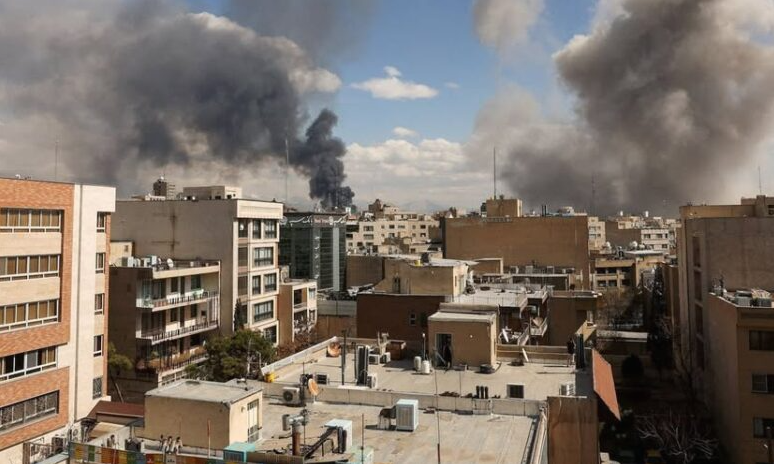
In a development that has stirred strong reactions across European political circles, the Italian government has openly criticized the recent military operations carried out by the United States and Israel against Iran. On Thursday, March 5, 2026, Italy’s Defense Minister, Guido Crosetto, addressed the lower chamber of parliament in Rome and stated clearly that the coordinated strikes—which reportedly resulted in the death of Iran’s Supreme Leader, Ali Khamenei—constituted a “clear violation of international law.” His remarks represent one of the strongest signs so far of tension within the Western alliance, reflecting growing discomfort among traditional partners regarding the rapid and largely unilateral foreign policy decisions coming from the current U.S. administration.
The timing of Italy’s criticism is particularly significant. Since Donald Trump returned to the presidency last year, Italy’s prime minister, Giorgia Meloni, and her right-wing government have worked to strengthen ties with Washington. Rome had hoped to become one of the primary European supporters of the American “America First” agenda. However, the scale of the weekend’s attacks and the escalating instability that followed across the Middle East have forced Italian leaders to reconsider that close alignment. Speaking before parliament, Crosetto—an influential member of the Brothers of Italy party—stated bluntly that the decision to carry out the strikes “clearly fell outside the framework of international law.”
One of the main concerns raised by the Italian government is the absence of consultation with allies. Crosetto explained that the United States and Israel launched a large wave of military operations without informing or coordinating with their Mediterranean partners or fellow members of NATO. This lack of communication, he argued, has placed Italy and the broader European Union in a difficult position—aware of the conflict but unable to influence decisions that could have serious humanitarian and economic consequences. “This is a war that began without the world even knowing,” Crosetto said, reflecting a frustration that is reportedly being echoed in other European capitals such as Paris and Berlin.
The legal justification for the strikes remains the subject of intense international debate. Officials in Washington have defended the operation as an act of pre-emptive self-defense aimed at preventing Iran from reaching a nuclear weapons capability. However, legal experts connected with the United Nations argue that international law allows such action only when there is clear and immediate evidence of an imminent threat. By labeling the strikes as unlawful, Italy is signaling that it may be less willing to offer diplomatic backing to the coalition than it has in previous conflicts. This position complicates the unified front the U.S. administration has tried to present while reshaping the political balance in the Middle East.
Despite its criticism, Italy is still deeply involved in the consequences of the crisis. The government has already begun deploying air-defense systems to Gulf states in order to protect civilian infrastructure in countries such as Bahrain and the United Arab Emirates, which have faced retaliatory drone and missile attacks from Iran. In addition, Italian naval forces have moved closer to Cyprus to reinforce maritime security and monitor potential disruptions to shipping routes. This situation creates a complex political balance for the Meloni government: publicly criticizing the legality of the war while simultaneously helping stabilize the region affected by it.
Economic concerns are also placing pressure on Italian leaders. As a country that relies heavily on imported energy, Italy is highly vulnerable to fluctuations in global oil and gas markets. With tensions threatening the vital shipping route of the Strait of Hormuz and shipping costs rising dramatically, Italian officials fear that the conflict could trigger a broader economic slowdown. Crosetto’s remarks suggest that Rome views the situation not only as a legal problem but also as a strategic miscalculation that could destabilize the entire Mediterranean region.
More broadly, Italy’s criticism could contribute to renewed discussions about Europe developing a more independent security strategy. If major European allies continue to feel excluded from key military decisions made in Washington, calls for greater “strategic autonomy” within the European Union may grow stronger. The crisis has highlighted how traditional alliances are being tested by a new style of international politics in which rapid decisions by powerful states can leave even close partners feeling sidelined.
As Crosetto delivered his address in parliament, many European leaders began calling for a ceasefire or a return to diplomatic negotiations. However, with Iran promising further retaliation and leaders in Washington and Tel Aviv hinting that additional operations may still be planned, hopes for immediate de-escalation remain uncertain. Italy’s position now serves as a warning that even close allies of the United States may speak out when they believe the principles of the international order have been ignored.
In the coming days, it will become clearer whether Rome’s criticism will trigger a wider diplomatic divide among Western allies or simply reflect domestic political concerns about being drawn into a larger conflict. For now, global attention remains fixed on both the Mediterranean and the Persian Gulf as governments watch to see whether other countries will follow Italy’s lead in questioning the rapid escalation of a war that many feel began without their input.
From Crosetto’s perspective, the deeper tragedy of the situation is that many nations now find themselves managing the consequences of a conflict they did not choose. As tensions rise and trust within traditional alliances faces new strain, his comments highlight a changing geopolitical landscape—one in which dissent among allies may reveal as much about the future of global leadership as the actions of the powers at the center of the crisis.