In the rapidly shifting and historically significant geopolitical environment of March 2026, discussions about the reliability and strength of American leadership have intensified. Around the world, tensions have risen sharply, especially as military and diplomatic developments involving the United States, Israel, and Iran dominate international headlines. In this atmosphere of uncertainty and heightened global awareness, the role and responsibility of the American executive branch have come under closer public examination. Citizens, analysts, and policymakers alike are evaluating how prepared the United States is to maintain stability during unpredictable and potentially dangerous moments in global politics.
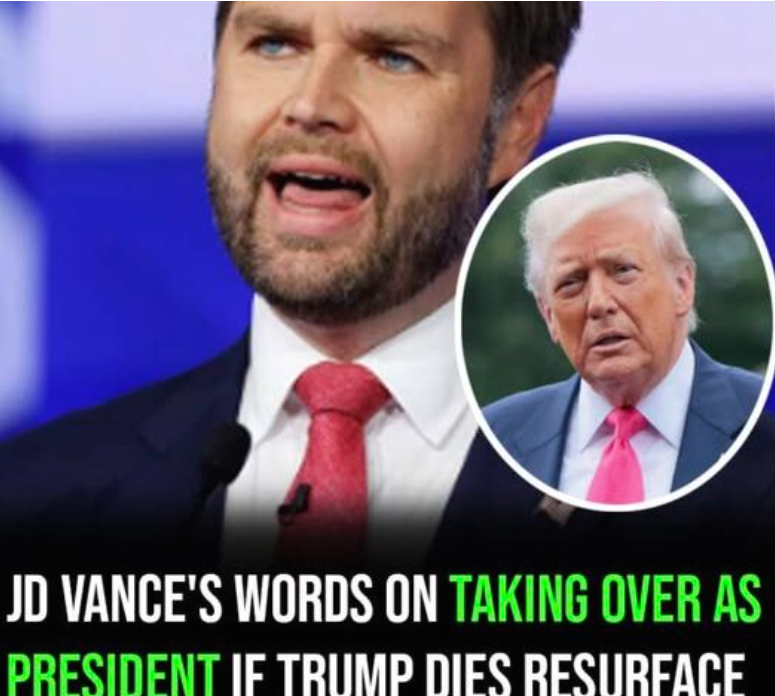
Amid this atmosphere, earlier remarks made by Vice President JD Vance about presidential succession have resurfaced in public debate. These comments, once part of routine political discussion, now carry greater weight as people reflect on the importance of continuity in leadership during international crises. Conversations about who would lead the nation in a moment of sudden change are no longer theoretical. Instead, they represent a serious and responsible consideration of how a nation prepares itself for unforeseen circumstances.
The structure of the United States government was intentionally designed to endure moments of instability or crisis. The Constitution and subsequent legislation established a clear and legally defined line of presidential succession so that the country would never face a vacuum of authority. The Presidential Succession Act ensures that if a sitting president is unable to perform the duties of the office—whether due to illness, tragedy, or any other unexpected event—the transition of power can occur immediately and smoothly.
This legal framework reflects the foresight of the country’s founders and later lawmakers. They understood that a stable government requires more than just leadership in calm times; it must also function effectively during emergencies. Because of this system, the Vice President automatically assumes the role of President and Commander-in-Chief if the president becomes unable to serve. The goal of this process is simple but critical: to guarantee continuity, stability, and confidence in the nation’s leadership regardless of circumstances.
The Established Protocol of Succession
Within the current administration, this means that Vice President JD Vance serves as the immediate successor to the presidency if such a transition were ever required. Public discussion about this responsibility is not merely speculation by journalists or political commentators. Instead, it is part of a broader understanding of how democratic systems maintain order and stability in times of uncertainty.
Like previous administrations, the White House operates with detailed continuity-of-government plans. These strategies are designed to ensure that essential government functions continue without interruption, even during extreme scenarios such as national emergencies or security threats. Such plans represent years of preparation and planning by national security experts and government officials.
In an interview with USA Today, Vance acknowledged the seriousness of his role in this system. He explained that while any sudden transition of presidential power would be deeply tragic and undesirable, his work alongside the president has given him valuable insight into the responsibilities and decisions required at the highest level of government. According to Vance, constant communication and involvement in policy discussions help ensure that he is prepared to carry out the constitutional duties of the presidency if necessary.
For many Americans, statements like these provide reassurance. Knowing that a clearly defined system exists—and that individuals within that system understand the gravity of their responsibilities—helps maintain public confidence during uncertain times.
Rising Tensions and Executive Authority
The renewed attention on succession planning also comes during a period of growing international tension, particularly regarding relations with Iran. Over the past year, the United States administration has taken a stronger stance against Tehran through a combination of diplomatic pressure, economic sanctions, and strategic policy decisions.
In February 2025, President Donald Trump signed an executive order that significantly expanded federal authority to impose stronger measures against Iran’s leadership and economic networks. The directive signaled a tougher approach to the ongoing conflict between Western allies and Iranian interests. According to administration officials, the policy aimed to strengthen national security and deter actions that could threaten American or allied interests.
Such geopolitical developments inevitably raise questions about leadership stability and crisis management. When international tensions rise, governments must ensure that their decision-making structures remain clear and resilient. This is one reason why the topic of presidential succession becomes especially relevant during moments of geopolitical strain.
Another factor contributing to renewed discussion has been security concerns involving national leaders. Previous incidents, including a widely reported assassination attempt in Butler, Pennsylvania, highlighted the risks that public officials can face. Events like these often trigger renewed reviews of security procedures and emergency protocols designed to protect government leadership.
Journalists and political analysts have explored these issues in detail. For example, reporting and commentary from figures such as Jonathan Karl of ABC News have examined the broader implications of these security risks and the importance of preparedness within the executive branch. Such reporting encourages transparency and public understanding about how democratic institutions safeguard stability.
Stability and Constitutional Resilience
One of the defining characteristics of the American political system is its ability to endure crises without collapsing. The country’s constitutional structure was intentionally designed to function even under the most challenging circumstances. The line of succession, continuity-of-government planning, and established legal procedures all serve the same purpose: preventing instability and preserving democratic governance.
In times of uncertainty, these systems offer reassurance to both citizens and international partners. They demonstrate that leadership is not dependent on a single individual but instead supported by a broader institutional framework. Even if unexpected events occur, the structure of government ensures that authority and responsibility are transferred smoothly.
Legal scholars and constitutional experts frequently emphasize the importance of this framework. They argue that succession laws exist not because leaders expect disaster, but because responsible governments must be prepared for any possibility. By clearly defining how power transfers in moments of crisis, the United States minimizes the risk of confusion, conflict, or institutional breakdown.
The attention given to JD Vance’s readiness is therefore part of a larger conversation about stability. Observers often look at how vice presidents approach their responsibilities, since they must be capable of assuming the presidency without hesitation. This expectation has existed throughout American history, regardless of which political party holds power.
Continuity as a Democratic Strength
Ultimately, the ongoing discussion about succession highlights one of the strengths of democratic governance: resilience. Institutions that anticipate challenges and plan for continuity are better equipped to maintain order when unexpected events arise.
For the United States, the Presidential Succession Act and the broader constitutional framework serve as safeguards that protect the continuity of leadership. They ensure that no sudden crisis—whether domestic or international—can leave the nation without clear authority or direction.
As global tensions continue to evolve, maintaining confidence in leadership structures remains essential. The ability of a nation to respond calmly and decisively during uncertain moments depends largely on the strength of its institutions. In this sense, succession planning is not simply a legal formality; it is a critical component of national stability.
In the end, the central message is clear: the United States has established systems designed to preserve leadership continuity under any circumstances. These frameworks reflect decades of legal development and strategic planning. While geopolitical tensions may fluctuate and global challenges may arise, the institutional foundation of American governance is built to endure.