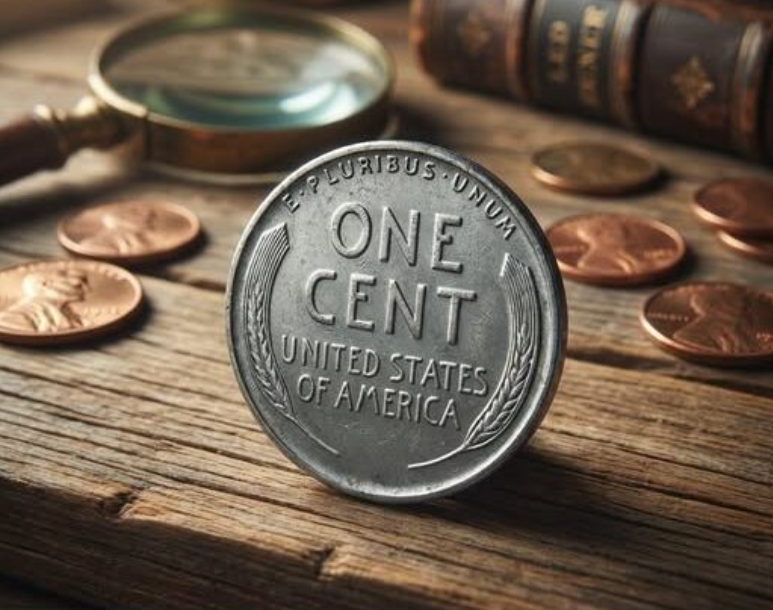
In the quiet corners of attic trunks, the dusty velvet of old coin jars, and even the mundane pockets of everyday denim, a fortune may be hiding in plain sight. While most people view a penny as the lowest denomination of American currency—a negligible bit of copper-plated zinc often left in “take a penny” trays—there exists a specific, accidental relic of the Second World War that has become the “Holy Grail” of American numismatics. The 1943 Bronze Lincoln Cent is not just a coin; it is a legendary manufacturing error that represents a collision between the frantic pressures of wartime production and a simple human oversight. Today, a single one of these coins can command a staggering $336,000 or more at auction, turning a forgotten cent into a life-changing windfall.
To understand the value of this elusive treasure, one must look back to the early 1940s, a period when the United States was deeply embroiled in World War II. The war effort required vast quantities of raw materials, and copper was a high-priority commodity needed for the manufacturing of shell casings and telephone wiring. In a move to conserve this vital metal, the U.S. Mint made a historic decision in 1943: it would cease production of the traditional bronze cent and instead strike pennies out of low-grade steel coated with a thin layer of zinc. These “steelies,” as they were colloquially known, were a silvery-grey color and were intended to be the only pennies produced that year.
However, the transition from one metal to another was not perfectly seamless. As the story goes, a small handful of bronze coin blanks, or “planchets,” from the 1942 production run remained lodged in the crevices of the massive hopper bins or were stuck in the feeding machinery at the Philadelphia, Denver, and San Francisco Mints. When the presses began striking the 1943 steel cents, these stray bronze planchets were inadvertently fed into the machines. The heavy steel dies slammed down with tons of pressure, imprinting the 1943 date onto the “wrong” metal. What resulted was a physical impossibility: a 1943 penny that looked, felt, and weighed like a traditional copper coin, even though such a coin was never officially authorized.
These error coins were not caught by the quality control inspectors of the era. Instead, they were tumbled into bags alongside millions of steel pennies and released into the general population. For years, they circulated unnoticed, passed from hand to hand in change for groceries, newspapers, and bus fares. It wasn’t until 1947, two years after the war ended, that the first example was discovered by a sharp-eyed teenager. The discovery sent shockwaves through the collecting world and launched a national scavenger hunt that continues to this day.
The 1943 Bronze Lincoln Cent is visually striking because it defies the expected aesthetic of its year. While the common 1943 steel pennies often appear dull, rusted, or artificially shiny, the bronze error possesses the deep, rich patina of a classic Lincoln cent. The bold relief of President Abraham Lincoln’s profile stands out in stark contrast to the coin’s smooth, dark surface. Because most of these coins spent years in circulation before being identified, they often exhibit “natural wear”—the soft smoothing of the edges and high points that serves as a testament to their long journey through the American economy.
For numismatists, the rarity of the coin is its primary allure. It is estimated that only about 20 to 40 of these bronze errors were ever struck across all three mints. This scarcity, combined with the historical context of the war, creates a perfect storm of value. When one of these coins appears at a major auction house like Heritage Auctions or Stack’s Bowers, it is treated with the same reverence as a fine piece of art. In recent years, high-grade examples have shattered records, with some fetching well over $300,000, and a unique 1943-D (Denver Mint) example once selling for a staggering $1.7 million in a private sale.
The hunt for these coins is complicated by the existence of millions of “fake” 1943 copper pennies. Because the coin is so valuable, many unscrupulous individuals over the decades have copper-plated genuine 1943 steel cents to trick collectors. Others have taken 1948 pennies and carefully filed down the “8” to look like a “3.” However, there are two simple scientific tests that can identify a genuine 1943 bronze cent. The first is the magnet test: because steel is magnetic and bronze is not, a genuine error coin will not stick to a magnet. The second is the weight test: a 1943 steel cent weighs approximately 2.7 grams, whereas a genuine 1943 bronze cent weighs approximately 3.11 grams.
Beyond the monetary value, the 1943 bronze cent represents a fascinating chapter in the history of American industry. It serves as a reminder that even in an era of strict government oversight and high-stakes wartime production, errors can happen. It is a “mistake” that has become more valuable than the intentional products of the Mint. This irony is part of what fuels the enduring fascination with the coin; it is a symbol of the unexpected, a treasure that was never meant to exist.
Collectors have sustained their interest in this error for over seventy years because it represents the ultimate “get rich quick” story that is actually grounded in reality. Unlike the lottery, which is a game of pure chance, finding a 1943 bronze cent is a matter of observation and historical knowledge. Every time a story about the coin goes viral, thousands of people across the country are inspired to break open their piggy banks and examine their change. It keeps the hobby of coin collecting alive and vibrant, bridging the gap between professional numismatists and the general public.
The 1943 bronze cent also highlights the importance of preservation. Many of the known examples were found by children or casual observers who had the presence of mind to notice that something was “different” about the coin they were holding. In a world that is increasingly moving toward digital currency and cashless transactions, the physical penny is becoming a relic of the past. However, as long as there are jars of loose change sitting on dressers and coins wedged in the cushions of old sofas, the dream of the $336,000 penny remains alive.
Ultimately, the 1943 bronze penny is more than just a piece of metal; it is a bridge to the past, a survivor of the greatest conflict in human history, and a testament to the enduring allure of the rare and the accidental. It is a reminder to look a little closer at the world around us. That dull, brown coin at the bottom of your cup holder might just be the most valuable thing you own, a silent witness to history that is waiting for someone to recognize its true worth.