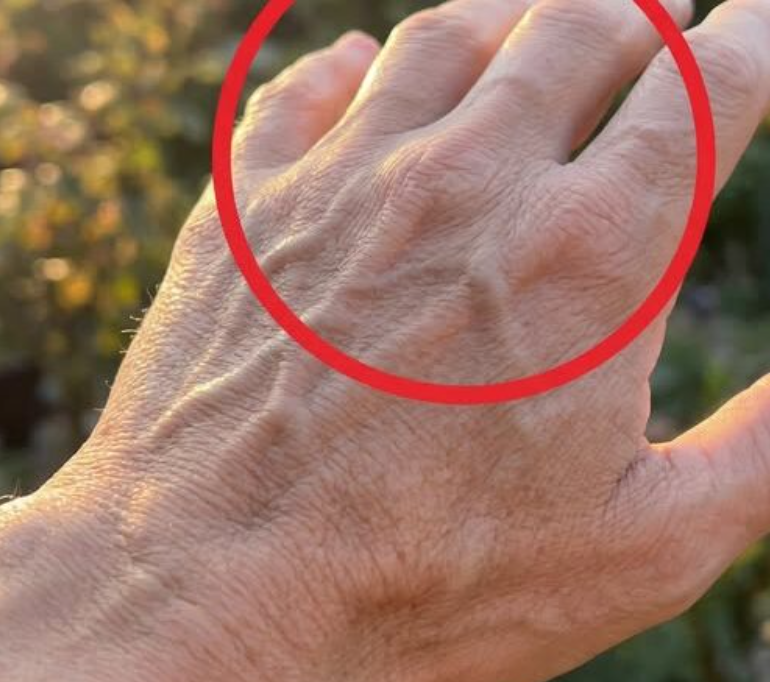
Noticing a sudden map of prominent, bluish rivers tracing across the back of your hands can be a jarring and even startling experience. In a world where we are increasingly attuned to the “silent signals” of our bodies, it is natural to question whether these visible changes are a benign feature of aging, a quirky hallmark of personal anatomy, or a subtle warning of something more serious. By 2026, the proliferation of health information online has created a digital echo chamber in which minor anatomical quirks are often over-interpreted. One persistent rumor suggests that visible hand veins are a “bruised darkness,” an ominous signal pointing to hidden kidney distress or systemic illness. Yet, as we peel back the layers of physiological truth, a much more grounded reality emerges: for the vast majority of people, veins that stand out on the hands are simply a testament to life’s passage, the body’s intricate design, and the natural variability of human anatomy—not a harbinger of organ failure or catastrophic illness.
The primary reason veins become more prominent lies in the “Quiet Giant” of our anatomy: the skin itself. As we age, particularly entering the decades of our 50s and 60s, the skin undergoes a series of profound structural changes. Collagen and elastin, the proteins responsible for skin’s thickness, resilience, and youthful elasticity, steadily decline. This reduction leads to thinner skin, and as the surface barrier diminishes, the underlying vascular network, which has been present for a lifetime, becomes more visually pronounced. The result is a natural and inevitable “shared, trembling pilgrimage” that most people experience in varying degrees. These veins are not newly formed threats; they are old friends stepping into the spotlight as the supporting landscape—our skin—becomes more translucent.
Beyond aging, several other physiological and environmental factors contribute to this striking “spectacle” of prominent veins. Individuals with lower body fat percentages have less subcutaneous padding, which naturally makes veins easier to see. Genetics is another powerful determinant: families often share the trait of corded, visible veins, passing down the blueprint of vascular architecture. Temperature plays a role as well; in warm weather, veins dilate to help dissipate heat, temporarily increasing their visibility. Even transient physiological states, like dehydration or heightened blood flow after exercise, can make veins surge to the surface, creating fleeting or semi-permanent impressions.
Physical activity, particularly strength training and other weight-bearing exercises, leaves a particularly lasting mark. Muscles demand more blood during activity, and over time, veins adapt to the increased “output” required to support circulation. These adaptations can lead to semi-permanent enlargement, making veins more noticeable even at rest. Far from being a symptom of illness, this is often a sign of a robust and highly functional circulatory system, a body actively responding to the stresses and needs of daily movement. In this sense, what might seem like a cosmetic anomaly is, in fact, an indicator of resilience and healthy cardiovascular adaptation.
The circulation of misinformation linking hand veins to kidney disease exemplifies a broader “digital con” in contemporary health culture. The assumption is seductive but scientifically inaccurate: visible veins on the back of the hands rarely correlate with renal dysfunction. In reality, when kidney function declines, the body struggles to maintain fluid balance. This can lead to edema, where the skin swells due to retained fluid—a starkly different appearance than the delicate, sculpted network of bluish veins often cited in these online myths. Other signs of kidney issues—fatigue, decreased urine output, nausea, and electrolyte imbalances—are far more indicative than mere vascular visibility.
Medical experts continue to emphasize context and holistic assessment over visual conjecture. Vein prominence should be considered alongside lifestyle, body composition, genetics, and systemic health markers rather than as an isolated “symptom.” In fact, some vascular specialists argue that visible hand veins are frequently a sign of a healthy circulatory system, reflecting strong cardiac output and adaptive vascular remodeling. This is particularly true for individuals who have spent years engaging in physical activity, leading to a well-conditioned vascular system capable of efficiently shuttling blood to meet metabolic demands.
Psychologically, the sudden notice of prominent veins can trigger anxiety due to the body’s silent communication. People may interpret normal physiological patterns as danger signals, especially when exposed to fear-based social media content. Understanding that these veins are typically benign allows individuals to reframe their perception, transforming what might feel like a visual threat into a simple, natural mark of a life well-lived. Awareness, rather than alarm, becomes the key: paying attention to other health indicators—blood pressure, kidney function labs, hydration levels—is far more useful than fixating on vein visibility alone.
Ultimately, the story of the veins on our hands is a quiet meditation on the human body’s complexity. They are reminders of our physiology’s intricate design, the passage of time, and the ways in which our bodies adapt to both environment and lifestyle. These veins carry the literal and figurative “output” of our life experiences, revealing nothing more sinister than the cumulative evidence of living. As we navigate the health narratives of 2026, it is essential to separate the “allure” of aesthetic concern from genuine medical warning, and to recognize the hand veins we see as a normal, sometimes beautiful, emblem of our enduring vitality.
In short, the next time your hand veins seem suddenly pronounced, remember: they are a badge of life, adaptation, and anatomy—not an automatic sign of illness. They are silent signals, yes, but ones that usually whisper of time, activity, and the natural brilliance of the human form, rather than the shadow of disease.