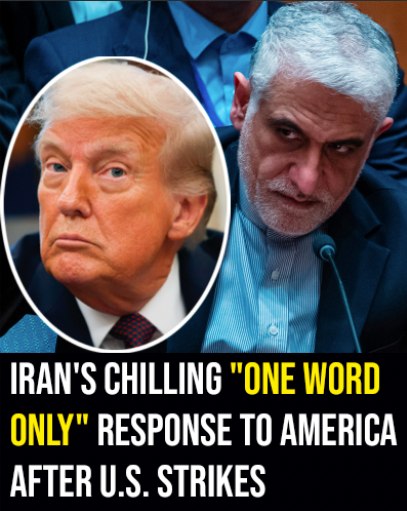
The world woke up to a nightmare that seemed pulled straight from a dystopian prophecy. Tehran was engulfed in flames, its skyline fractured by explosions, smoke curling into the dawn like dark, vengeful fingers over the city. Streets once filled with morning chatter now echoed with sirens and the frantic footsteps of civilians seeking shelter. Israel, thousands of miles away, braced with its own air defenses, activating every available interceptor system, its population listening to the ominous wail of sirens in towns and cities that had previously known only the rare tremor of conflict. In Washington, the corridors of power were tense and silent, the weight of anticipation hanging like a storm cloud. Intelligence reports streamed in by the second—satellite images, drone feeds, and radar signals all painting the same grim picture: Iran had been hit, hard, and the retaliation had only begun. Leaders were dead. Strategic sites were obliterated. And somewhere in that cascade of fire and metal, a new and terrifying precedent had been set. Threats of “force never seen before” reverberated through the chambers of the United Nations, turning what should have been a forum for dialogue into an echo chamber of ultimatums and fury. One ambassador’s chilling warning, delivered in measured tones yet with eyes that burned with fear, cut through the chaos like a scalpel: if escalation continued unchecked, the consequences would be “irreversible and unprecedented.” Then everything escalated at a speed that made headlines impossible to keep up with, and reality itself felt suspended on a knife’s edge.
What began as yet another stalled round of tense nuclear negotiations—a diplomatic dance that had dragged on for years, punctuated by ultimatums, leaked memos, and carefully worded press statements—had spiraled into a confrontation that felt terrifyingly final, almost apocalyptic. The meticulously coordinated U.S.–Israeli operation, striking simultaneously across Tehran’s key governmental and military centers, shattered long‑standing taboos that had kept decades of tense equilibrium in place. To many analysts, it wasn’t just a strike—it was a statement: the old rules no longer applied. Iran’s leadership, a carefully insulated network of power brokers, clerics, and military strategists, had been decapitated in moments. Tehran’s air was thick with the acrid scent of fire, its streets littered with debris from buildings once thought untouchable. In response, Tehran unleashed a cascade of missiles and swarms of kamikaze drones, targeting Israel, U.S. bases across the Gulf, and allied positions in the Levant. State media broadcast promises of the “most devastating offensive operation” in the nation’s history. The language on all sides had hardened into absolutes: obliteration, annihilation, total war, and war crimes—all phrases now tossed into headlines and diplomatic cables with chilling casualness. For civilians, these weren’t just words; they were the soundtrack of fear, uncertainty, and the possibility that no city, base, or border would remain untouched.
Inside the United Nations, the last fragile veneer of diplomacy was cracking under the strain. Delegates whispered behind closed doors, pressed against the walls of chambers that had historically held only heated debates, not the very real threat of missiles streaking overhead. Iran’s ambassador stood, voice unwavering, as he denounced the strikes in terms that left no room for misinterpretation: “This is a crime against humanity,” he said, his gaze sweeping the assembly. “We are exercising our right to self-defense under Article 51 of the Charter. The regime of Washington would do well to conduct itself politely, lest it underestimate the consequences of its actions.” Every syllable seemed chosen to strike both fear and caution, yet beneath the formal delivery was a tremor of barely contained fury. On the opposite side, the U.S. envoy refused to relent, framing Iran’s leadership as not merely provocative but “murderous and illegitimate,” a threat that justified immediate and decisive action. Between them stood the Secretary-General, desperately attempting to mediate, to remind both sides of the catastrophic human cost of escalation, urging that peace remained the only viable escape from what was rapidly becoming a regional inferno. Yet, as he spoke, the world could not ignore the iron truth: missiles were already in the air, their trajectories calculated, their payloads deadly. Diplomacy had become a desperate whisper against a crescendo of kinetic reality.
Around the globe, governments reacted with alarm. European capitals, traditionally vocal yet cautious, issued statements urging “maximum restraint” and warning of an economic shock that could ripple across oil markets, trade routes, and financial systems. Moscow and Beijing condemned the U.S.–Israeli operation in stark terms, calling it a violation of international norms and a reckless gamble that threatened regional—and potentially global—stability. Meanwhile, in Tehran, citizens looked out from high-rise apartments as the city smoldered beneath a canopy of smoke, fear, and the echo of sirens. In Tel Aviv, families huddled in reinforced shelters, following the rhythm of air-raid sirens, each minute stretching into an eternity. And in Washington, decision-makers scrolled through intelligence updates, every notification a reminder that the smallest miscalculation could tip the fragile balance into total war.
The sequence of events, from the initial strikes to the retaliatory volleys, was a stark reminder of how fragile modern diplomacy can be when measured against raw military power. Where once negotiation, patience, and cautious signaling dictated action, now every missile, every drone, every intercepted threat reshaped the rules of engagement. The world was awake to a terrifying new reality: the theoretical models of deterrence, containment, and negotiation had collided with the brutal calculus of immediate, kinetic retaliation. Every leader, every diplomat, every civilian caught in the crossfire had to reckon with a single, unyielding truth: the morning headlines had become the framework of a war whose scope—and whose consequences—were still almost impossible to fully comprehend.