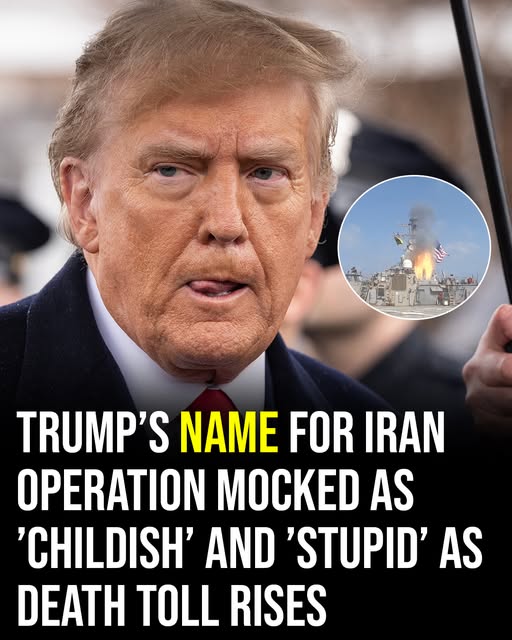
The name drops like a bad joke in the middle of a massacre, echoing through social media feeds, news cycles, and living rooms across the globe. While missiles scream through the skies of the Middle East, their trails lighting up the dusky horizon with fiery arcs, and bodies are being pulled from the shattered remains of residential buildings, markets, and schools, the Trump administration takes the stage and gives this catastrophe a name: “Operation Epic Fury.” The words are meant to sound decisive, bold, and commanding, but instead they land with the gravity of absurdity. The instant the announcement hits, social media erupts with outrage, disbelief, and a barrage of memes. Allies flinch; traditional partners exchange worried messages behind closed doors; even diehard MAGA icons recoil in awkward confusion. As the death toll climbs and drones strike targets as far away as Cyprus, the contrast between the name and the carnage becomes painfully obvious. What should have been a sober moment of strategy, crisis management, and reflection becomes, in the eyes of the world, a grotesque exercise in branding a real war like a summer blockbuster.
As the dust settles over cities, towns, and villages stretching from Tehran to Cyprus, the sheer incongruity between rhetoric and reality becomes unbearable. On one hand, there is the polished, comic-book-style branding of “Operation Epic Fury”, carefully scripted and rehearsed for a podium in Washington, framed as a show of American strength and decisiveness. On the other, there are frantic rescue workers combing through rubble, the acrid smell of smoke and burning fuel drifting over shattered airfields, families frantically counting the missing, and the anguished cries of civilians who never signed up for this war. The distance between those two realities—political theater and human suffering—is so vast that the operation’s very name feels like a slap in the face. It is as if mass death and destruction have been sanitized, compressed, and packaged into a three-word tagline designed for headlines, retweets, and Instagram carousels, completely detached from the horror it represents.
The backlash spreads rapidly, cutting through the usual political lines and alliances, as the spectacle invites both outrage and reflection. Critics from the left question not only the strategy of targeting Iranian infrastructure with overwhelming force but also the morality of giving such catastrophic violence a slick, marketable title. The right, often ready to rally behind Trump’s every move, finds itself uncomfortably torn. Even loyalists admit, quietly, that the spectacle of triumphant rhetoric layered over smoldering runways, devastated residential blocks, and fresh graves is hard to reconcile with any sense of decency or dignity. The public discourse becomes dominated by a recurring question: if leaders can treat war like a marketing campaign, selecting names designed to entertain or inspire rather than reflect reality, then how easily will they authorize subsequent operations, escalating the violence even further? The entire scenario becomes a meditation on the power of language, the thin line between performance and atrocity, and the profound human cost of treating war as a theatrical exercise.
Meanwhile, journalists, analysts, and historians begin to dissect the layers of this moment. Social media threads explode with commentary ranging from ironic jokes to furious denouncements. Hashtags emerge almost instantaneously: #EpicFuryFails, #WarIsNotAGame, and #BloodOnTheBanner, among dozens of others. Influencers dissect the cognitive dissonance between the administration’s triumphant press release and images of charred buildings, overturned cars, and rescue teams working through nightfall. The operation’s branding, meant to signal control and power, instead becomes a symbol of the absurdity of modern information warfare—where the speed of a catchy phrase can outpace the reporting of the human toll it represents. Every post, every image, every leaked video adds layers of interpretation, building a global narrative in which the bloodshed becomes footnotes in the story of a name.
The human dimension, however, cannot be overstated. Families in Tehran sift through ruins, searching for loved ones amid collapsed apartments and mangled vehicles. In Cypriot coastal towns, the sight of drones and missile impacts triggers emergency drills, evacuations, and a palpable sense of fear. Aid organizations scramble to respond to the immediate needs of injured civilians and displaced populations. Hospitals are overwhelmed, and volunteers work around the clock, often without sufficient equipment or protection. Meanwhile, in Washington, the operation’s name continues to reverberate across news broadcasts, presidential briefings, and political commentary, creating a tension between the sanitized, branded image of war and its raw, human consequences. The grotesque juxtaposition of comic-book-style branding and the very real suffering of ordinary people around the region becomes the defining image of the operation for global audiences.