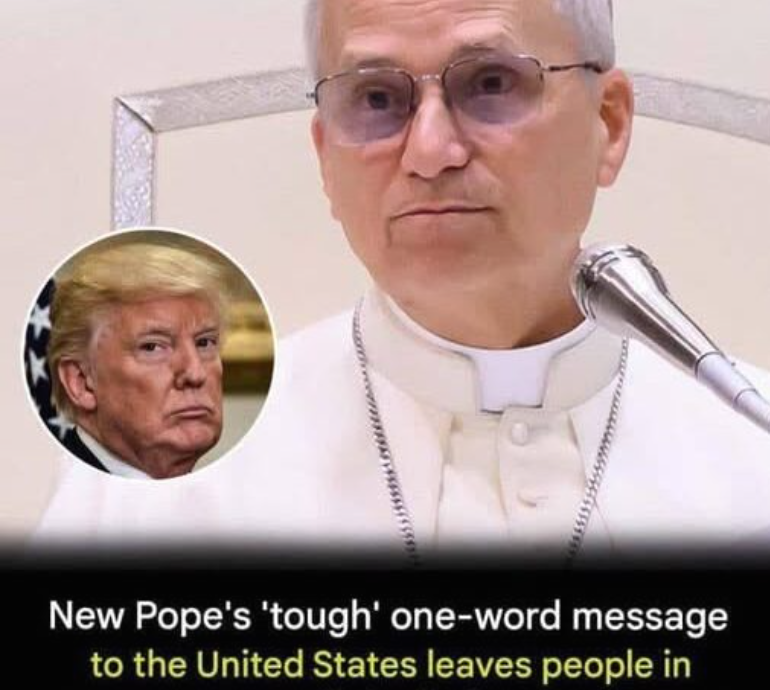
In the rapidly evolving digital and geopolitical landscape of 2026, where political discourse is often drowned by exhausting verbosity, algorithmically engineered outrage, and carefully focus-grouped rhetoric, the papacy of Leo XIV has introduced a startling and almost revolutionary economy of language. On March 1, 2026, the global media cycle—dominated by 24/7 scrolling headlines and hot takes—was halted, even if briefly, by a single word posted from the pontiff’s official social media account. Responding to a query regarding the pressing challenges facing the United States and the broader Western world, Pope Leo XIV—formerly known as Cardinal Robert Francis Prevost—simply replied with a solitary, almost cryptic word: “Many.”
The ripple effect was immediate. Within hours, the word had gone viral, trending across platforms from X to Mastodon, prompting analysts, journalists, and theologians alike to pause in reflection. Yet this was not mere digital theater. This one word functioned as a theological and political x-ray, exposing the raw nerves of contemporary society. In a world where leaders over-explain to the point of obfuscation, Leo XIV’s brevity stood as a carefully calculated provocation, a signal that the Vatican remains acutely aware of the breadth of crises facing modern humanity, and is willing to confront them with moral seriousness that transcends partisan divides and soundbites.
The Architect of Modern Moral Clarity
Understanding the gravity of this one-word response requires a look at the man behind the ring. Before ascending to the Chair of St. Peter, Robert Francis Prevost was known for his vocal advocacy for the marginalized and disenfranchised. As head of the Dicastery for Bishops, he consistently emphasized pastoral care over bureaucratic formality, earning a reputation as a prelate deeply committed to social justice. His tenure was marked by principled stances on migration, human dignity, and the ethical application of Church teaching to contemporary issues—positions that occasionally put him at odds with political establishments in Washington and beyond.
Leo XIV’s earlier criticisms of policies enacted by the second Trump administration, particularly those relating to the deportation of international students and migrant families, cemented his image as a Pope willing to challenge secular authority when human dignity is at stake. In this light, his reply of “Many” should not be viewed as evasive, but rather as a moral lens: it signals the enormous scale of societal fractures observed from the Vatican, encompassing inequality, systemic injustice, and the erosion of public trust across nations.
The Power of Intentional Ambiguity
The brilliance of “Many” lies in its refusal to be categorized, co-opted, or weaponized by partisan politics. In the hyperpolarized 2026 political landscape, listing specific grievances would have immediately allowed factions to claim the Pope as an ally or dismiss him as an adversary. Instead, Leo XIV’s choice reflects a masterful deployment of intentional ambiguity.
When the Pope says “Many,” he acknowledges the cumulative crises that define the modern human condition: economic inequities, the accelerating pace of climate emergencies, persistent global conflicts, the fraying of civil discourse, and the moral dilemmas posed by technological advancement. The word functions as both a rebuke and an invitation—a whisper with the moral weight of an encyclical—forcing individuals, societies, and governments to reflect on which of these “many” challenges they are perpetuating and which they are actively confronting.
A Lineage of Nuance: From Leo XIII to Leo XIV
The choice of papal name itself carries significance. By choosing Leo XIV, Prevost aligns himself symbolically with Pope Leo XIII, the 19th-century pontiff whose landmark encyclical Rerum Novarum navigated the complex social upheavals of the Industrial Revolution. Just as Leo XIII balanced the rights of labor with property rights, Leo XIV appears to advocate for a nuanced, Catholic approach to modern social ethics—one that resists the simplifications and slogans that dominate contemporary discourse.
This Pope communicates that the path toward justice is neither partisan nor performative. Solutions to the “many” problems of the world, he implies, will not emerge from electoral victories or fleeting legislation but from a reorientation of the human heart toward common good, moral responsibility, and ethical stewardship of society and creation.
The Global Reaction: Silence, Reflection, and Scrutiny
The international response has been as varied as it has been intense. Political strategists, diplomats, and religious scholars have convened emergency sessions to parse the implications of the pontiff’s single word. In the United States, where debates over student deportation policies, military engagements abroad, and domestic inequality dominate public discourse, the Pope’s “Many” was interpreted as a direct and moral commentary on the country’s social and spiritual health.
Critics across the political spectrum have struggled to place this papacy neatly into familiar categories. To some on the right, Leo XIV is a “radical advocate” for migrants; to some on the left, he is a steadfast traditionalist who refuses to compromise on core doctrines. Yet the pontiff appears unfazed by these conflicting interpretations, viewing them as a testament to his successful navigation of the “narrow path” of the Gospel: neither pandering to popularity nor retreating from moral authority.
Conclusion: A Pastoral Force in a Volatile Era
In a year dominated by crises ranging from military escalations in the Pacific to climate-driven disasters in Europe, the reverberations of “Many” endure. It is more than a word—it is a challenge, a reflection, and a moral compass. By refusing to over-explain, Leo XIV compels reflection and self-examination, demanding that the faithful, the policymakers, and the global citizenry recognize the multiplicity of the world’s troubles while remaining accountable for their own contributions to solutions.
This papacy, emerging in 2026, is unmistakably pastoral in concern, provocative in challenge, and profoundly unpredictable in method. The weight of “Many” signals that the Church will remain an active voice in the moral discourse of the modern world. In the silence following his post, the global audience is left to grapple with the breadth of their own failures and responsibilities—guided by a pontiff who demonstrates that sometimes, the loudest way to speak is to say almost nothing at all, yet still communicate everything that matters.