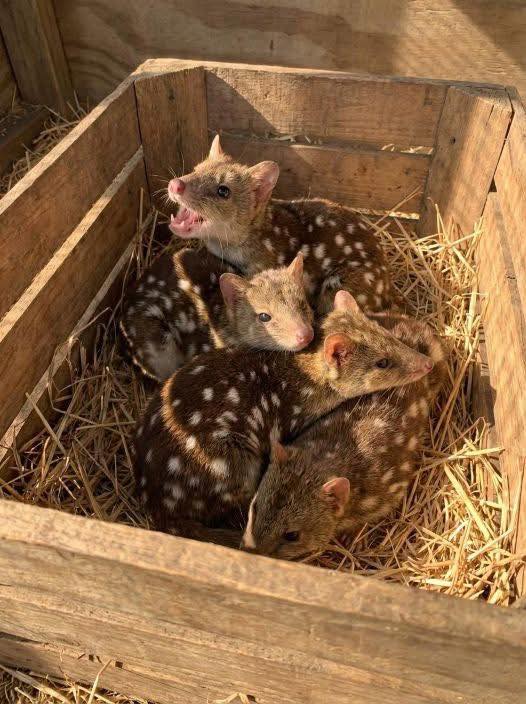
New life has exploded in a place once thought to be silent, a place where the echoes of loss had long filled the air. At Mt Gibson Wildlife Sanctuary, a land once marked by the shadows of extinction, tiny, spike-furred hunters have defied the odds and emerged from the brink of oblivion. These resilient creatures, the western quolls, had been written off by many, considered lost forever in the vast tapestry of Australia’s environmental decline. But against all expectations, these tenacious beings have reappeared, clawing their way back into a world that had all but forgotten them. Their emergence has stunned scientists, who watch in awe as this species, once almost buried by history, returns with claws bared and eyes blazing. It’s a moment of triumph, but as the first fragile litter stumbles into a world still filled with the traps, poisons, and prowling invaders of modern life, one question looms larger than all others: is this a miracle, or is it merely the beginning of a long, grueling fight that may still end in defeat?
In the red, unforgiving dust of Mt Gibson, the tiny western quoll joeys have come to symbolize more than just a scientific success. They are a powerful, defiant answer to extinction—a living testament to the resilience of life, even in the harshest conditions. Each soft growl, each unsteady step these joeys take, is a small victory, signaling that the sanctuary’s careful reintroduction efforts, predator control measures, and habitat restoration programs are working where past attempts have failed. Their very existence in this corner of Australia is a triumph over the relentless forces that once seemed insurmountable, forces that had pushed the quoll to the edge of history’s pages. The sanctuary, with its focus on creating a safe environment, has given these animals a fighting chance, proving that even in a world where wildlife is increasingly under siege, hope can still take root and thrive.
Ecologist Georgina Anderson and her team now track these nocturnal hunters with a quiet sense of awe and cautious optimism. Watching them claim burrows, search for food, and raise their young in a landscape that almost forgot them is nothing short of miraculous. The quolls are, of course, wild and independent, but the fragile nature of their return is evident in every aspect of their struggle to adapt. The dangers that have led to their near extinction are still present, lurking at the edges of their fragile sanctuary. Feral cats, foxes, and other predators still roam the surrounding land, and the extremes of Australia’s unpredictable climate remain an ever-present threat. But for every challenge they face, there is a spark of life, a flicker of determination that keeps them moving forward, against all odds. This new litter, despite the obstacles ahead, is proof that the western quolls are capable of fighting back—if they are given a chance, and the right conditions to flourish.
However, even with these early successes, survival is by no means guaranteed. The sanctuary’s walls, both literal and metaphorical, are not impervious to the outside world. Outside forces—whether they be environmental, biological, or human—still press in on this delicate ecosystem. The battle for the western quoll’s future is far from won, and every day, new threats appear on the horizon. Invasive species, habitat destruction, and the ever-changing climate all represent powerful forces that threaten to undo the progress made. Despite these challenges, the sanctuary remains a beacon of hope, a symbol of what can be achieved when careful planning, dedication, and scientific ingenuity are combined with a deep commitment to preserving the natural world.
For Australia, the return of the western quoll is not just a reminder of what was lost, but a profound lesson in the power of second chances. It is a vivid reminder that the stories of lost wildlife do not have to end in silence, as so many have before. Rather, these stories can be rewritten, with new chapters unfolding in the smallest of footprints and the brightest of wild eyes. The quolls, with their defiance and survival instinct, show that even when it seems that all hope is gone, there is still a path forward. Sometimes, the greatest victories come not from grand gestures, but from the quiet, steady progress of a species finding its place in a world that seemed too far gone to support them.
As the quolls continue to grow, as their population begins to rise, and as the ecosystem of Mt Gibson becomes more and more restored, their presence will serve as a powerful reminder of the possibility of regeneration, not just for one species, but for the larger environmental struggles we face as a planet. The success of the western quoll is a victory for all who believe that the fight for biodiversity, for the health of our ecosystems, is one worth pursuing. It’s a story of resilience, of hope, and of the ability of life to reclaim what was once lost, if only we are willing to give it a chance. For the team at Mt Gibson, and for the people of Australia, this is not just a triumph of science—it’s a victory for the natural world, and a call to action for all of us to do our part in ensuring that such miracles continue to unfold.