It was supposed to be an ordinary Saturday, the kind of day that slips from memory before it even ends. I woke up calm, steady, and grateful for the quiet life I had built. At 35, I wasn’t chasing anything dramatic—just comfort, routine, and the warmth of sharing small moments with Jessica, the woman I loved. That morning was simple: coffee, breakfast, and a quick grocery run. Nothing about it suggested that my entire identity was about to unravel in the middle of a fluorescent-lit store aisle.
Jessica was still in bed when I left, half-asleep and smiling faintly as I promised to bring back shaved turkey, cheese, and pickles. It was our routine, familiar and safe. I grabbed my keys, drove to the store we always visited, and moved through the aisles on autopilot. Bread. Turkey. Cheese. Pickles. The basket felt light in my hand, my mind already drifting back to home, to lunch, to the ordinary comfort of the day. I had no idea that within minutes, nothing would feel ordinary again.
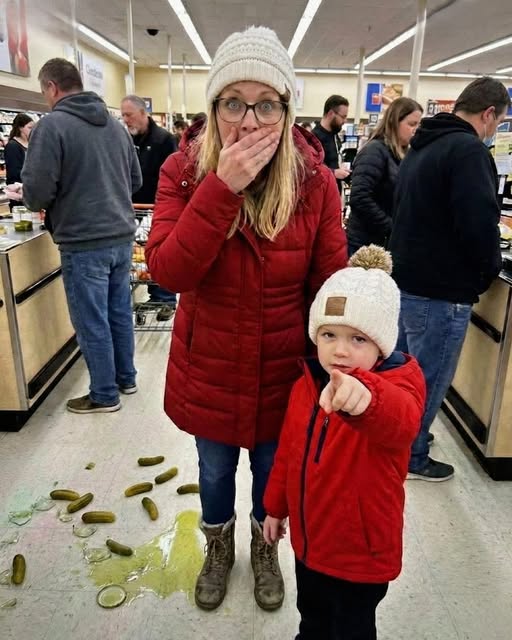
As I stood in line at checkout, a child’s voice suddenly broke through the quiet rhythm of scanning machines and murmured conversations. “Mom… look. That man looks exactly like Dad.” The words froze me in place. I turned slowly, unsure why my chest felt tight. Behind me stood a woman and a boy, maybe seven years old. The boy stared at me with certainty, not curiosity. The woman’s face drained of color, her hands trembling as a jar slipped from her fingers and shattered on the floor. She looked at me like she had seen someone return from the dead.
She stepped closer, her voice barely above a whisper. “Lewis… is that really you?” My heart pounded with confusion. I shook my head, apologizing, telling her she must be mistaken. But she wasn’t. Her eyes filled with emotion as she said words that didn’t make sense. “It’s me. Emily. Your wife.” The world tilted beneath my feet. My mind rejected her words immediately. I had a life. I had Jessica. I had memories—didn’t I? But as I stood there, something else lingered—fear. Not of her, but of the possibility that she might be telling the truth.
Outside in the parking lot, Emily explained everything. She told me about a car accident three years ago, about how I disappeared, how my vehicle was found but my body never was. She told me about Caleb, the boy who stood quietly beside her, watching me with cautious hope. She showed me photos—photos of me holding him, smiling beside her, living a life I couldn’t remember. Each image hit me like a physical blow. The man in those photos was me, but he felt like a stranger wearing my face.
When I returned home, Jessica immediately knew something was wrong. I told her everything—every word, every impossible detail. She listened in silence, trying to grasp a reality neither of us had imagined. Questions filled the room, but answers were harder to find. Who was I before? Which life was real? The one I remembered, or the one I had forgotten? The certainty I once carried was gone, replaced by a quiet, unsettling emptiness.
In the weeks that followed, I began searching for answers—meeting with Emily again, speaking with doctors, and confronting the gaps in my memory. The diagnosis confirmed what I had feared: trauma had erased part of my identity. My past hadn’t disappeared—it had been buried. Standing between two lives, I realized something that changed me forever. Memory defines who we think we are, but love, responsibility, and choice define who we become. And now, for the first time, I had to decide which version of myself I was ready to live with—and which future I was willing to build from the pieces left behind.