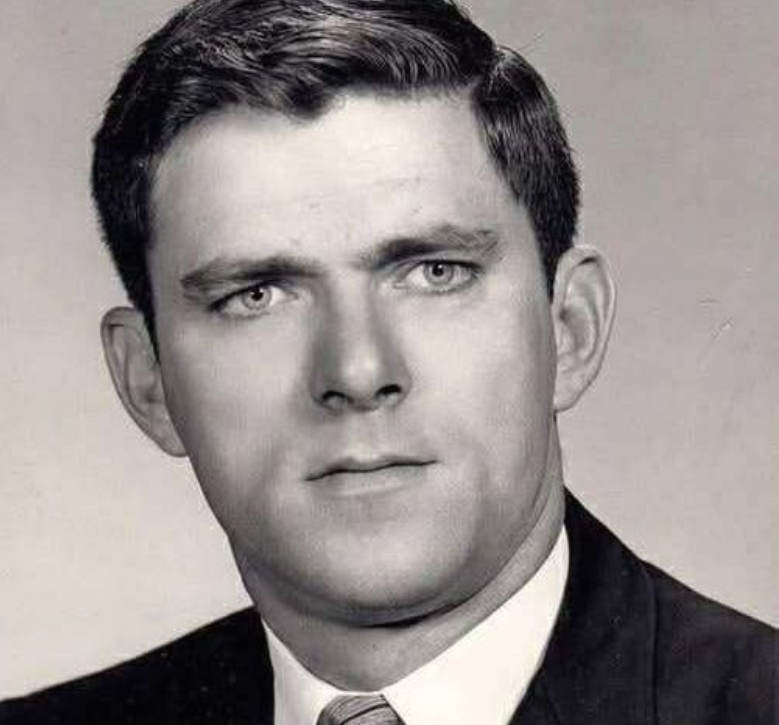
The death of Phil Donahue at 88 does more than mark the end of a remarkable broadcasting career; it dims a rare and compassionate presence that once illuminated some of the most hidden and uncomfortable corners of American life. Labeling him simply as the “father of the daytime talk show” barely captures the depth of his impact. Long before social media amplified every voice and long before “virality” became a measure of relevance, Donahue was engaged in something quietly revolutionary: he gave the microphone to people society had pushed aside.
At a time when television now often feels repetitive and performative, his legacy stands as a powerful reminder of what the medium once aspired to be. Donahue didn’t just moderate conversations—he built a national town square. His program entered homes across a country wrestling with division, fear, and silence around difficult issues. On his stage stood single mothers confronting stigma, Vietnam veterans carrying unspoken trauma, whistleblowers risking everything for truth, and LGBTQ+ teenagers seeing their experiences acknowledged publicly for perhaps the first time. He created space where none had existed.
What made Donahue extraordinary was his refusal to soften reality for comfort’s sake. He did not dilute anger to make it palatable, nor did he edit grief into something easily consumed. Instead, he trusted viewers. He believed audiences could face discomfort, wrestle with complexity, and emerge more thoughtful because of it. He did not position himself as a preacher delivering conclusions. He asked questions. He listened. He allowed conversation—not spectacle—to lead.
In today’s media climate, where debate often devolves into volume and speed rather than understanding, Donahue’s method feels almost radical. We inhabit echo chambers shaped by algorithms, rarely required to encounter perspectives that unsettle us. Donahue challenged that instinct daily. He demonstrated that asking sincere questions and genuinely hearing the answers is not weakness—it is courage. It acknowledges that no single viewpoint defines reality and that growth begins with humility.
His passing feels particularly heavy because it exposes something missing in contemporary culture. Over the years, daytime talk shows drifted toward sensationalism and staged confrontation, trading curiosity for spectacle. Networks attempted to recreate his formula, but what they often missed was that Donahue’s strength wasn’t a format—it was character. His empathy could not be scripted. His interest in people was not a production strategy; it was authentic.
There is now an empty space where his microphone once moved through studio aisles. No individual can fully replace that presence. Yet the deeper loss would be allowing his approach to disappear with him. His influence does not belong solely to television archives or broadcasting history. It lives in how we choose to engage with one another—in living rooms during disagreements, in community meetings, in classrooms, and even online where conversations often spiral into hostility. His legacy survives only if we practice it.
Donahue’s career was ultimately an act of faith in humanity. He believed people were capable of empathy, intelligent enough to grasp nuance, and brave enough to reconsider their beliefs. He staked his reputation on the idea that understanding is worth the discomfort it requires. Carrying his legacy forward means embracing that same risk—choosing dialogue over dismissal, curiosity over contempt, and listening over lecturing.
When we revisit old footage of him weaving through a studio audience, microphone in hand and focus etched across his face, we see more than a television host. We see someone who understood that democracy depends on conversation. He recognized that disagreement need not strip away dignity, that passionate debate can coexist with mutual respect. His show modeled civic engagement at its best.
The fading of this compassionate light is not merely a moment for nostalgia; it is a challenge. We live in a fragmented era where shouting often replaces listening. The void Donahue leaves asks each of us a difficult question: will we retreat into our certainties, or will we step forward, metaphorically lift the microphone, and ask someone else to share their story?
Phil Donahue’s death closes a defining chapter in television history, but it does not have to close the chapter he began in public life. The continuation of the “Donahue way” rests with us. It depends on our willingness to endure discomfort, to confront complexity, and to recognize the shared humanity beneath disagreement. He once changed the conversation by giving people a voice. Now, what remains is whether we are prepared to honor him by truly listening.