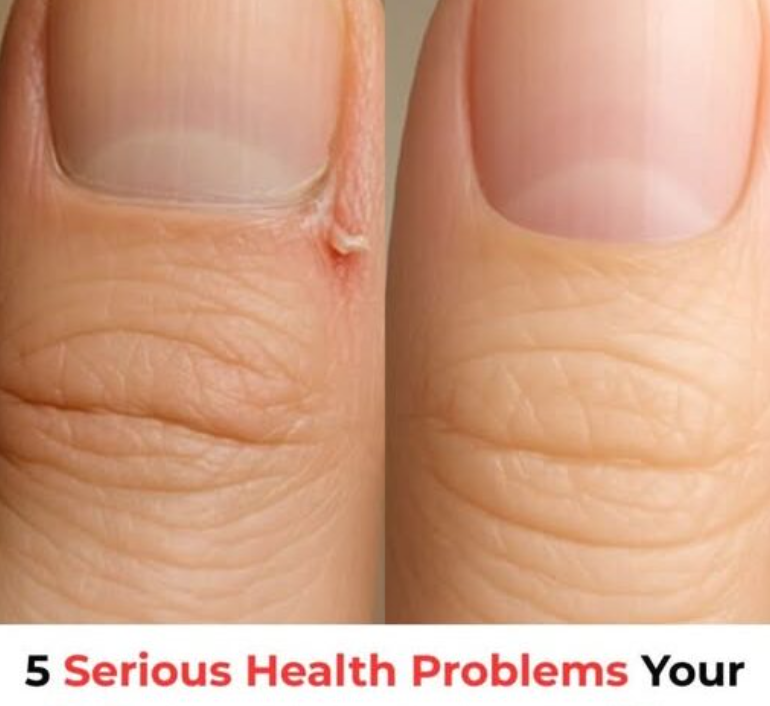
Although many people see their nails as purely cosmetic or practical, medicine views them as important indicators of internal health. Fingernails are made of keratin—the same protein found in hair and skin—and grow from the nail matrix, an area highly responsive to changes in circulation, nutrition, and inflammation. For this reason, alterations in nail color, texture, or strength are often more than superficial concerns. They can serve as early warning signs of systemic imbalance or even serious disease. Learning to interpret these changes can help detect conditions ranging from nutrient deficiencies to potentially life-threatening illnesses.
1. Pale or White Nails: A Sign of Anemia and Liver Disease
Normally, when you press on a healthy nail, it briefly turns white before returning to pink as blood flow resumes. If nails appear persistently pale or white, it may indicate reduced red blood cells or low hemoglobin levels—commonly known as anemia—which limits oxygen delivery to tissues.
In some cases, the entire nail bed looks white with only a narrow darker band at the tip. This pattern, called Terry’s nails, is often associated with significant liver conditions such as cirrhosis or hepatitis. Because the liver produces many essential proteins, its dysfunction can give the extremities a pale, washed-out appearance. When pale nails occur alongside fatigue, shortness of breath, or jaundice (yellowing of the skin), medical evaluation with blood tests and liver function panels is strongly recommended.
2. Yellow and Thickened Nails: Fungal and Respiratory Clues
Yellow discoloration is one of the most frequent nail changes. Most commonly, thick, brittle, yellow nails are caused by fungal infections (onychomycosis), which affect the keratin and often require prescription treatment.
More rarely, persistent yellowing may signal Yellow Nail Syndrome, a condition in which nails become yellow or yellow-green and grow very slowly. This syndrome is often linked to lymphatic dysfunction or chronic respiratory conditions such as bronchitis or pleural effusion (fluid around the lungs). Impaired oxygen exchange and lymph drainage can disrupt nail nutrition, leading to their characteristic thickened appearance.
3. Spoon-Shaped Nails (Koilonychia): Iron Imbalance
When nails curve upward at the edges and form a concave, spoon-like shape—a condition known as koilonychia—it commonly points to iron deficiency anemia. Low iron levels impair hemoglobin production, softening the nail plate so that everyday pressure reshapes it.
However, spoon-shaped nails can also be associated with conditions like hemochromatosis (iron overload) or Raynaud’s disease, which affects blood flow to the fingers. Since iron is vital for cellular function, identifying and correcting imbalances early helps prevent broader complications affecting the heart and overall development.
4. Dark Vertical Lines: A Warning for Subungual Melanoma
A particularly serious sign is the appearance of a new dark vertical streak beneath the nail. While some individuals naturally have pigmented bands, especially those with darker skin tones, a new or changing stripe may indicate subungual melanoma, a rare but aggressive form of skin cancer that begins in the nail matrix.
Unlike a bruise, which gradually grows out or fades, a melanoma-related streak tends to persist or widen. It may also extend into the cuticle area (Hutchinson’s sign). Because melanoma can spread quickly, any unexplained dark line should be evaluated promptly by a dermatologist. Early detection significantly improves outcomes.
5. Pitting and Horizontal Grooves: Autoimmune and Systemic Stress
Nail texture also provides valuable clues. Small pinpoint dents, known as pitting, are frequently associated with autoimmune diseases. About half of individuals with psoriasis develop nail pitting, and it is also common in alopecia areata, an autoimmune condition that causes hair loss.
Deep horizontal grooves across the nail, called Beau’s lines, mark periods when nail growth temporarily stopped due to severe illness, high fever, heart attack, or intense stress. As growth resumes, the interruption leaves a visible ridge. By measuring its distance from the cuticle, clinicians can often estimate when the body experienced the stress event.
Paying attention to nail changes is a simple but powerful tool for preventive health. While a single alteration rarely confirms a diagnosis, persistent changes act as early alerts that warrant closer examination. By observing these subtle signals, you may identify underlying health concerns long before more obvious symptoms develop.