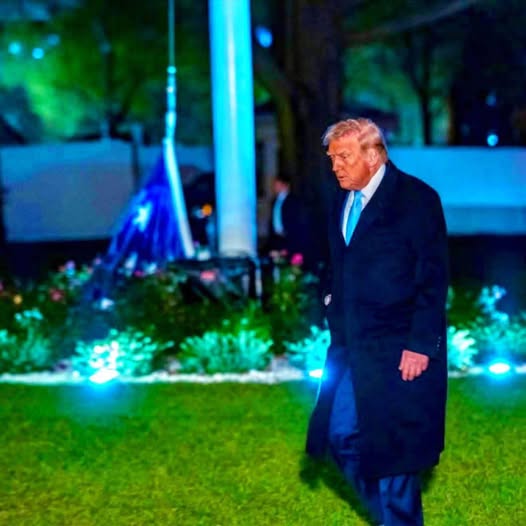
The moment the charges were formally announced, a heavy silence swept across the room, as if the air itself had paused to register the gravity of the occasion. This was no ordinary news cycle, no routine political skirmish destined to fade into partisan background noise. The very walls of power seemed to tremble under the weight of the revelation. Conspiracy. Obstruction. A deliberate, systemic attempt to manipulate the processes designed to uphold the people’s voice. Across the nation, Americans collectively inhaled, sensing that what was unfolding was not merely legal proceedings but a profound test of the structures that sustain democracy itself. Questions that had long circulated in whispers now erupted into the open: what if the mechanisms designed to hold leaders accountable could be challenged, bent, or broken by the very office sworn to protect them? What if the principles that had long been assumed inviolable were suddenly revealed to be fragile, contested, and deeply human?
The indictment makes clear the charges facing Donald Trump: conspiring to defraud the United States, obstructing and attempting to obstruct an official proceeding, and conspiring to violate the constitutional rights of citizens and institutions alike. These are not minor allegations; they strike at the heart of the nation’s political architecture. At the center of the case lies the former president’s alleged role in the 2020 election aftermath, a moment when the ritual of peaceful transfer of power—a ritual older than most living Americans—was imperiled in real time. Prosecutors contend that what may have appeared, at a glance, as chaotic missteps or political bluster was in fact a deliberate, methodical campaign to subvert the electoral process and consolidate personal authority. According to their case, the events were coordinated, intentional, and calculated, a blueprint for bending the machinery of democracy to the will of one individual.
For millions of Americans, the news struck differently depending on perspective. For Trump’s supporters, the charges are interpreted as yet another manifestation of a political establishment determined to silence a populist movement, an effort to weaponize the justice system against a leader they still trust. To his critics, the indictment represents a long-delayed but essential reckoning, the first step toward accountability after years of mounting evidence and perceived abuses of power. Yet beneath the partisan divides lies a more profound, unspoken fear: if a president—or any person entrusted with the highest office—can allegedly intimidate officials, promulgate false claims, and attempt to disrupt the constitutional framework without immediate consequence, then what does the law truly protect? What safeguards remain for the ordinary citizen, the vote, or the institutions that are meant to shield democracy from personal ambition?
This case is as much a reflection of Donald Trump’s actions as it is a mirror held up to the country itself. It forces a confrontation with the question of how seriously Americans are willing to defend their own rules, the durability of constitutional norms, and the balance between political loyalty and civic duty. Every argument presented in court, every filing, every public statement now carries weight far beyond the courtroom—it is a statement about the resilience of the Republic, a living test of whether the principles of accountability, transparency, and impartial justice can withstand the pressures of political power and mass public scrutiny.
The indictment has also sparked a cascade of national debate. Media outlets, social platforms, and dinner-table conversations alike have been consumed with parsing the implications, replaying the sequence of alleged actions, and projecting potential outcomes. Analysts warn that the case may redefine the boundaries of presidential authority, the limits of partisan immunity, and the role of public perception in sustaining—or undermining—legal processes. Lawyers and scholars alike have noted that while the focus is on Trump personally, the real stakes are institutional: the integrity of the electoral system, the credibility of law enforcement and justice institutions, and the very meaning of constitutional accountability.
Ultimately, the Trump indictment is not just about one man, nor is it merely a political moment destined to fade with the next news cycle. It is a crisis of trust, a reckoning with the vulnerabilities of a system that has long relied on norms, restraint, and the assumption of good faith. The outcome will reverberate far beyond Trump’s personal fate, shaping public confidence in governance, the enforceability of legal standards, and the future willingness of elected leaders to abide by rules designed to serve the people rather than themselves. In short, the case is about more than criminal charges—it is a referendum on the resilience of the American experiment itself.