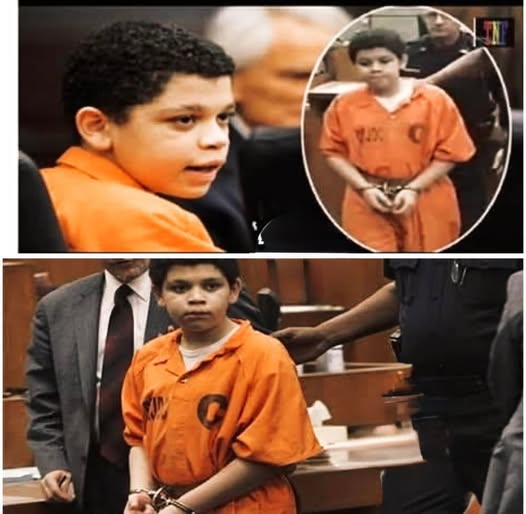
The American legal system stands at a critical crossroads, facing moral and ethical questions that have drawn both national and international criticism. Across the United States prison system, at least 79 individuals who were under the age of 14 when they committed their offenses are currently serving life sentences without the possibility of parole. This stark reality raises urgent human rights concerns, with experts arguing that sentencing a child to die in prison denies their potential for growth, change, and rehabilitation.
For decades, trying children as adults has been a hallmark of “tough on crime” policies, yet the consequences often fall on those least capable of understanding or navigating the system. Organizations such as Human Rights Watch and the Equal Justice Initiative have documented persistent patterns: most children sentenced to life without parole come from backgrounds marked by extreme poverty, abuse, and systemic inequality. Frequently, the acts that result in lifelong imprisonment are the tragic culmination of lives shaped by survival in difficult circumstances, where social supports were lacking.
One high-profile example is Lionel Tate, who in 2001 became the youngest person in modern U.S. history to receive a life-without-parole sentence at just 12 years old for the death of a six-year-old girl. His defense argued that the incident was a tragic accident influenced by professional wrestling moves during play. While Tate’s sentence was later reduced, his case remains a symbol of the broader debate: at what age can society justly hold a child fully responsible for actions committed in an immature and still-developing mind?
The argument against such harsh sentences is supported by research on adolescent brain development. Neuroscientists and psychologists show that the prefrontal cortex, responsible for impulse control, long-term planning, and emotional regulation, does not fully mature until the mid-twenties. Children under 14 act without this full capacity, and sentencing them to life for a single mistake ignores their potential for growth and rehabilitation.
The U.S. Supreme Court has begun to acknowledge these scientific and ethical realities. In Miller v. Alabama (2012), the Court ruled that mandatory life-without-parole sentences for juveniles were unconstitutional, emphasizing their reduced culpability and greater capacity for reform. This was reinforced in Montgomery v. Louisiana (2016), which required retroactive application of the ruling. Yet, practical implementation remains uneven, and many young offenders still wait years for cases to be reviewed, trapped in a legal and emotional limbo.
Reform efforts increasingly emphasize restorative justice over purely punitive approaches. Advocates argue that accountability should not erase a person’s entire future. Restorative programs focus on healing victims, promoting offender responsibility, and repairing communities. For young offenders, this involves personalized interventions addressing trauma, lack of education, and other root causes, instead of merely isolating them behind bars. These programs recognize that empathy can be cultivated and that children who cause harm can grow into constructive, responsible adults with the right support.
Internationally, the U.S. stands out as an outlier. The UN Convention on the Rights of the Child explicitly prohibits life sentences without parole for minors. Critics argue that continuing this practice undermines America’s credibility as a global leader in human and civil rights. The concern is not only about the sentence length but also the message it sends—that some children are deemed irredeemable before reaching adolescence.
Several states have begun reforming their laws, abolishing life-without-parole for juveniles and creating “meaningful opportunities for release” after a set period. Stories of individuals released after childhood incarceration demonstrate the power of rehabilitation and the importance of second chances. Many of these former offenders now advocate for at-risk youth, showing how support and guidance can redirect lives that might otherwise have remained trapped in cycles of crime and punishment.
As we look toward 2026, the case of these 79 children remains a stark reminder of unfinished work in the American justice system. It is a story of lost potential and the heavy cost of a system that sometimes forgets the principle of justice itself. The debate now extends beyond law: it is about the kind of society we want to build. Should a child’s worst mistake define the rest of their life, or should we trust in time, growth, and human resilience to allow a return from the brink?
The stories of these children, hidden behind prison walls, challenge us to address the systemic inequities that brought them there. By prioritizing restoration over punishment, we not only offer a path forward for current inmates but also build a more compassionate and just framework for future generations. A fair system balances accountability and public safety with the belief that every child deserves the opportunity to grow, learn, and redefine themselves beyond their darkest moment.