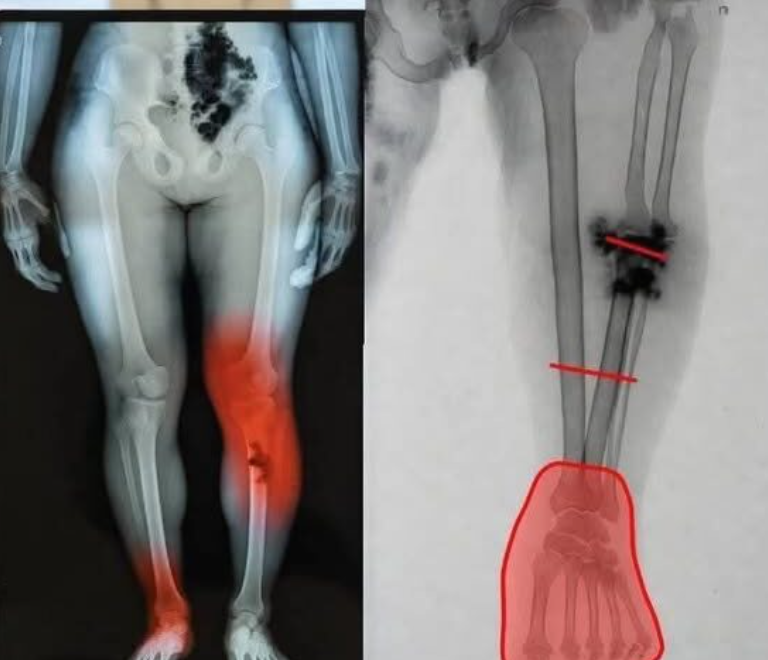
The digital landscape of 2026 continues to grapple with a profound tension: the instantaneous spread of information versus the preservation of medical accuracy. Social media platforms, now more powerful and pervasive than ever, act as double-edged swords. While they allow life-saving news and public health guidance to reach millions within moments, they also provide fertile ground for misinformation to flourish. A recent wave of viral posts exemplifies this danger: images of alleged COVID-19 vaccine-induced limb damage, often paired with shocking X-rays depicting fractured bones, distorted joints, or apparent bone erosion, have ignited widespread fear. For many viewers, these images provoke a visceral reaction—what appears as sudden skeletal collapse is interpreted as incontrovertible proof of harm. However, a deeper investigation, grounded in clinical evidence and expert interpretation, reveals that these claims are not only unsubstantiated but also represent a sophisticated form of medical misdirection designed to exploit lingering post-pandemic anxieties.
The images circulating online primarily show lower leg and foot abnormalities, often including jagged bone structures or unusual growths. To the layperson, these visuals suggest catastrophic side effects. Yet radiologists and orthopedic specialists examining the same images identify completely different etiologies: localized physical trauma, chronic infections such as osteomyelitis, or severe vascular insufficiency. None of these pathologies are connected to the mechanism of mRNA vaccination or any approved viral vector vaccine. Instead, these conditions often predate any vaccination, sometimes by years, and reflect systemic health issues that are unrelated to the immune response targeted by a shot in the arm.
The Anatomy of Viral Misinformation
This phenomenon—where a real medical image is misrepresented to fit a fear-driven narrative—is known among professionals as “anecdotal hijacking.” In this case, X-rays of rare but genuine pathologies have been recirculated, stripped of context, and labeled as proof of vaccine-induced skeletal collapse. In a digital ecosystem dominated by speed over accuracy, posts like these spread exponentially, often reaching tens of thousands of people within minutes. Figures such as Savannah Guthrie and David Muir represent the slower, more deliberative counterweight of traditional journalism, but the “bottom-up” nature of social media ensures that emotionally charged content often eclipses scientifically validated reporting.
Biologically, vaccines are designed to engage the immune system in a highly targeted manner. Specifically, they train white blood cells to recognize viral spike proteins, preparing the body for future encounters with the pathogen. At no point does this immune activation include a pathway capable of directly degrading bone, distorting joints, or inducing structural skeletal collapse. Public health authorities, including the CDC, the European Medicines Agency, and the WHO, continuously monitor millions of doses administered worldwide. While extremely rare side effects such as myocarditis, anaphylaxis, or transient neurological responses have been documented and addressed, the claim that vaccines cause visible limb damage has no basis in controlled clinical trials, post-marketing surveillance, or peer-reviewed research.
Expert Interpretation: What the X-rays Really Reveal
The misunderstanding of radiographic imagery is central to the fear these posts generate. A jagged line or darkened area on an X-ray can appear alarming to an untrained eye, yet it tells a specific story to a professional. Dr. Elena Rodriguez, a senior radiologist with decades of experience, explains: “Bones do not spontaneously disintegrate as a result of an immune response to a vaccine. The images circulating are almost exclusively late-stage manifestations of diabetic complications, high-impact trauma, or untreated infections.” In other words, the visuals are real, but the interpretation imposed by viral posts is entirely fabricated. The misrepresentation not only frightens viewers but also undermines confidence in medical science, encouraging some individuals to avoid interventions that are genuinely life-saving.
The danger of such misinformation is compounded by its speed and reach. A single viral post can outpace careful correction by weeks or even months, creating a persistent “information asymmetry” where fear and emotion dominate logic and evidence. This dynamic has significant consequences for public health: when a population begins to distrust validated scientific guidance, even the most effective vaccination campaigns can suffer diminished uptake, potentially leaving communities vulnerable to preventable disease.
The Global Vaccine Safety Net
Since the rollout of COVID-19 vaccines, public health authorities have implemented one of the most comprehensive vaccine monitoring systems in history. Systems such as the Vaccine Adverse Event Reporting System (VAERS) in the U.S., EudraVigilance in Europe, and the WHO’s global surveillance initiatives serve as early-warning mechanisms, akin to smoke detectors in a fire-prone building. Any genuine pattern of skeletal damage related to vaccination would have triggered immediate investigation, peer-reviewed study, and public reporting. That no such signal has emerged confirms the extremely low probability of these outcomes, reinforcing the conclusion that viral posts are misleading.
The reality of vaccine side effects is far more mundane. Most recipients experience a transient localized reaction—soreness at the injection site, mild fatigue, low-grade fever—signs that the immune system is responding appropriately. Serious adverse events are exceedingly rare, occurring in fewer than one per 100,000 doses, and are typically associated with pre-existing conditions or specific allergic susceptibilities. Far from being systemic catastrophes, these reactions are mostly predictable and manageable, further underscoring the dissonance between actual risk and the panic generated online.
Navigating Digital Medical Truth in 2026
The current “infodemic” underscores a broader societal challenge: separating fact from fear in a media environment designed to maximize engagement. Just as stories of financial fraud or identity theft—like those involving Florence Sutton or Lauren Hart—exploit our instinctual anxieties, misleading medical content preys on our innate concern for bodily integrity. The principles of skepticism and verification are crucial. A viral post, no matter how alarming, should be treated with the same caution as a suspicious email, an exaggerated advertisement, or a “too-good-to-be-true” investment scheme. Trusted verification through academic medical centers, peer-reviewed journals, or reputable health organizations is the only reliable defense against the amplification of falsehoods.
In the case of alleged vaccine-induced limb damage, the takeaway is twofold. First, images must be understood in their proper clinical context. Second, claims must be cross-referenced with rigorous scientific oversight. Only by combining visual literacy with evidence-based reasoning can the public resist the seductive but dangerous narratives propagated online. Failure to do so jeopardizes not only individual decision-making but the collective health of entire communities.
A Call for Resilience and Critical Thinking
While the COVID-19 pandemic has largely receded as an immediate threat in 2026, the psychological reverberations remain. Fear-driven misinformation exploits this residual anxiety, threatening to undo decades of progress in public health literacy. By focusing on verified data, understanding the mechanisms of medical intervention, and maintaining a healthy skepticism toward emotionally manipulative visuals, individuals can reclaim agency over their health.
The claims of limb damage, when scrutinized through the lens of medical science, are revealed as a cautionary tale about the fragility of trust in the digital era. They remind us that while viruses can be contained, the contagion of fear—spread by distortion and misrepresentation—remains a potent and enduring threat. By emphasizing reason, context, and evidence, society can ensure that healthcare decisions remain grounded in reality rather than the emotional manipulation of viral imagery. In this sense, truth itself becomes an act of resilience, protecting both individual well-being and the integrity of public health at large.