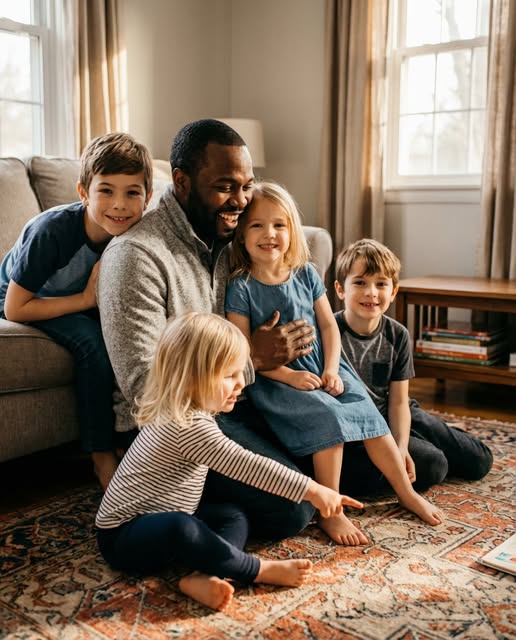
It began with a late-night scroll and a photo I almost didn’t click. Two years after losing my wife and young son in a tragic accident, my house had grown silent in a way words can’t fully capture. Then I saw it: a post showing four siblings huddled together, faces marked with uncertainty. They had already lost their parents, and now the system was preparing to separate them into different homes. Something about their expressions—the way they leaned on each other—hit me like a mirror to my own past. In that moment, I realized I couldn’t change what I had lost, but maybe I could help shape their future.
My name is Michael Ross, and at the time, I was barely holding myself together. Grief had woven itself into my daily life, quiet but persistent. Yet the thought of these children being split apart felt unbearable. The next morning, I called Child Services to learn more. Owen was nine, Tessa seven, Cole five, and Ruby only three. They were in temporary care, waiting for someone willing to take all four. Without fully realizing the impact on my own life, I said the words that even surprised me: “I’ll take them. All of them.”
The process took months—interviews, paperwork, and emotional preparation—but eventually, they came home. My quiet house filled with life again: footsteps echoing down the hall, laughter spilling from the living room, and even the occasional argument.
The transition was not easy. Each child carried their own grief, their own fears, and trust had to be earned. There were sleepless nights, difficult conversations, and moments when none of us knew what to say. Slowly, though, things began to shift. They began to feel safe. Ruby stopped crying herself to sleep. Cole started showing me his drawings. Tessa asked me to sign school forms. And Owen, who had been holding himself together for the others, finally allowed himself to just be a child. One night, he said, “Goodnight, Dad,” without thinking—and neither of us corrected him. We weren’t replacing what had been lost, but together, we were building something new.
About a year later, an unexpected visitor arrived: the attorney who had represented the children’s biological parents. She explained that, before their passing, the parents had created a will and set up a trust for the children, including a house and savings for their future. Most importantly, they had left one clear request: they wanted their children to remain together in the same home. Hearing that brought everything into sharp focus. Without even realizing it, I had honored the one wish their parents had hoped for most.
That night, as the kids slept and the house hummed with the quiet comfort of belonging, I understood something powerful. Family isn’t always about where you start. Sometimes, it’s about choosing to stay together, to care for one another, when it matters most.