The economic landscape of 2026 has painted a picture of complexity and contradiction for the American consumer, especially when it comes to shopping at the local supermarket. As the second term of the Trump administration marks its one-year milestone, the ambitious promises made in 2024—particularly the vow to cut living costs “starting on Day 1″—are being tested against the stubborn realities of global trade, climate changes, and agricultural disruptions. Although the aggressive, double-digit inflation rates that characterized the post-pandemic recovery have subsided, they’ve been replaced by a “new normal” of inconsistent pricing, where a drop in prices in one aisle is quickly countered by a spike in another. For today’s shoppers, the grocery cart has become an important reflection of the shifting national and global economy, where policy decisions made in Washington, D.C., ripple across households from Chicago to the Balkans.
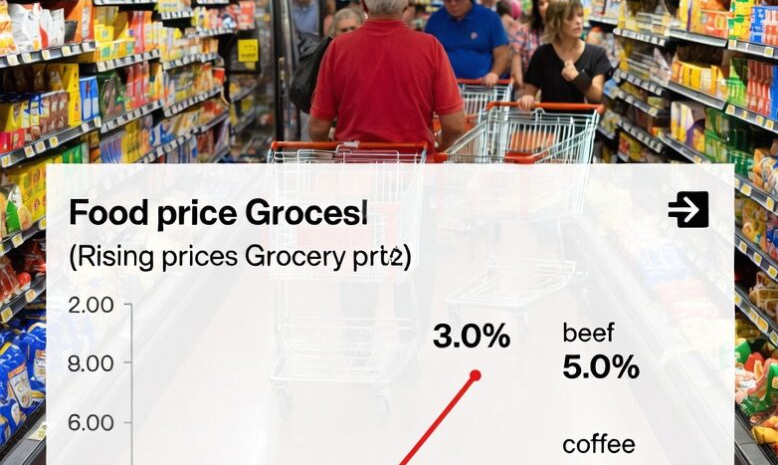
According to data released in January 2026 by the U.S. Department of Agriculture’s Economic Research Service (USDA ERS), food prices in the U.S. are expected to rise by 3.0% over the course of the year. Though this marks a considerable slowdown from the peak inflation seen in 2022, it still conceals the underlying tensions within specific food categories. The consumer experience has become a mix of price drops in some areas and steep rises in others. On the positive side, dairy and poultry aisles have offered some relief. Eggs, once emblematic of food inflation, have dropped nearly 30% from their 2025 highs, thanks to stabilized supply chains and the successful control of avian flu outbreaks. Dairy products, meanwhile, are expected to see a slight dip of about 1%, providing modest relief for household budgets.
However, these gains are offset by significant challenges in the meat and commodity sectors. The U.S. cattle industry is facing its smallest herd in 75 years—a long-term issue that cannot be addressed by policy alone. Combined with rising feed costs and parasitic challenges affecting imports from the southern border, wholesale beef prices have surged nearly 14% over the past year, with a further 6.9% increase projected in 2026. For the average American family, this translates to beef prices soaring by nearly 20% in certain regions, turning a once-affordable staple into a luxury item. Global harvest failures in Brazil, compounded by trade tensions, have sent coffee prices up by 20%, meaning that even the morning cup of coffee is now more expensive.
A significant driver of these ongoing price hikes is the administration’s aggressive tariff strategy. Rolled out throughout 2025, tariffs on goods from China, the European Union, Mexico, and Canada have added extra inflationary pressure. While the administration argues that these tariffs are essential for long-term supply chain resilience and domestic industry protection, the short-term effect has been a “tariff tax” passed directly onto consumers. Estimates from the Tax Foundation and the Yale Budget Lab suggest that more than half of imported food products now carry added costs, contributing between 0.5 and 0.7 percentage points to overall inflation. For a typical household, this policy-driven increase can translate into an additional $1,000 to $1,700 in annual food expenses, much of which is hidden in the price of imported seafood, olive oil, pasta, and tropical produce like Mexican avocados and tomatoes.
The economic strain is further amplified by shifts in the labor market. Immigration enforcement has reduced the available pool of agricultural workers, which has led to higher wages for producers. These increased labor costs inevitably trickle down to consumers. This is especially apparent in the “food-away-from-home” sector. Restaurants and takeout services are experiencing price hikes of 4.6%, nearly double the historical average, as they struggle to balance rising ingredient costs and the need to pay competitive wages in a tighter labor market. For many middle-class families, dining out has become increasingly inaccessible, adding financial pressure to home-cooked meals.
For residents of Pristina and the broader Balkans, the question arises whether this American grocery shift will affect them. While Kosovo remains somewhat insulated due to its reliance on local and European production for staples like bread and dairy, the global food system is deeply interconnected. A stronger U.S. dollar, which often results from aggressive trade and tariff policies, makes dollar-denominated imports such as coffee, chocolate, and certain oils more expensive worldwide. Furthermore, if U.S. demand or policy changes trigger a rise in global commodity prices for grains or fertilizers, the impact will eventually be felt in Pristina and beyond. The IMF predicts a stabilizing inflation rate of 2% for Kosovo in 2026, but the volatility of global energy prices and freight rates remains an unpredictable factor that could increase import costs in Eastern Europe.
The broader economic picture revealed in the January 2026 Consumer Price Index (CPI) data shows a slight easing of national food inflation to 2.9% year-over-year, but the actual experience varies greatly depending on geography. In urban areas like Chicago or New York, shoppers report real-world grocery costs increasing by double digits, far exceeding the moderated national average. This disparity has led to ongoing consumer anxiety, with grocery prices consistently topping polls as Americans’ number one concern. The psychological toll of seeing “10%” added to a receipt or “180°C” temperature forecasts only compounds the sense of financial uncertainty.
Looking ahead to the rest of 2026, consumer strategy will be one of vigilance and adaptability. In the U.S., households are increasingly opting for store brands, buying in bulk, and shopping seasonally to manage the 3.0% price forecast. In Kosovo and the Balkans, the lesson is about monitoring the global interconnections; a tariff decision made in Washington today can subtly affect the price of an imported good months later. The “massive changes” predicted for grocery prices are not singular events, but a series of incremental policy-driven shifts that require more sophisticated household management.
In conclusion, the grocery situation in the U.S. in 2026 tells a story of mixed relief. The sweeping reductions promised during the campaign have been stifled by the smallest cattle herd in generations, global climate impacts on crops, and the self-imposed challenges of international trade wars. While the drop in egg prices offers a small respite, the rising costs of beef, coffee, and restaurant meals serve as stark reminders that the cost of living remains a stubborn challenge. Moving forward, the intersection of climate, policy, and economics will continue to dictate what consumers see in their grocery carts. For now, the best advice for any shopper—whether in the American Midwest or the heart of the Balkans—is to stay informed, shop wisely, and recognize that in an interconnected world, there’s no such thing as a purely local price tag. The evolution of the grocery store in 2026 reminds us that while headlines may promise quick fixes, the realities of the dinner table are shaped by deeper, more complex forces.