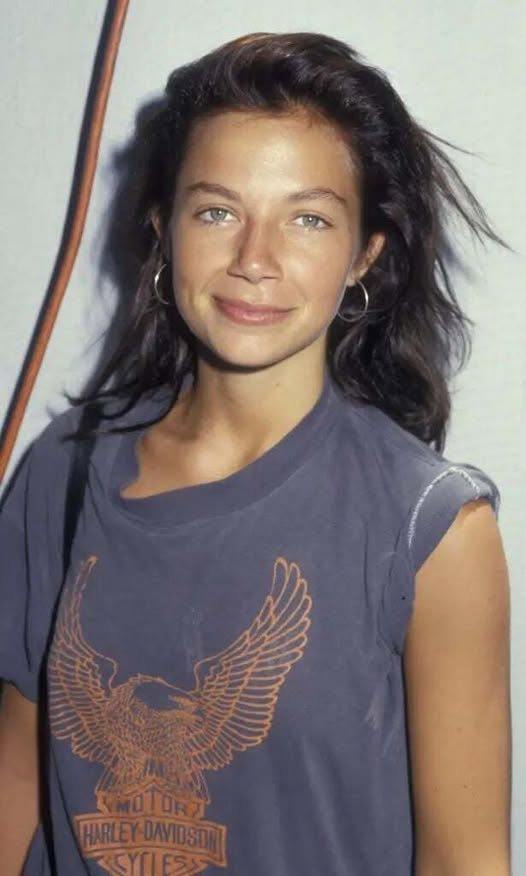
Justine Bateman, widely recognized for her role in the beloved television series Family Ties, has once again found herself in the spotlight—this time not for a new acting project, but for her unapologetic and powerful stance on aging naturally. At 57, Bateman has openly addressed the criticism she has received about her appearance and the recurring questions about why she has chosen not to pursue cosmetic surgery or other aesthetic procedures to maintain a more “youthful” look.
Rather than bowing to the immense societal pressure placed on women—especially those in the public eye—to preserve a certain standard of beauty, Bateman has firmly rejected those expectations. She has spoken candidly about the unrealistic ideals that dominate Hollywood and social media, where aging is often treated as something to be hidden, corrected, or erased. In doing so, she encourages others to question these norms and to embrace their natural beauty, along with every life stage it represents. For Bateman, the decision to forgo cosmetic enhancements is not a passive choice; it is an intentional and deeply personal act of self-acceptance and self-expression.
Her perspective is rooted in confidence and authenticity. Bateman believes that aging is not something to fear or resist, but a natural and meaningful journey. The physical changes that come with time—lines, wrinkles, and gray hairs—are, in her view, visible markers of a life fully lived. They reflect experiences, hardships overcome, lessons learned, and moments of joy and triumph. Each mark tells a story, forming a visual record of personal growth and resilience.
To remove or significantly alter those signs, she argues, would be like erasing chapters of her own history. Bateman sees cosmetic procedures not simply as aesthetic adjustments, but as actions that can strip away the visible evidence of wisdom and maturity. In her eyes, embracing one’s natural face is a way of honoring the years and everything they have brought. She challenges the idea that youth equals value, pointing out how deeply ingrained that belief is in modern culture.
In a society where looking young is frequently equated with relevance, desirability, and worth—particularly for women—Bateman’s stance stands out as both refreshing and quietly revolutionary. By choosing authenticity over conformity, she sends a powerful message: beauty does not diminish with age, and self-worth should never depend on how closely one aligns with ever-changing beauty standards. Through her example, she invites others to redefine what it means to age gracefully—not by resisting time, but by accepting and honoring it.