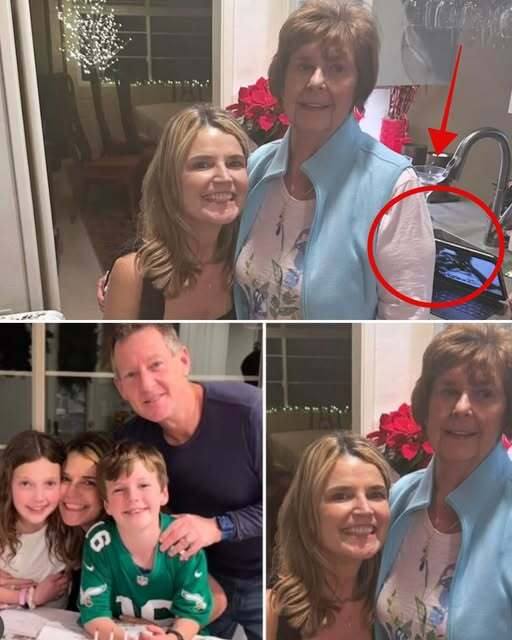
Viral Rumors About Savannah Guthrie’s “Confession” Spread Online — Separating Fact from Fiction
In recent days, numerous social media posts and online articles have suggested that Savannah Guthrie made a shocking on-air confession regarding her mother, Nancy Guthrie. These posts, often highly emotional and dramatic, have described supposed hidden motives, secret involvement, and explosive revelations meant to captivate readers.
However, as of now, there is no verified evidence supporting these claims.
Media analysts and professional journalists note that the narrative circulating online appears to be fictionalized or exaggerated, designed primarily to generate clicks, emotional reactions, and social engagement rather than to report confirmed facts.
How the Rumor Originated
The story began spreading rapidly on platforms such as Twitter, TikTok, and certain unverified websites. Posts framed the situation in a sensational, almost novelistic style, emphasizing “confessions” and “hidden truths.”
Yet, these claims consistently lacked:
Official sources or statements
Court records or legal filings
Police confirmations
Credible reporting from established news outlets
Within hours, the story had been widely shared, creating confusion and anxiety among readers. Experts identify this as a typical pattern in viral misinformation campaigns, where emotionally charged narratives spread faster than verified facts.
What Credible Sources Report
Reputable media organizations, including NBC News, have not reported any confession or implication of Savannah Guthrie in any criminal activity. Key points confirmed by credible outlets include:
No law enforcement agency has named her as a suspect
No charges have been filed against her
No verified statements exist to support these allegations
No official investigation links her to wrongdoing
Journalism watchdogs emphasize that if such an event were factual, major news organizations would have immediately reported it.
Why Emotional Stories Spread Quickly
Digital media researchers note that stories containing the following elements are highly likely to go viral, even when false:
The names of well-known public figures
Family tragedy or personal conflict
Allegations of betrayal
Claims of secret confessions
These stories trigger strong emotional reactions, prompting readers to share and comment before verification. Algorithm-driven platforms can amplify such content, making fiction appear credible through sheer repetition.
The Real Impact of False Allegations
Spreading unverified claims can have serious consequences. Psychologists and media ethicists warn that false stories can:
Damage reputations of those mentioned
Cause emotional harm to families
Erode public trust in journalism
Confuse readers who are seeking accurate information
For individuals already facing personal or professional stress, misinformation adds an additional layer of trauma. Responsible reporting requires verification, caution, and empathy.
Public Reaction and Online Debate
Despite the lack of evidence, many online communities quickly began analyzing the rumor. Some users examined facial expressions in interviews, while others speculated based on unverified second-hand accounts.
Media literacy experts caution that these “crowd investigations” often lead to false conclusions and can reinforce misleading narratives. They encourage readers to rely on primary sources and verified news reporting, rather than speculation or social media commentary.
Why Verification Matters, Especially in High-Profile Cases
When public figures are involved, misinformation spreads faster and farther than in ordinary circumstances. Journalists recommend three basic precautions for readers:
Check multiple credible sources before believing a claim
Look for official statements or confirmations
Avoid anonymous, sensational, or unverified websites
Without these safeguards, fictional stories can be mistaken for factual accounts.
Reflection: Truth, Responsibility, and Digital Ethics
This situation highlights the delicate balance between curiosity and responsibility in the digital age. While people naturally seek answers in emotionally charged stories, truth cannot be built on speculation alone.
Faith leaders, counselors, and media ethicists often remind communities that justice and clarity require patience — not viral judgment. In uncertain situations, it is usually wiser to prioritize verification over immediate reaction.
Conclusion: No Evidence Supports the “Confession” Claims
Currently, there is no reliable information indicating that Savannah Guthrie made any confession or was involved in wrongdoing. The circulating story appears to be a fictionalized narrative, not a factual report.
Readers are encouraged to trust established news organizations and official sources when following sensitive cases. In today’s era of rapid information sharing, protecting the truth is not only a journalistic responsibility — it is a shared social duty.