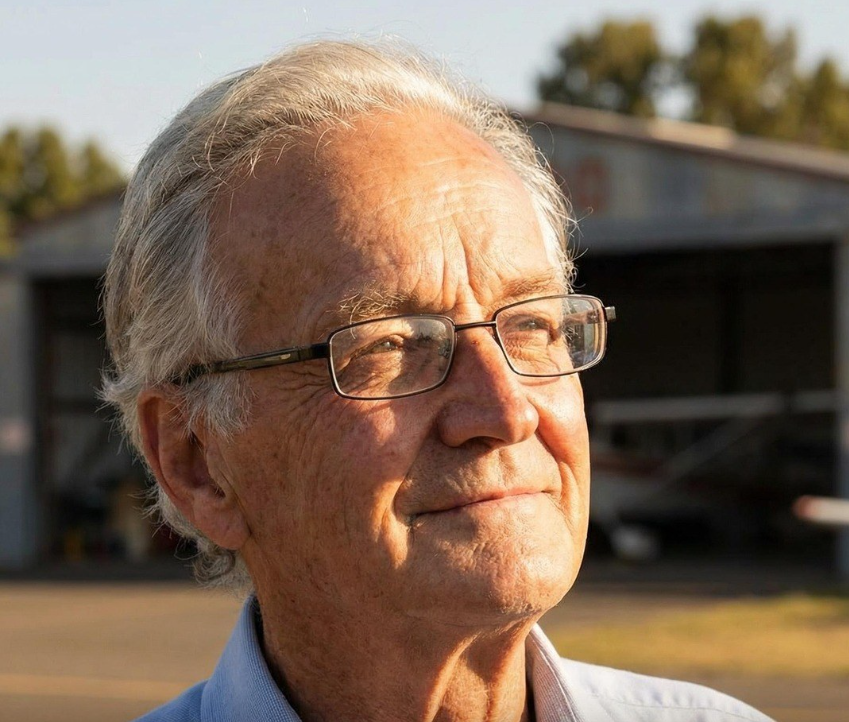
The global conservation community mourns the loss of a true giant in wildlife biology—one whose lifelong dedication reshaped how humanity understands the African elephant. For over sixty years, he immersed himself in the lives of these majestic creatures, uncovering the intricacies of their emotions, social hierarchies, and extraordinary communication. His work transcended academic study; it was an act of empathy that transformed the African elephant from a distant silhouette on the horizon into a sentient, familial being recognized worldwide. As tributes pour in—from heads of state to scientific institutions and grassroots advocates—the consensus is clear: the world has lost its most eloquent advocate for the voiceless.
Iain Douglas-Hamilton’s journey began in the vast expanses of East Africa, where he introduced a revolutionary method for studying megafauna. Prior to his work, elephants were often seen merely as populations to manage rather than as complex societies to understand. Douglas-Hamilton pioneered the individual-based approach, meticulously tracking unique ear notches, tusk shapes, and temperaments to distinguish one elephant from another. By naming and following them through droughts, births, and the arrival of calves, he created the first detailed “biographies” of elephants, revealing the depth of matriarchal leadership and the profound grief elephants display when a herd member dies.
His research became the foundation for one of the most important conservation victories of the modern era. At a time when the ivory trade was decimating elephant populations, Douglas-Hamilton emerged as a fierce advocate. Using data that illustrated the collapse of elephant societies due to poaching, he took his findings to international forums. His testimony and lobbying were pivotal in the historic 1989 global ban on ivory. He understood that saving the species required altering the political and economic forces driving their slaughter—and he navigated the corridors of power with the same steady determination he applied when tracking elephants in the wild.
As technology advanced, so too did his methods for protecting the herds. Recognizing that habitat loss and fragmented migratory paths were the greatest threats in the 21st century, he founded Save the Elephants, a globally respected conservation organization. He introduced satellite-linked GPS collars, allowing researchers to track elephants across thousands of miles in real-time. This “eye in the sky” revealed hidden migratory routes, showing how elephants avoid human conflict zones and cross borders in search of sustenance. These insights became the blueprint for modern land-use planning, guiding governments in creating wildlife corridors for peaceful human-elephant coexistence.
Douglas-Hamilton’s approach to conservation was inclusive. He believed that protecting elephants depended on empowering the local communities sharing their land. He advocated “respectful stewardship,” emphasizing education and empathy over fences and firearms. Every person living near a reserve could be a guardian, and he spent as much time in village meetings as he did in the field. His rare ability to translate complex science into a moral call inspired generations of conservationists to carry on his work.
The impact of his research is staggering. When he began studies at Lake Manyara in the 1960s, little was known about the space a healthy herd requires. Today, thanks to his tracking programs, we know elephant populations may need areas exceeding $10,000\text{ km}^2$. His work on acoustic communication revealed that elephants use infrasonic calls, below the range of human hearing, to communicate across distances up to 10 km. These discoveries fueled global fascination, securing political and financial support for conservation.
Despite his renown and awards, including the OBE, he remained humble and family-oriented. He is survived by his wife, Oria, and daughters Saba and Dudu, who have continued his conservation and filmmaking legacy. His six grandchildren grew up hearing stories of the “Great Tuskers,” inheriting a worldview that prioritizes nature over material gain. Yet, as his family mourns, they acknowledge that his truest kin are the elephants whose lives endure because of his work.
Iain Douglas-Hamilton’s legacy extends beyond academia and organizational headquarters. It resonates in the stride of a matriarch across the Samburu plains, in the quiet of a protected forest, and in the eyes of children learning that elephants are beings of memory, love, and wisdom. He proved that a single person, armed with binoculars and courage, could confront extinction and effect lasting change. As his remarkable life concludes, the echoes of his work continue across the continent he cherished—a testament to a man who didn’t just study nature but safeguarded the very soul of the planet.
The 1989 ivory ban remains a benchmark in international wildlife policy, and the GPS tracking systems he developed are still essential tools for park rangers combating poaching. His life exemplifies the power of persistence and serves as a reminder that though environmental challenges are immense, human determination is equally formidable.