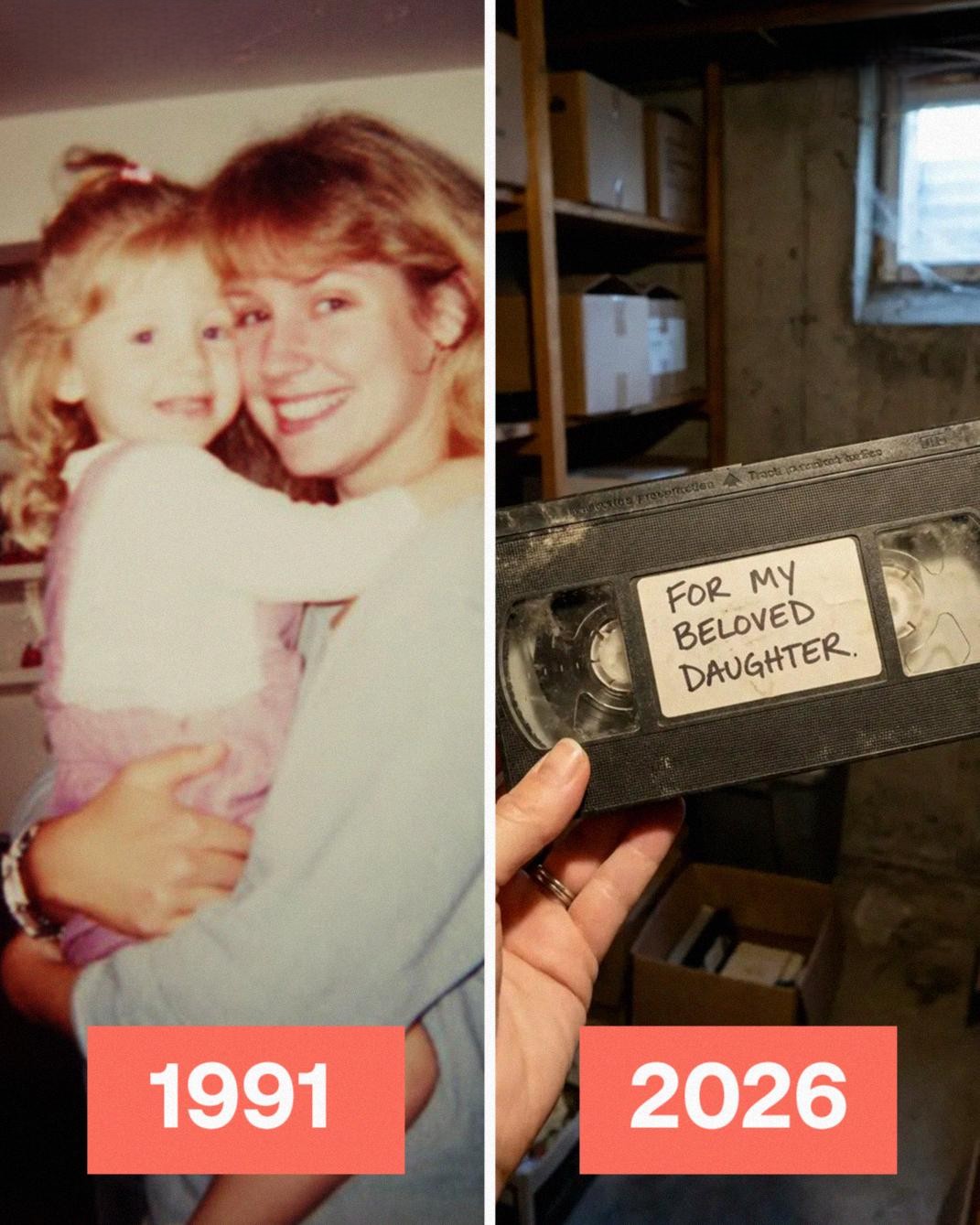
The human memory is a fragile and unpredictable thing, especially when it comes to early childhood. For most, those years are a blurred montage of colors and sounds, but for me, they are defined by a single, sharp fracture in time. I was three years old the last time I saw my mother. The memory remains seared in my mind with unnatural clarity: I stood on our neighbor’s front porch, the rough wood beneath my bare feet, clutching a worn stuffed rabbit against my chest. My mother knelt before me, her eyes searching mine with a depth of emotion I couldn’t yet comprehend. She promised she would return before dinner, kissed the top of my head, and walked away. She never came back. The police called it a “vanishing act”; I called it the end of the world.
Thirty-five years later, my world began to shift, piece by piece. I had grown up under the loving care of Linda, the neighbor who had taken me in that fateful afternoon. She had filled the void my mother left behind, raising me with a fierce devotion that ultimately led to her legally adopting me. I built a life I was proud of—a career, a husband I adored, and children of my own—but I never could bring myself to sell the small brick house where my mother and I had once lived. It stood, silent and dusty, like a monument to the ghost of a woman I barely knew but could never fully forget.
The catalyst for uncovering the truth came when Linda announced she was moving into a retirement community. She could no longer maintain the quiet guardianship of my mother’s estate, and the responsibility fell to me. Returning to that house felt like stepping into a time capsule. The air was heavy with stagnant dust and years of unanswered questions. On the third day of cleaning, I found myself in the basement, navigating through boxes that seemed to multiply with each step. As I moved a stack of crates, I bumped into a section of the wood paneling that felt suspiciously loose. When I knocked, the hollow sound echoed like a secret.
I pried the panel free, my heart pounding in my chest. Tucked into the darkness of the wall was an old VHS tape. The label bore my mother’s elegant handwriting: For My Beloved Daughter. I didn’t walk back upstairs—I ran. I found an old VCR, fumbled with the cords, and sat on the floor as the screen flickered through blue static. Then, the image cleared. My mother appeared, sitting at our old kitchen table. She looked young, vibrant, and terrified.
As she spoke, the foundation of my life began to crack. She wasn’t speaking to me directly; she was speaking to Linda. “If you’re watching this, then something has gone terribly wrong,” she began, her voice trembling but resolute. She revealed a truth hidden from everyone: my father wasn’t dead. She had lied to protect us from a man named Daniel—someone she described as dangerous. For weeks before her disappearance, he had been tracking us, calling her repeatedly, demanding something she had. She had arranged a meeting with him, hoping to gather evidence against him to secure our freedom.
“If I don’t come back,” she whispered, her eyes filled with sorrow, “promise me you won’t let him take Adrienne. Use the documents to expose him. I’ve hidden everything in the basement, behind the furnace panel.”
The tape clicked into silence, and a chilling cold settled over me. I returned to the basement, now focused on the furnace. I pressed against the second board from the left. It gave with a dull scrape. Behind it lay a plastic-wrapped bundle, thick with the dust of thirty-five years. As I sat on the cold concrete floor and began to unwrap it, I felt like I was finally meeting the woman who had given me life.
The documents were a meticulous archive of investment fraud—bank account numbers, wire transfers, fraudulent signatures—all linked to the name Daniel. On top of the stack lay a final letter. In it, my mother explained that she had discovered the extent of my father’s crimes when I was just a baby. When she confronted him, he threatened to take me away, ensuring I’d never see her again. She fled that night, taking the documents as a form of insurance, hoping they would shield us from harm. For three years, it worked. But eventually, the shield failed.
The weight of that letter was overwhelming. For my entire life, I had thought of my mother as simply a victim of fate. Now I understood that she had been a protector—a woman who walked into a trap, refusing to let a predator near her child. There was no grand public trial or dramatic moment of revelation. The resolution came quietly, in the form of a trip to the authorities.
The investigation moved slowly, as true justice often does. The documents my mother had preserved led investigators through decades-old records. Two months later, I received a call that would change my life forever: they had found Daniel. He was arrested for the original fraud, but more importantly, my mother’s missing person’s case had been reopened as a homicide investigation. The evidence she had hidden for me provided the motive that had been missing for thirty-five years.
I drove to Linda’s new home to share the news. When I told her about the video and the documents, the woman who had spent thirty-five years wondering if she could have done more simply wept. She held my hand and reminded me of the one truth that had never changed: my mother loved me enough to disappear.
As I sat there with the woman who had raised me, the fog of the past began to lift. The house that had once been a ghost of brick and mortar was no longer a place of fear. It was the place where a mother fought for her daughter’s future from beyond the grave. I finally understood that I hadn’t been abandoned that day on the porch. I had been saved. The truth was devastating, but it was also liberating. For the first time, I could look at my own children and know exactly who I came from: a woman of unimaginable courage who made sure her voice would reach me, no matter how long it took. My mother didn’t just vanish; she waited in the silence, until I was strong enough to find her.