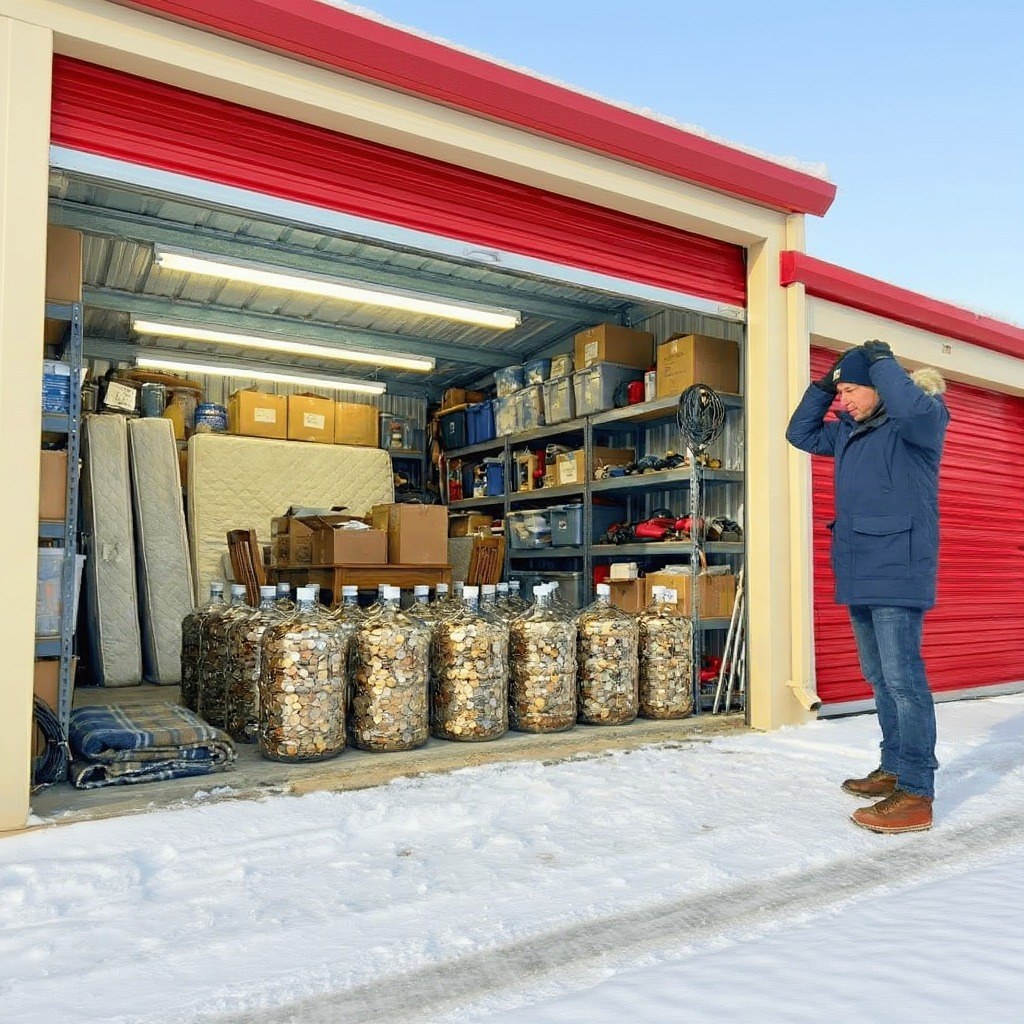
When Daniel Harper raised his bidder card that sweltering Saturday morning, his pulse wasn’t racing with the usual thrill of the chase. Instead, it was weighed down by a sense of desperation so heavy it felt suffocating. At thirty-seven, Daniel was a single father, navigating the precarious edges of lower-class life in Tulsa, Oklahoma. His world consisted of a cramped two-bedroom apartment that still smelled faintly of microwave dinners, a warehouse job that demanded double shifts, and a back that ached constantly from the strain. His hands were worn and cracked from labor, bearing the deep, dry marks of winters spent working too many hours in harsh conditions.
For the past three years, ever since his wife had vanished without a trace—leaving behind only a hastily written note and an emptiness in their eight-year-old daughter Lily’s life—Daniel had become a master of juggling the impossible. He had taken on the roles of breadwinner, bedtime storyteller, homework tutor, and the primary source of emotional support. Yet the math of survival was no longer adding up. The final straw came when a fluorescent orange notice was taped to his door: “Rent Past Due. Final Warning.” Daniel had only $413 left in his checking account, and his landlord required $1,200 by Monday morning or they would be evicted.
The tip-off about the auction at Red River Storage had come from a coworker who mentioned vintage guitars and forgotten fortunes. When Daniel showed up, he wasn’t sure what to expect, but he had no other options. The metal door to Unit 32 groaned open, and a collective sigh of disappointment spread through the crowd. There was no shiny chrome, no rare antiques, no hidden treasures. Instead, there were rows upon rows of giant, glass water jugs—the vintage office cooler kind. Each one, however, was filled to the brim with coins. The professional bidders immediately lost interest, scoffing at the “pennies mess” that would take weeks to sort and even longer to cash in. But to Daniel, the sight was different. He didn’t see a logistical nightmare; he saw volume. And in the world of currency, volume equals value.
When the bidding stalled at $125, Daniel’s gut told him to push. He hesitated for a moment—$250 was half of his remaining grocery money—but he went for it anyway. As the gavel fell, Daniel became the owner of a literal ton of pocket change.
The work that followed was grueling. With a borrowed pickup truck, Daniel and Lily spent the entire afternoon hauling the heavy glass jugs into their small apartment. By evening, their living room was transformed into an absurd, surreal treasury. Jugs lined the walls, their surfaces dusty and tarnished, each one containing a chaotic mosaic of copper and silver coins.
That night, Daniel and Lily sat cross-legged on the floor, determined to count the change. The first jug yielded $412.37, nearly enough to cover the overdue rent. As they continued, their excitement grew. Hours later, they stood in front of the coin-counting machine at the local grocery store, ignoring the glares of impatient customers behind them. The machine roared to life, rattling under the weight of thousands of coins. By midnight, after only processing three jugs, the total stood at $1,326.82—enough to cover the rent, with more to spare. For the first time in years, Daniel felt the suffocating weight on his chest begin to lift. But what started as a survival story soon evolved into a discovery that would change his life.
As they moved through the older, dustier jugs toward the back of the unit, Daniel began to notice something peculiar. The previous owner hadn’t just been saving spare change. They had been hoarding it for decades. Among the piles of common pennies and quarters, Daniel began spotting coins that were different. He found rare “Wheat” pennies from the early 1900s, silver Roosevelt dimes, and Buffalo nickels—some dating back nearly a century.
Curiosity led him to a local numismatist, Mr. Abernathy, a kindly old man who ran a small, cluttered shop downtown. Daniel brought him a small velvet pouch filled with some of the “unusual” coins. After adjusting his loupe, Mr. Abernathy’s eyes widened as he inspected a 1943 copper penny—a legendary error coin from the war years when most pennies were made of steel. Then, he examined a 1916-D Mercury dime in near-mint condition.
“Mr. Harper,” the shopkeeper said, his voice trembling slightly. “Whoever owned that unit wasn’t a casual saver. They were a collector. They used the jugs for storage. Some of these coins are worth significantly more than their face value. Significantly more.”
Over the next month, the “Jugs of Coins” became a full-time project for Daniel and Lily. Each evening, they worked together with magnifying glasses and reference books. They uncovered a treasure trove of rare American currency. Pre-1964 silver quarters, worth their weight in precious metal, were found among the less remarkable coins. There were rare mint marks that transformed a five-cent piece into a three-hundred-dollar asset.
The financial transformation was nothing short of staggering. Once the rare coins were appraised and the bulk change deposited, the total value of the contents of Unit 32 reached into the high five figures. It wasn’t just “rent money” anymore. It was a down payment on a house, a college fund for Lily, and the means to end the grueling double shifts at the warehouse.
Daniel didn’t use the newfound wealth to indulge in a flashy car or a luxury vacation. Instead, he bought a small, sturdy home with a yard for Lily to play in—a place where they would never again have a “Past Due” notice taped to the door. In his new home office, he kept the last glass jug, now cleaned and empty, as a reminder of the fateful Saturday morning when he had placed his last bet on the belief that even the most overlooked things can hold a fortune.
But the true change wasn’t just in Daniel’s bank account—it was in his spirit. The hollow, haunted look of a man drowning in debt was replaced by the steady, unwavering gaze of a father who could finally promise his daughter a future. He had gambled with rent money and found a legacy. As Lily grew older, she would often tell her friends about the “Treasure of Unit 32,” but Daniel knew that the real treasure wasn’t the copper, the silver, or the rare coins—it was the hope he had found at the bottom of a glass jar when he thought there was none left.