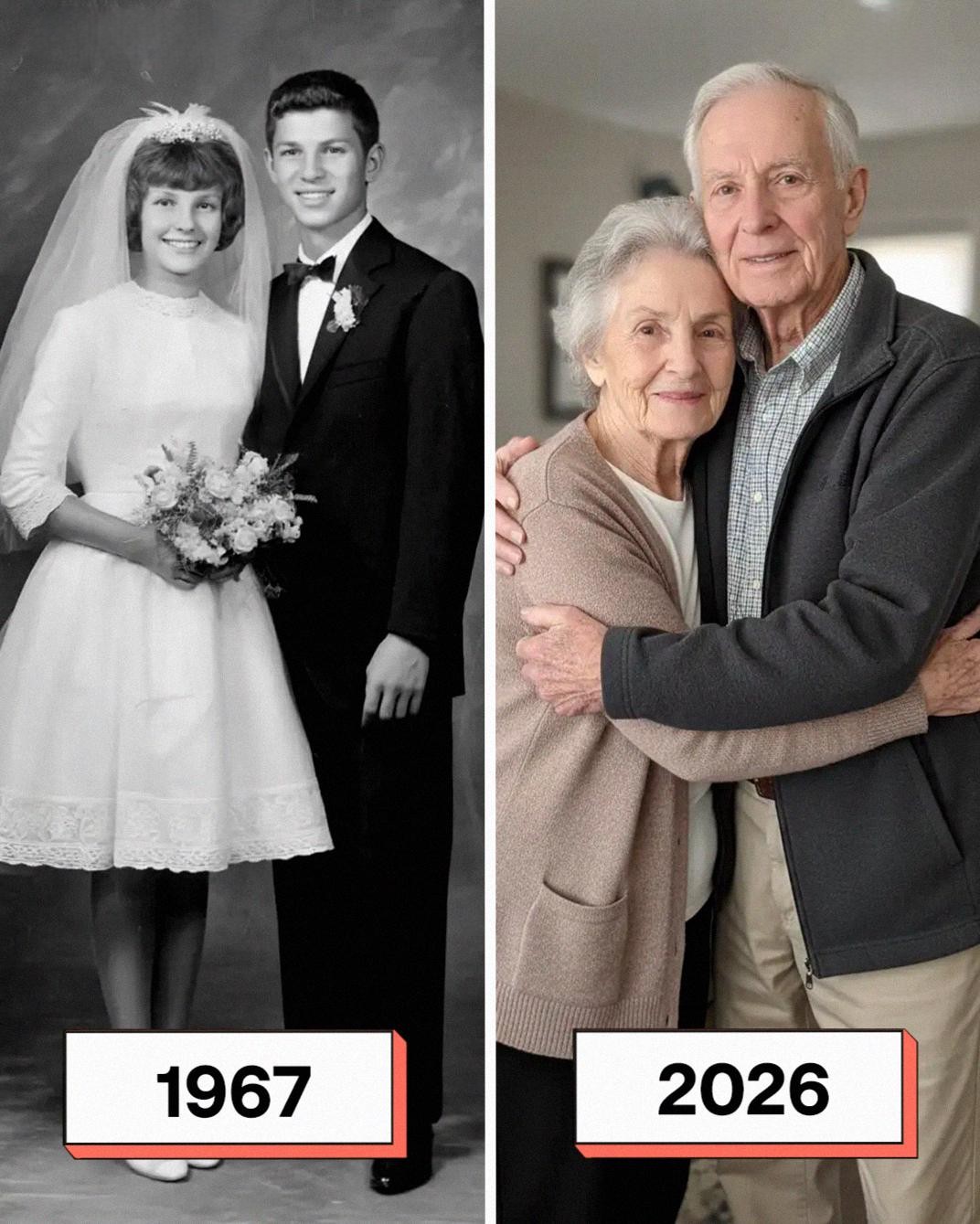
In the quiet rhythm of sixty years of marriage, trust becomes as natural as breathing. At seventy-eight, I believed I knew every corner of Henry’s soul, just as he knew exactly how I took my tea and when a crumb needed brushing from my sweater. We were the “inseparable” couple, a high school romance that had weathered decades of factory shifts, raising four children, and the joyful chaos of seven grandchildren. Yet, for all our transparency, there was one threshold I was never allowed to cross: the heavy wooden door of the garage.
Henry’s “one crazy rule” was a gentle, persistent request. He spent hours in there, the faint strains of old jazz and the sharp scent of turpentine drifting beneath the door frame. Whenever I teased him about what he was hiding, he would simply laugh and say I wouldn’t want to see his mess. For most of our lives, I respected that boundary. Everyone deserved a sanctuary. But recently, a shift in the atmosphere of our home weighed heavy on my heart, accompanied by a nameless dread. Henry began to watch me with a gaze that wasn’t quite romantic—it was more like profound, lingering fear.
The facade cracked on a Tuesday afternoon when Henry left for the market, leaving his gloves on the kitchen table. Thinking he was still in his workshop, I walked down the path. The door was slightly ajar, a sliver of golden afternoon light cutting through the interior gloom. I pushed it open, expecting to see a cluttered workbench. Instead, I found myself standing in a cathedral of memory. Every inch of the garage walls was covered in hundreds of portraits of a single woman. She was laughing, sleeping, weeping, and dreaming. I pulled a canvas from the wall, my hands trembling, and looked into eyes I barely recognized as my own.
The discovery was more than an art gallery; it was a timeline. Beneath each portrait, Henry had written dates—some from our past, others from the future. Before I could process the shock, Henry appeared in the doorway. He looked terrified, not like a man caught in an affair, but like a man caught in a desperate lie of protection. When I demanded an explanation, accusing him of a secret obsession or a digital-age mistress, he simply whispered that he was painting to “hold on to time.” He begged for my trust, promising the truth later, but the seed of doubt had already sprouted.
In the days that followed, the silence between us grew loud. I began to watch him as closely as he watched me. I caught him withdrawing significant amounts of cash from our safe and slipping into his good jacket—the one reserved for doctors and lawyers. One morning, I followed him across town to a private neurology clinic. Standing in the shadows of the hallway, I listened through a cracked door as a doctor spoke to my husband about a condition “progressing faster than hoped.”
I heard them discuss a timeline for deterioration: 2026 for early memory loss, 2027 for the failure to recognize faces, and 2032 for the advanced stage. The realization hit me like a physical blow; they weren’t talking about a stranger or a secret lover. They were talking about me. The dates on the paintings weren’t random. Henry had been obsessively documenting every nuance of my expression, trying to preserve the woman I was before Alzheimer’s fogged her mind. He was painting my future confusion, so he would still recognize me when I could no longer find myself in a mirror.
I pushed the door open, confronting the two men with the truth of my presence. Henry’s apology was a flood of suppressed grief. He had known for five years, keeping the diagnosis to himself to shield me from the terror of my own fading mind. Every time he tried to tell me, the words died in his throat. I sat in that clinical chair and finally understood the “mess” in the garage. It wasn’t a secret life; it was a desperate attempt at preservation.
That night, the garage door stayed open. Henry walked me through the gallery, which had become a map of our sixty years together. He showed me the portrait from our high school chemistry class, where I was seventeen with paint on my nose. He showed me the glowing, exhausted mother of 1970 and the vibrant grandmother of 2005. Then, he led me to the future wall. In the 2027 portrait, my eyes were clouded with the first signs of disorientation. By 2029, the canvas showed a woman sitting in a garden chair, looking at her own daughter with the polite, distant smile one gives a stranger.
The final painting, dated 2032, was the most painful. The eyes were entirely vacant, fixed on a horizon I could not see. But in the bottom corner, Henry had painted a small, steady hand holding mine. Beneath it, he had written: “Even if she doesn’t know my name, she will know she is loved.” I took a pencil from his workbench and, with a hand that still felt like my own, I added my own vow: “If I forget everything else, I hope I remember how he held my hand.”
The revelation transformed the way we lived. I stopped being a passive observer of my own life and became an active participant in my survival. I started a journal, documenting the names of our children and the specific, idiosyncratic details of our life—the way the light hits the kitchen at four o’clock, the smell of Henry’s jazz records, the specific blue of our first car. Henry no longer hid his art supplies or his fear. Instead, we turned the garage into a space of active remembrance.
I know the treatment we are pursuing—the expensive experimental trials Henry was willing to sell our house to fund—is a gamble against a relentless tide. Already, there are days when the names of my grandchildren slip through my fingers like water, leaving me grasping at the air. But now, when I walk into a room and forget why I am there, I don’t feel the sharp sting of embarrassment. I look at the man who has spent sixty years preparing to be my memory, and I trust him to lead me back.
If the day comes when I look at Henry and see only a kind stranger, I’ve left instructions in my journal for someone to read my own words back to me. I want to be reminded that the man standing before me is my heart, and that even if my mind has surrendered its history, my soul will recognize his presence. We are living in the “today” we have left, anchored by a love that refuses to be forgotten. Henry wasn’t hiding a secret to hurt me; he was building a lighthouse so that when I am lost at sea, I might still see the flame.