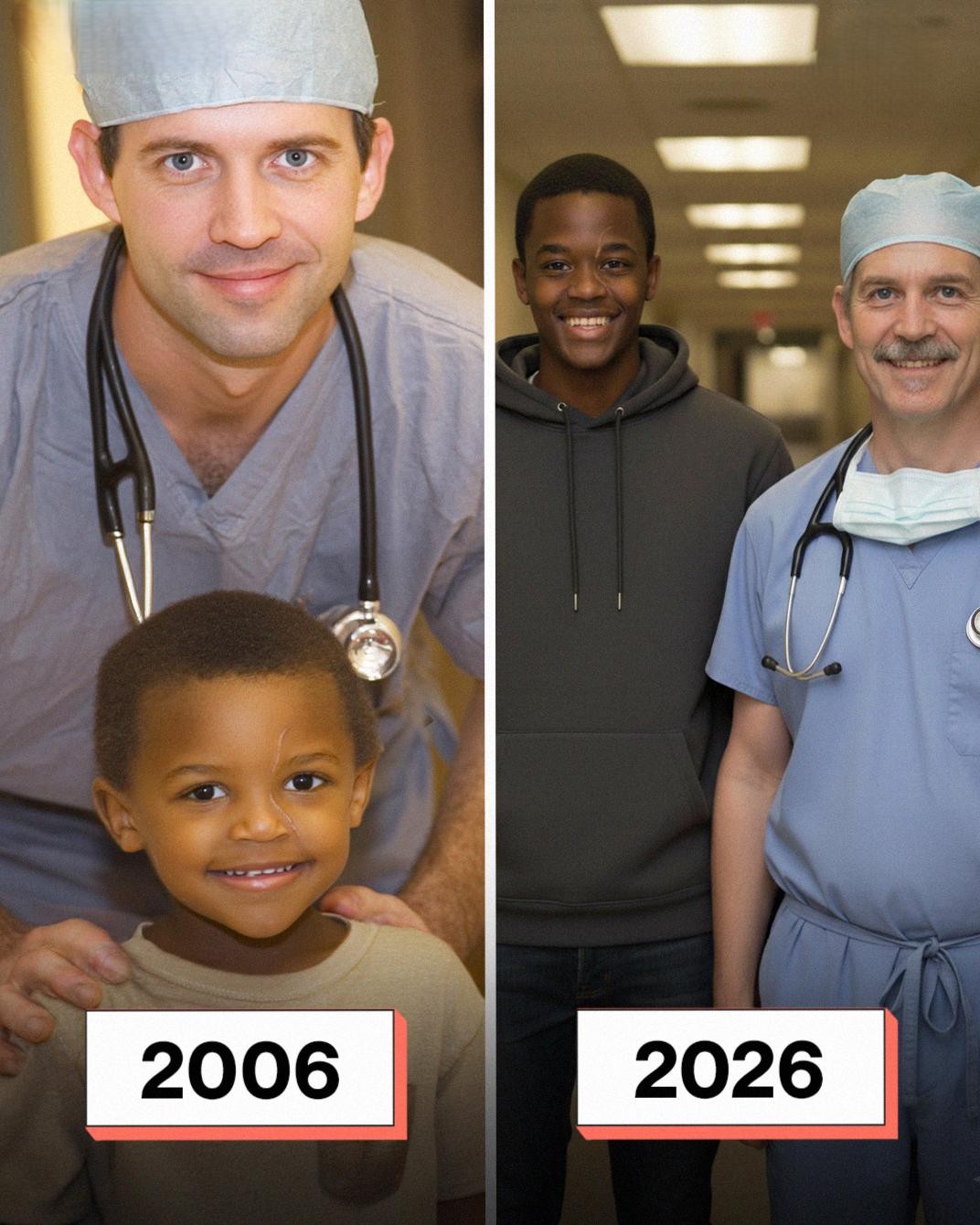
A career in surgery is usually judged by precision, steady hands, and successful outcomes. Yet every so often, life intervenes to remind us that the hearts we mend are connected to stories that can circle back into our own. I began my path in cardiothoracic surgery, a specialty defined by relentless pressure and zero tolerance for mistakes. At just thirty-three, newly appointed as an attending surgeon, I carried the quiet burden of imposter syndrome that shadows many young doctors. My nights were spent walking sterile hallways under fluorescent lights, my white coat feeling less like a badge of honor and more like protective armor against the terrifying truth that someone’s life could rest entirely in my decisions.
My first true trial came late one humid evening when my pager blared with the unmistakable urgency of a Level 1 trauma. A five-year-old boy had been brought in after a horrific high-speed collision. The initial signs were ominous—faint heart sounds and swollen neck veins—clear indicators of pericardial tamponade. Blood was collecting around his heart, compressing it with every strained beat. As I rushed toward the trauma bay, the surrounding noise seemed to dissolve into a single, pounding rhythm. When I saw him, small and fragile beneath a tangle of tubes and frantic hands, a wave of panic nearly overtook me. He looked impossibly young, like a child caught in a nightmare far too large for him.
Inside the operating room, everything narrowed to the rise and fall of his tiny chest. I can still picture the contrast of his dark lashes against pale skin. Once I opened his chest, the damage proved severe: a rupture in the right ventricle and significant trauma to the ascending aorta. There was no senior surgeon to step in. Every clamp, every stitch, every decision was mine. At one point his blood pressure crashed and the monitors screamed in protest, but surrender was never an option. After hours of relentless focus, we stabilized him. When the anesthesiologist finally said the word “Stable,” it felt like a blessing spoken into sacred air.
Leaving the operating room, I met his parents in the hallway. Their faces were drained of color, suspended between hope and devastation. As I approached to deliver the update, the world seemed to tilt. The boy’s mother was Emily—my first love from Lincoln High. The girl I once kissed behind bleachers now stood before me as a mother trembling for her child. Recognition flashed between us, stunned and wordless. I explained the surgery in clinical terms, and when I told her her son, Ethan, would survive, she collapsed into her husband’s arms in relief. Her whispered “thank you” stayed with me long after that night ended.
Ethan recovered well, and over time the family faded from hospital follow-ups. In medicine, no news is often good news. I immersed myself in my work, and the years moved quickly. Two decades passed in a blur of complex procedures and professional acclaim. I built a reputation as the surgeon people called when cases seemed hopeless. Personally, though, my life was less triumphant. Two divorces and a series of quiet disappointments left me more committed to my career than to any relationship. My name carried weight in operating rooms, but outside of them, my world felt increasingly solitary.
Then, one morning after an exhausting thirty-six-hour shift, the past returned without warning. As I shuffled through the hospital parking lot in a haze of fatigue, a furious voice shattered the quiet. A young man in his early twenties stormed toward me, eyes blazing. “You ruined my life! I hate you!” he shouted, pointing at me with shaking anger.
Before I could fully process his words, I noticed a familiar scar—a jagged, lightning-shaped mark cutting from his eyebrow down his cheek. Memory snapped into place. This was Ethan. But his rage quickly shifted to desperation. In the passenger seat of his car sat a woman slumped and pale.
“Chest pain,” he choked out. “Her arm went numb—she just collapsed.”
I moved instantly, pulling my car aside and calling for a stretcher. When I reached the passenger seat, my breath caught. It was Emily.
Inside the trauma bay, tests revealed the crisis: an aortic dissection. The main artery was tearing, a catastrophic condition that could turn fatal within minutes. With other surgical teams already occupied, the Chief looked at me. I didn’t hesitate. Fatigue vanished beneath pure adrenaline. “Prep the OR,” I said.
Operating on Emily felt like stepping into an echo of the past. As I replaced the damaged portion of her aorta, I noticed the freckles I remembered and strands of gray threading through her hair. This was no longer just about a successful outcome. Outside that room, Ethan paced with fear and unresolved anger, and I needed her to survive—not just for him, but for the strange continuity of all our lives. The procedure was grueling, but eventually her heart stabilized and blood flow was restored. Once again, the anesthesiologist’s voice delivered the word I had come to cherish: “Stable.”
In the ICU waiting area, Ethan searched my face for answers. When I told him his mother would live, he sank into a chair, overcome with relief. After a long silence, he apologized for confronting me in the parking lot. I told him I understood fear can twist into anger. Then I asked if he knew who I was. When he realized I had been the surgeon who saved him as a child—the man his mother had often spoken about with gratitude—his expression changed completely.
He admitted that he had resented the scar on his face and the trauma that followed the accident. He blamed the survival that left him feeling marked and different. But seeing his mother so close to death altered his perspective. The life he once thought had been “ruined” was the very reason he could sit beside her now. “I’d go through it all again,” he said quietly, “if it meant she’d still be here.”
Emily’s recovery became more than physical healing. It opened the door for reconnection. We were no longer teenagers but adults shaped by hardship and time. We began meeting occasionally for coffee, far from hospital corridors. Ethan sometimes joined us. We spoke honestly about the years between us, about regret and resilience, and about how strangely life had brought us back together—twice—on an operating table.