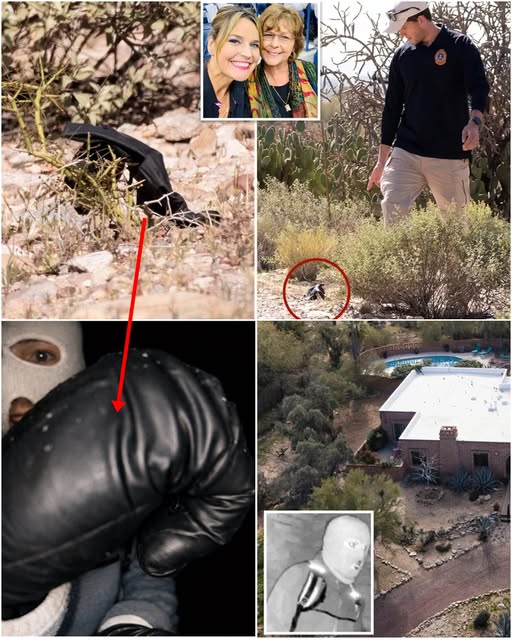
Authorities in Tucson, Arizona have confirmed that forensic testing has now been completed on a black glove recovered near the perimeter of Nancy Guthrie’s residence, a key piece of evidence collected early in the investigation. The item was originally cataloged during an initial sweep of the property, but it was later sent for more advanced laboratory analysis after detectives undertook a comprehensive re-evaluation of physical items connected to the scene. According to officials, forensic experts successfully extracted two distinct DNA profiles from the fabric of the glove, in addition to partial latent fingerprints preserved on its interior lining, each presenting potentially significant leads for investigators.
Law enforcement sources confirmed that one of the DNA samples has been conclusively matched to Nancy herself. Forensic analysts suggest that the biological material is consistent with direct contact, which could indicate a struggle or physical confrontation. While authorities have refrained from publicly specifying the precise circumstances, they noted that the placement and distribution of the DNA on the glove were particularly notable, and warrant closer scrutiny. Experts indicated that the patterns observed are not typical of casual handling, suggesting the glove may have been involved in an altercation at or near the residence.
The second DNA profile, however, has introduced a more complex dimension to the ongoing investigation. Officials confirmed that this sample has been identified and linked to a known individual, though authorities have not yet released the person’s identity publicly. Detectives are currently cross-referencing this new information against prior statements, alibis, and documented interactions with Nancy in the days leading up to her disappearance. Sources familiar with the inquiry indicated that investigators are examining digital communications, witness accounts, and location data to determine whether this individual had any legitimate reason to be near Nancy’s property, or if the presence of their DNA may reflect suspicious activity.
In addition to the DNA findings, fingerprint specialists recovered partial ridge detail from the interior surface of the glove. At this stage, authorities have not confirmed whether the fingerprints correspond to either of the two DNA profiles already identified, or if they suggest the involvement of an additional, previously unidentified contributor. Investigators have indicated that supplementary trace analysis is ongoing, aimed at detecting fibers, soil particles, or environmental residues that could provide additional context regarding how and when the glove was left near the residence. Experts believe that even minor traces could help reconstruct the sequence of events, potentially revealing whether the item was dropped deliberately or accidentally, and whether it was moved prior to collection.
Officials caution that, while these forensic results represent a major development in the investigation, they do not, on their own, establish criminal liability. DNA presence and fingerprints must be interpreted alongside other evidence, including surveillance footage, timeline reconstructions, and witness statements. Law enforcement emphasized that the findings are one component of a broader investigation, which continues to prioritize accuracy, corroboration, and procedural rigor over premature conclusions.
The Tucson Police Department has reiterated that no charges have been filed at this time, underscoring that forensic evidence alone cannot be used to determine guilt. Detectives continue to interview persons of interest, revisit alibis, and review all relevant laboratory findings. In parallel, surveillance and digital records are being meticulously analyzed to identify patterns of movement, potential points of contact, and any inconsistencies in previously provided accounts.
Authorities described the discovery and analysis of the glove as a “significant, but preliminary, step” in understanding the circumstances surrounding Nancy’s disappearance. Investigators remain focused on combining physical evidence with corroborating details from witness statements and communications records, aiming to establish a clearer picture of events in the critical hours leading up to the incident. Law enforcement continues to urge caution against speculation, reminding the public that while the forensic findings provide important leads, the investigation is ongoing, and conclusions can only be drawn after careful consideration of all available information.