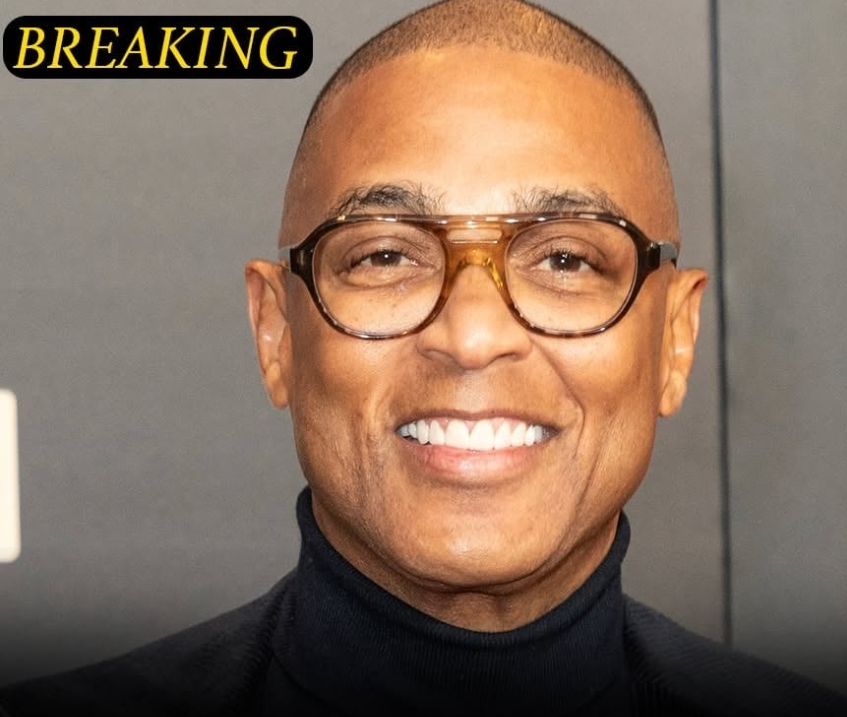
Former CNN anchor and veteran journalist Don Lemon was arrested by federal authorities in Los Angeles on the evening of January 29, 2026, a shocking development that immediately grabbed headlines across the nation. Lemon, who had been in Los Angeles covering the 68th Annual Grammy Awards, was suddenly taken into custody at his hotel by federal agents — an arrest whose implications have since sparked fierce debate about press freedom, political protest, and the role of journalists in moments of social upheaval.
The arrest, confirmed by Lemon’s attorney and reported by multiple major news outlets, came nearly two weeks after Lemon was present at a controversial anti‑ICE protest in St. Paul, Minnesota — a protest that drew national attention for its dramatic disruption of a Sunday worship service at Cities Church. Lemon’s detention was unexpected, and many observers noted the surreal contrast between a red‑carpet entertainment event and the grave legal situation he suddenly found himself in.
According to authorities, Lemon’s presence at the January 18 demonstration — where activists entered Cities Church during a service to protest immigration enforcement policies — was more than just journalistic observation. Federal prosecutors allege that Lemon and other journalists crossed a legal line, prompting a grand jury indictment on charges including conspiracy and interference with the First Amendment rights of worshippers. These allegations, which Lemon’s legal team vigorously denies, have raised urgent questions about when reporting ends and alleged involvement begins.
The protest itself was a flashpoint in an ongoing nationwide debate over immigration policy, enforcement tactics, and civil liberties. Demonstrators stormed the church service, urging congregants and clergy to condemn federal immigration enforcement and calling attention to broader concerns about ICE operations. What initially seemed like a localized protest rapidly became a subject of national discourse — especially once video footage and livestreams of the event began circulating online.
In the days that followed, federal prosecutors pursued charges against several individuals connected to the protest, including independent journalist Georgia Fort and others alleged to have played active roles in the disruption. Lemon’s attorney insists that his client was covering the event purely as a journalist and did not participate in organizing or inciting the protest. However, Justice Department officials say evidence suggests otherwise, claiming that certain actions — including entering the private property of a place of worship during a service — may have violated federal statutes designed to protect religious freedoms.
Lemon’s arrest in Los Angeles was dramatic and unexpected. Federal agents reportedly appeared at his hotel late in the evening, surprising the veteran journalist while he was engaged in professional duties unrelated to the Minnesota protest. His attorney described the move as an aggressive tactic that overshadowed his decades‑long career in journalism. The arrest has drawn widespread attention not just for the charges themselves, but for how they were carried out — a sequence of events that Lemon and supporters characterize as an attempt to intimidate members of the press.
Following his arrest, Lemon appeared in federal court, where a judge ultimately released him from custody without bail. During his court appearance, he stated his intent to plead not guilty and emphasized his commitment to reporting the truth. Lemon’s legal team has framed the case as a crucial battle for press freedom, asserting that actions undertaken in the course of journalistic duty deserve constitutional protection under the First Amendment.
Public reaction has been sharply divided. Media freedom advocates and journalists have criticized the charges as an overreach and a dangerous precedent for reporters covering protests and controversial events. Critics argue that arresting a journalist for entering with demonstrators blurs the lines between reporting and participation, potentially chilling future coverage of protests and government actions. Meanwhile, government officials and supporters of the charges maintain that no journalist is above the law, especially when actions allegedly interfere with the rights of others.
Don Lemon, who has spent more than three decades in the media spotlight, has used the attention to underscore his belief in the essential role of a free press. In interviews since his release, he has spoken candidly about the arrest — describing it as aggressive, unnecessary, and designed to send a message to journalists everywhere. Lemon insists that he was present in Minnesota strictly to observe and report, not to take part in the protest itself, and that he offered to surrender voluntarily before federal agents moved in to detain him.
The unfolding legal battle is likely to extend for months, with Lemon promising to fight the charges vigorously. As the story continues to develop, the case has ignited national conversations about civil liberties, the boundaries of protest coverage, and the protections afforded to journalists under the Constitution. Whether one views Lemon’s arrest as a justified legal action or a troubling encroachment on press freedoms, it is clear that this high‑profile case will reverberate far beyond the halls of the courtroom — shaping views on journalism and democracy in the years to come.