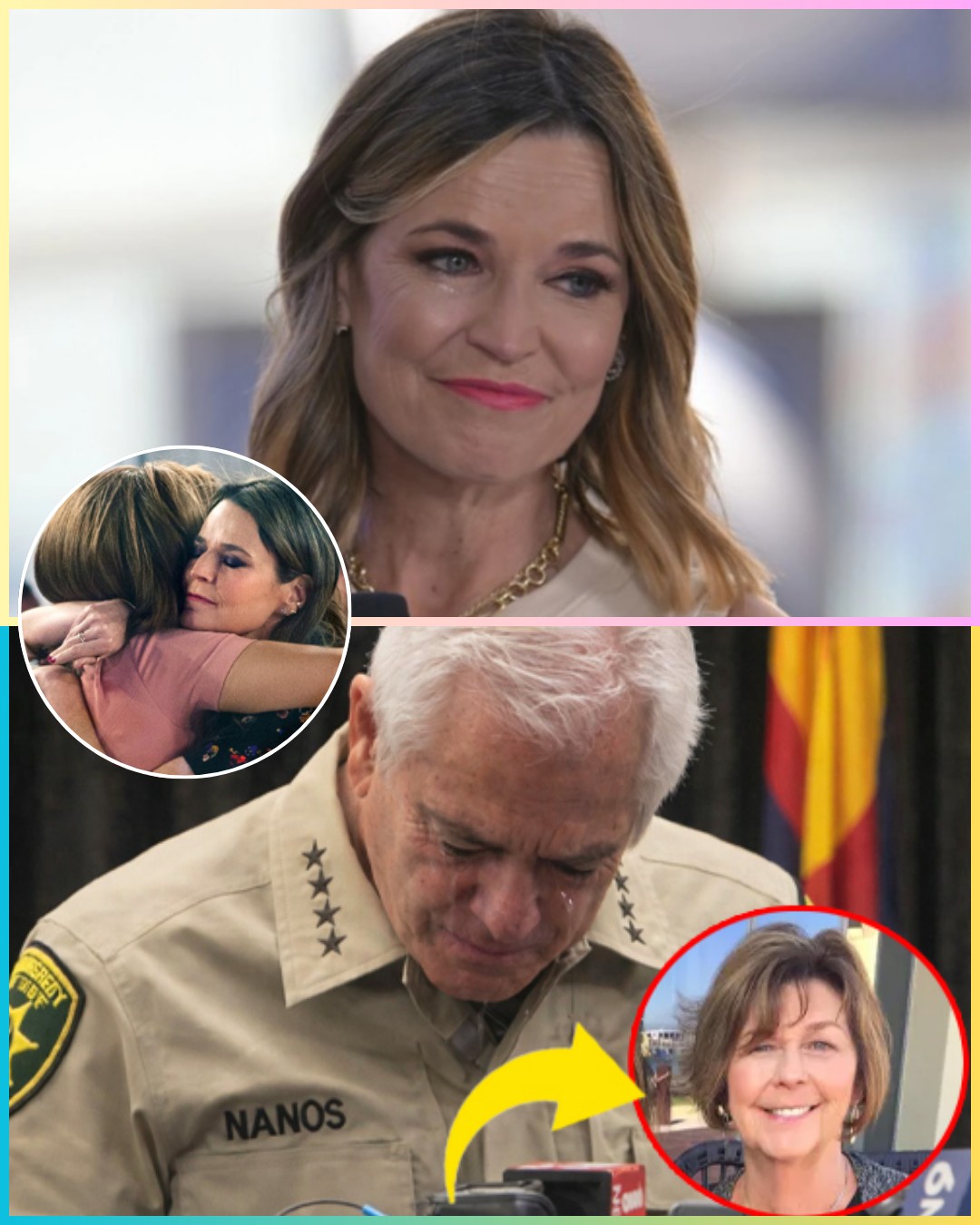
In the sun-baked foothills of Arizona, a story that began with a terrifying absence is now hardening into a full criminal investigation. For Savannah Guthrie and her family, the past forty-eight hours have marked a brutal shift—from the tormenting uncertainty of a missing person to the stark reality of a suspected kidnapping. Authorities in Arizona have officially identified a suspect in the disappearance of 84-year-old Nancy Guthrie, a development that has pushed the case from national concern into an urgent search for accountability.
What was once treated as a mysterious vanishing is now believed to be a calculated and deliberate crime. Investigators say evidence found at the scene—blood on the steps and surveillance cameras forcibly removed—points to planning and intent, not chance. This was no random act. It was a targeted assault on a vulnerable woman inside the supposed safety of her own home. As the investigation intensifies, detectives are now working to reconstruct the suspect’s movements, relying on digital trails and forensic analysis to build a case that can withstand scrutiny in court.
Inside the Search Effort
With a suspect now identified, law enforcement activity has accelerated dramatically. Local Tucson police, supported by federal specialists, are combing through phone records, cell-tower data, and countless hours of surveillance footage from nearby homes and businesses. Every witness statement—no matter how small—is being examined and cross-checked to establish a precise timeline of events leading up to Nancy’s disappearance.
The pressure on investigators is immense. As the mother of one of America’s most recognizable journalists, Nancy Guthrie’s case has captured national attention. Still, officials insist accuracy must come before speed. A rushed investigation, they warn, risks mistakes that could undermine justice later. Their objective is clear: not just an arrest, but a conviction that delivers real accountability.
A Daughter Holding the Line
Beyond the official statements and breaking-news banners is a family living in emotional limbo. For Savannah Guthrie, the identification of a suspect brings cautious hope—but also confirmation of her worst fears. Friends describe her as quietly resolute, leaning on a small circle of trusted loved ones while maintaining remarkable composure under extraordinary strain.
She is navigating two worlds at once: the public role of journalist and the private agony of a daughter waiting for answers. While viewers see professionalism and calm, behind the scenes she is enduring the unbearable—caught between hope for a rescue and fear of irreversible loss. Refusing to surrender to despair, Savannah has chosen perseverance as her response to the unknown.
The Unsent Message
One of the most haunting revelations came from a forensic review of Nancy Guthrie’s phone. Investigators discovered a seven-word message—typed but never sent. A plea for help, cut short before it could reach anyone. Though the full content remains undisclosed to protect the investigation, the existence of the message offers a chilling glimpse into Nancy’s final moments of awareness.
For police, the unsent message is a critical clue that helps narrow the timeline of the abduction. For the family, it is a heartbreaking reminder of how close Nancy came to reaching help—and how abruptly that chance was taken from her.
Questions Around the Suspect
As limited details emerge, reports have pointed to a California man with possible ties to low-level government work. Authorities are being careful to distinguish confirmed facts from speculation, emphasizing that some arrests connected to the case are peripheral, not definitive.
The motive remains unclear. Crimes involving elderly victims are often financially driven, but the violence evident at the scene suggests something far more aggressive. Investigators are exploring all possibilities—from financial exploitation to personal vendetta—until Nancy is located and the truth fully revealed.
A Country Waiting
This case has grown beyond a typical crime story. It has become a reflection of family bonds, public empathy, and the human cost of unanswered questions. In Tucson and across the country, the response has been quiet but deeply emotional. Viewers recognize that behind the familiar face of a morning-show anchor is a daughter searching for her mother.
Officials say the investigation is “closer than ever” to resolution, though they acknowledge the final steps are often the hardest. Until there is confirmation—of rescue or closure—the uncertainty remains heavy.
For now, the search continues with deliberate care. A family waits with restrained hope. And a nation watches, praying for an ending not defined by tragedy, but by the safe return of an 84-year-old woman whose absence has left a profound silence behind.