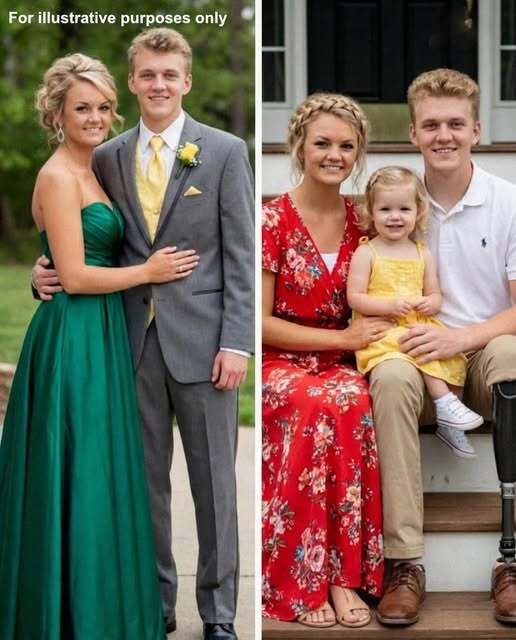
I Left Home to Buy a Toy for My Daughter’s Birthday — When I Returned, My Wife Was Gone, Leaving a Letter That Changed Everything
On the morning of my daughter’s third birthday, I stepped out briefly to buy her present. When I returned, the house felt lifeless. My wife had vanished, leaving behind only a letter—and the beginning of truths I wasn’t prepared to face. What followed forced me to confront love, betrayal, and the meaning of staying when everything falls apart.
When I walked through the door, the silence hit me immediately.
There was no music playing, no soft humming drifting from the kitchen. Just the slow tick of the clock on the wall and the steady buzz of the refrigerator filling the space where warmth used to be.
The birthday cake sat unfinished on the counter. Chocolate frosting clung messily to the bowl, as if someone had walked away mid-motion. The knife leaned against the edge, abandoned. A single balloon floated near the ceiling, its string snagged on a cabinet handle.
“Hope?” I called out, my voice sharper than I intended.
No answer.
The bedroom door stood open. I stepped inside and stopped cold. Hope’s side of the closet was bare. The floral hangers she loved swayed gently, as though they’d been moved moments ago. Her suitcase was missing. So were most of her shoes.
I steadied myself against the wall as I moved down the hall. Neve slept peacefully in her crib, her mouth slightly open, one tiny hand resting on the head of her stuffed duck.
“What is this, Hope?” I whispered under my breath as I gently woke Neve.
My chest tightened.
Beside her lay a folded piece of paper, instantly recognizable as Hope’s handwriting.
Hank,
I’m sorry. I can’t do this anymore.
Please take care of Neve. I made a promise to your mother, and I had to keep it. Ask her.
— Hope
That morning, before I left, music had been playing.
Hope stood at the counter frosting Neve’s cake—dark chocolate, imperfect, exactly how our daughter liked it. Her hair was tied up, a smear of frosting on her cheek. She hummed along to the radio, slightly off-key.
“Don’t forget,” she called over her shoulder, “she wants the one with the sparkly wings.”
“I’ve got it,” I said from the doorway. “Biggest, glitteriest doll they have.”
She laughed, but her eyes didn’t match her smile.
Neve sat at the table, duck in one hand and a crayon in the other, humming with her mom. She looked up at me and beamed.
“Daddy, make sure it has real wings!”
“I promise,” I said, rubbing my leg before heading out. “I’ll be quick.”
It felt normal. Safe. The kind of moment you don’t realize you’ll miss until it’s already gone.
The mall was packed—Saturday chaos. I parked farther away than I wanted and moved carefully through the crowd, shifting my weight to ease the pressure on my prosthetic.
It was sore again, rubbing behind my knee.
Standing in line with the doll tucked under my arm, I stared at a display of brightly colored kids’ backpacks. The waiting, combined with the dull ache in my stump, pulled my thoughts backward.
I was twenty-five when it happened. Second deployment. One second we were walking through a village; the next, everything exploded—fire, metal, pain.
The medics said I almost didn’t make it.
Recovery was brutal. Learning to stand again. To balance. To accept what my body had become. Some days I wanted to throw the prosthetic away and disappear.
Some days I nearly did.
Hope was there when I came home. Her hands shook the first time she saw me.
“We’ll figure it out,” she whispered. “We always do.”
And for a while, we did. We married. We had Neve. We built a life.
Still, there were moments—times she looked away too quickly when my leg was swollen or raw, when the smell of antiseptic lingered. I told myself it was just hard for her. I never questioned her love.
“Next!” the cashier called.
When I got home, the sun was setting. Across the street, Kate sat on her porch reading one of my books.
“Hey, Hank,” she said. “Hope left a bit ago. Asked me to listen for Neve. Said you’d be back soon.”
My stomach dropped.
“Did she say where she was going?”
“No. Just seemed urgent. The car was running.”
Inside, everything felt wrong. The unfinished cake. The knife. The silence.
“Hope?” I called again, knowing the answer.
Minutes later, I buckled a drowsy Neve into her car seat, the letter heavy in my pocket, and drove straight to my mother’s house.
Ruth opened the door before I knocked.
“What did you do?” I demanded. “What did you do to her?”
Her face drained of color.
“She really left?” she whispered. “I didn’t think she would.”
“I found the note,” I said, holding Neve closer. “She said you made her promise something. Start talking.”
Her silence said enough.